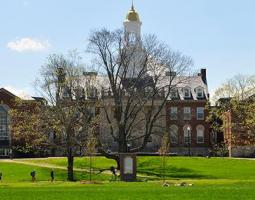
Harvard University


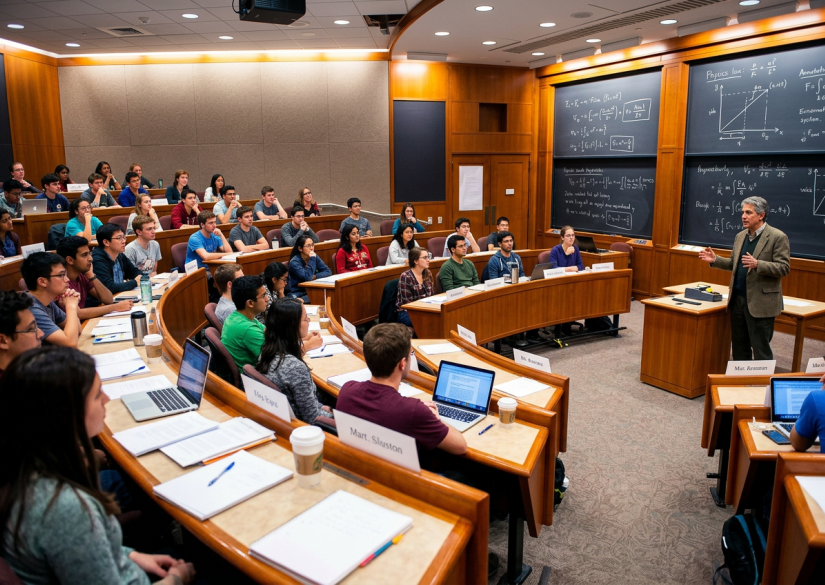



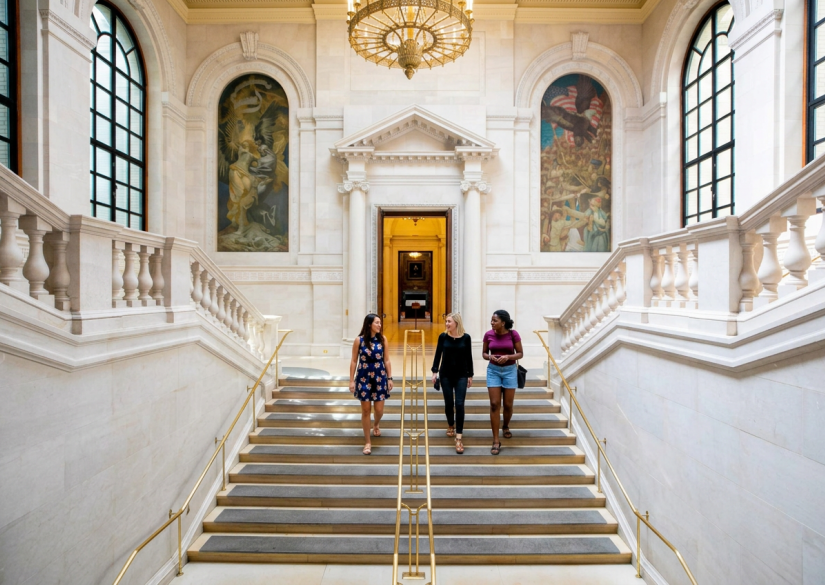
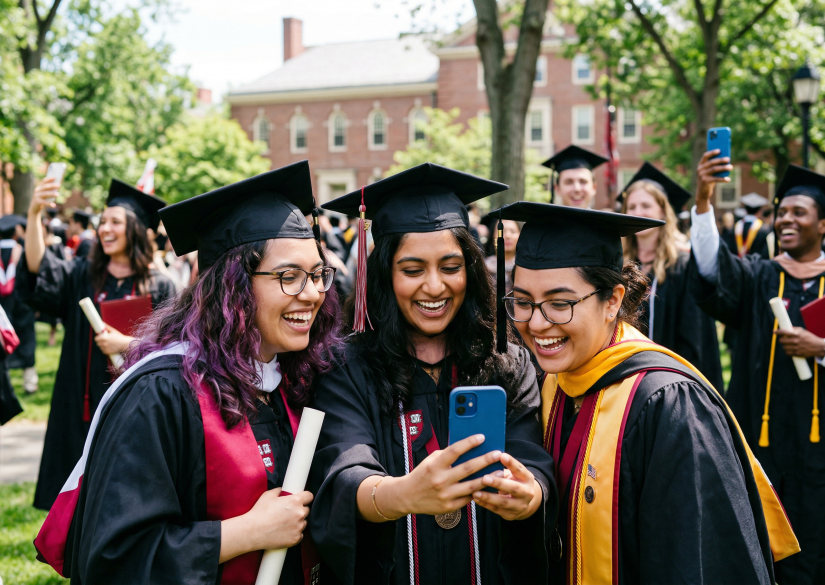



Programs and prices, tuition fees in Harvard University
Short information about standard four-year course of basic higher education in one of the sought after specialties.
About the course: the undergraduate program is offered by most Harvard faculties. Students often choose the directions of social and human sciences, biology, engineering. Less popular are IT, accurate, natural sciences.
Harvard studies in bachelor's degree are traditionally for the American education system. The programs provide for the study of a large number of general educational subjects. Specialization usually begins with the second semester of the 2nd course. In general, studies at the baccalaureate include the studying of 50% of core disciplines, 25% - profile additional specialization and 25% - humanitarian general education.
- Student age: 18+
- Start dates: annually.
- Requirements for enrollment: certificate, statement (For 4 years), SAT Reasoning Test (from 2070) or analogue, SAT Subject Test, 2 recommendations from the teachers of the school, knowledge of English at the level corresponding to TOEFL 109, motivation letter, essay, confirmation of sporting achievements, creative portfolio (if available).
- The result of the studying: obtaining a specialty in demand in the world, a large career prospects in the USA.


Short information about postgraduate program, designed for 2-3 years of study, depending on the specialization.
About the program: Master's degree in Harvard can be obtained at the faculties:
- Sciences and arts;
- Medicine;
- Jurisprudence.
Also specialists of this level prepare:
- Higher school of design (specialty urban, landscape design, architecture);
- Higher pedagogical school (a large number of specializations are offered, including management in the educational sphere, psychology) 999.15]
- School of health (specialization - legislation in the medical field);
- School of theology (directions of religion and theology);
- School of public administration (the graduates become future public figures, politicians);
- Business school (provides an opportunity to obtain an MBA degree).
Masters programs differ from Bachelor's in narrow specialization, practical orientation.
- Student age: 21+
- Start dates: annually.
- Requirements for admission: a diploma of higher education with a high average score, 2 academic recommendations, IELTS 7.0 or equivalent (TOEFL ibt 109), motivation letter, resume, essay (articles, publications, etc.), GRE or GMAT results (according to the bachelor's degree).
- The result of the studying: great career prospects, the opportunity to improve in the academic or practical field of knowledge in accordance with the chosen direction, specialization.
Description of Harvard University
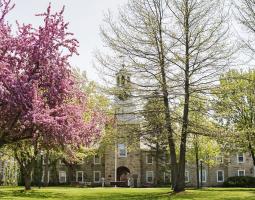
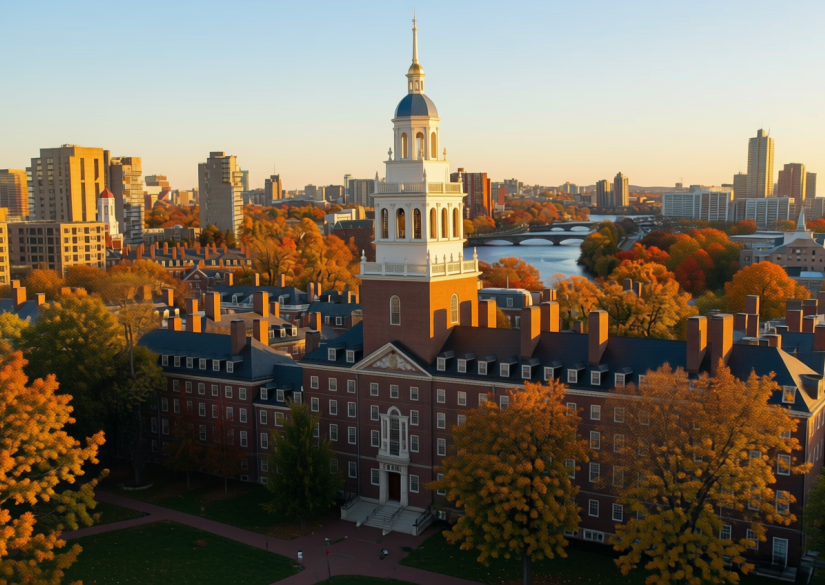
Harvard University is the oldest university in America. Harvard University in American Cambridge - the most famous and prestigious educational institution of the country. Annualy, it leads national rankings as a university of international importance. In TOP-10 prestigious universities abroad it takes a second place. In the US, Harvard is a part of the Ivy League.
The University has been working since 1636. Modern Harvard is more than 350-year-old educational traditions, openness to innovations, orientation to development and technological, academic improvement. Among the teachers (acting and former), there are 44 Nobel Prize laureates. Teaching in the university is conducted by experienced teachers. Each of them has more than one year of practical activity in a particular field.
Educational process
The History of Art and Architecture department partners with the Fogg, Busch-Reisinger, and Sackler Museums, giving students direct access to original works of art. In an online Harvard Law School copyright course, practicing alumni served as virtual section leaders.
Harvard School of Dental Medicine connects incoming students with Community & Campus Life student leaders and admissions ambassadors. They provide mentorship, guidance, and information about school and university resources. Harvard College requires incoming first-year students to complete a pre-matriculation module on living with people who hold different views, handling conflict, and community life.
New and returning teaching fellows and teaching assistants in the Faculty of Arts and Sciences must attend Pedagogy in Practice or two sessions on designated teaching topics.
Faculties and colleges
Harvard offers an undergraduate History of Art and Architecture concentration and a graduate program in the same field.
- the undergraduate concentration develops skills in historical interpretation and critical analysis of visual arts and architecture across different regions and periods,
- the graduate program prepares students for college-level teaching, museum work, independent research, and academic writing,
- graduate fields include African, Greek and Roman, East Asian, Islamic, Latin American, Medieval/Byzantine, South Asian, Renaissance and Baroque, Modern, and Contemporary art and architecture.
Scientific achievements
- Bruce Yankner’s Harvard team published research showing that lithium is biologically important in the brain and may prevent or reverse Alzheimer’s disease,
- Joel Habener set up an experiment at Massachusetts General Hospital that led to the discovery of GLP-1, a hormone now used to treat diabetes and obesity,
- Harvard scientists created AI models capable of diagnosing multiple forms of cancer,
- Harvard Professor Doug Melton’s laboratory conducts pioneering stem-cell work aimed at finding a cure for type 1 diabetes,
- Matthew Nock’s real-time survey research forecast 87% of suicide-related crises before they occurred,
- Four Harvard research teams received support from the Climate and Sustainability Translational Fund for work on sustainable aviation fuel, cleaner chemicals, sustainable packaging, and carbon storage.
Things to know about
- on December 23, 1954, Harvard Medical School Professor Joseph Murray and his team performed a kidney transplant that helped usher in the era of organ transplantation,
- Harvard’s Paul Zoll helped develop the defibrillator,
- researchers at Harvard’s Martinos Center helped pioneer functional MRI for measuring brain activity in real time,
- Harvard Medical School founding faculty member Benjamin Waterhouse introduced the smallpox vaccine in the United States and promoted its acceptance,
- Harvard Medical School faculty members Philip Drinker and Louis Agassiz Shaw developed the iron lung.
Accommodation, meals, prices
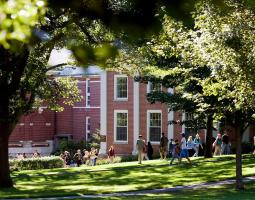
Students live in comfortable residences on campus. First-year students are accommodated in hostels in the Harvard area. Sophomores live in 12 university homes. Each of them is a separate structure with its managers, a group of curator educators, rules of conduct and traditions. Each house has cozy rooms with private facilities, seating areas, a cinema screening hall, a student kitchen-dining room. Some buildings have their own sports grounds and theaters.
No food is provided. Students are offered self-service. Students can also eat on campus in cafeterias.
Subjects, specialties
Activities Harvard University
Harvard Radcliffe Institute’s Emerging Leaders Program trains undergraduate mentors in constructive dialogue and open inquiry. Each mentor cohort includes 40–50 Harvard students.
Advantages
- Harvard University, ranked second in terms of prestige in the world, is known for the high quality of educational services and outstanding academic, career results of its graduates. The university was completed by US presidents, world-class scientists, outstanding businessmen, managers. It's one of the best options for obtaining higher education in America.
- The university is distinguished by its brilliant teaching staff. Nobel laureates, leading specialists of the world, who have received many prestigious awards and awards work with the students.
- These are great opportunities for academic, creative, physical development. On the campus of the university in USA, occupying an area of 2,000 hectares, all conditions for effective studying, comfortable living, playing sports and creativity are created.
- On the Bachelor's programs, 10 students study at 50% of the courses. Small groups provide the opportunity to effectively supervise the learning process and complete immersion in subjects.
- Harvard University is known as one of the leading research centers in the United States. In the university, young professionals, in particular students of the Magistracy, are given a lot of opportunities for academic development in a particular scientific field.
- This is quality education and active social life. On campus for students more than 4 hundred clubs and circles work.
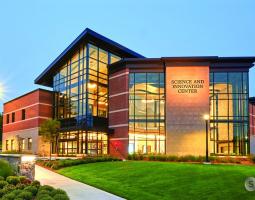
Facilities and equipment at Harvard University
Harvard collaborated with Boston University, MIT, Northeastern University, and the University of Massachusetts to create the Massachusetts Green High Performance Computing Center.
Enrolment process
Harvard Business School requires applicants to acknowledge and sign its Community Values before submitting an application and again before matriculation.
Smapse specialists will guide you through every stage of the admissions process.
Entry requirements, how to apply, what is required to enrol
- Harvard College and several graduate and professional schools consider an applicant’s ability to engage with different perspectives, show empathy, and participate in civil discourse,
- the Harvard College application asks about a time when the applicant strongly disagreed with another person,
- Harvard Chan School of Public Health asks applicants to describe a public-health opinion that changed after a conversation, class, or personal experience,
- Harvard Graduate School of Education asks applicants to examine an experience that conflicted with an important belief or value and explain what they learned,
- leadership developed through a faith-based organization is considered in the same manner as other leadership experience.
Institution on the map
Residence permits, citizenship and other services
- Guardianship services during the studies
- Student supervision
Review about Harvard University
Recommendations on when to apply
| Language courses, schools and children's language camps | Primary and secondary education - private schools | Preparation programmes for entering universities - higher education | Higher education (after completing accredited programs A-level, IB, High School) - Bachelor, Master, MBA |
| - we recommend to apply 6-9 months before the start of the course (some camps and schools offer discounts for early booking or for lengthy study programs) - there are some very popular and high demand children's camps, where the applications need to be submitted 1 year in advance (in particular Switzerland , Great Britain , USA , Canada , Austria) | - we recommend to apply one year before the start of the training program, - some schools have a specific time frame (September-November - please specify an individual school) - some schools require tests in several stages (UKISET, internal tests of the school: English, mathematics, logics, subjects, interview, some require a personal visit) | - we recommend to apply one year before the start of the program, - for Foundation and Pathway programs, IELTS and TOEFL certificates are usually required, respectively | - recommended submission one year before the start of the program, - the deadline normally closes in January, for TOP HEIs and, as a rule, in March in other universities - for a bachelor, a Foundation or Pathway preparatory program a completed A-level, IB, High School + IELTS / TOEFL are required - for Masters you need a graduated higher education, in some cases you need a pre-Masters program - MBA requires completed higher education, work experience preferably at least 2-3 years, etc. |