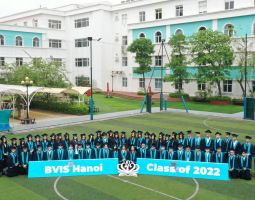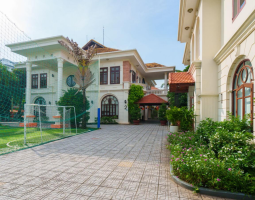
European International School Vietnam HCMC, International European School in Vietnam

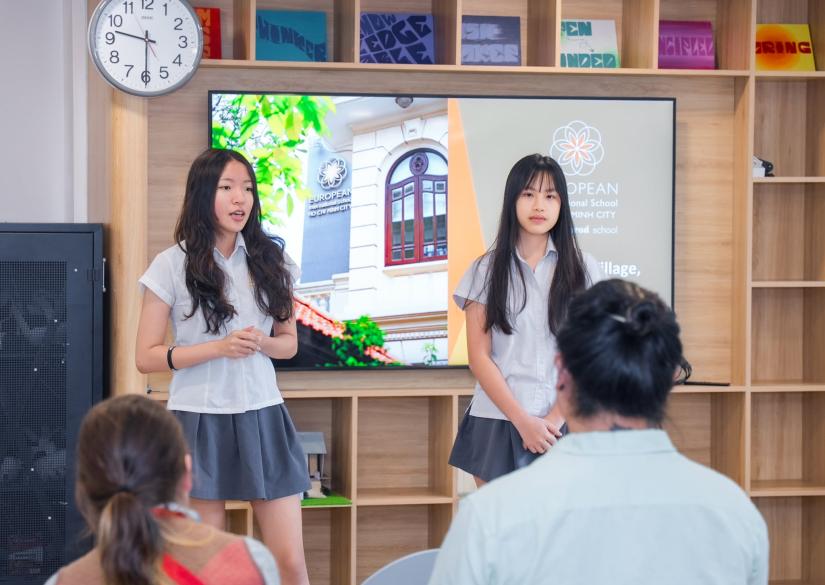
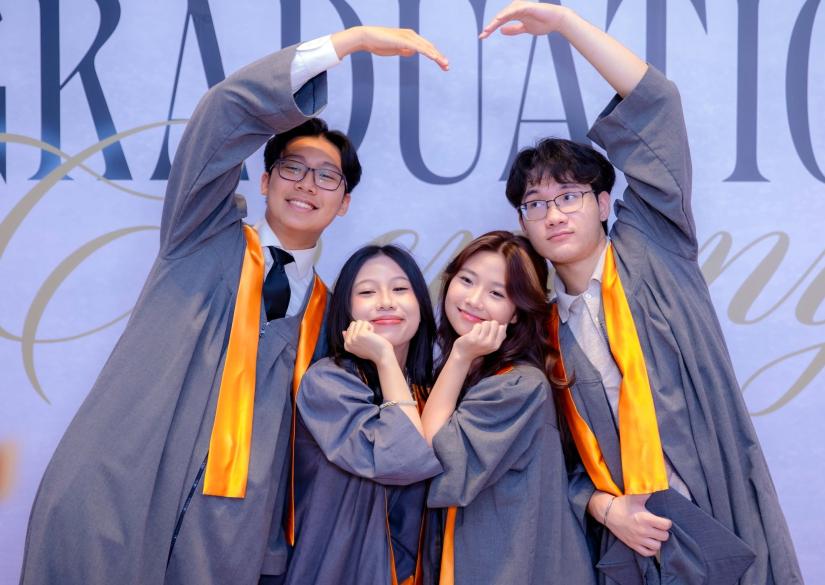


Programs and prices, tuition fees in European International School Vietnam HCMC, International European School in Vietnam

Kindergarten, Preschool Department
- Age — from 2 to 5 years,
- Duration of study — three to four years.
The kindergarten program is based on the pedagogical principles of the widely known Reggio Emilia educational method, which is founded on revealing the child's abilities through play, communication, and interaction with nature. Students are provided with various materials and resources, careful attention and comprehensive support in exploring the world around them, their emotions and abilities, and developing creative and physical skills.
The academic system of the preschool department includes four groups:
- Toddler — the youngest students, attending the campus several times a week for a limited time,
- First and second age groups — sequential development of children over two years,
- Pre-School — a preparatory group in which students consolidate their skills and prepare for the transition to primary school.
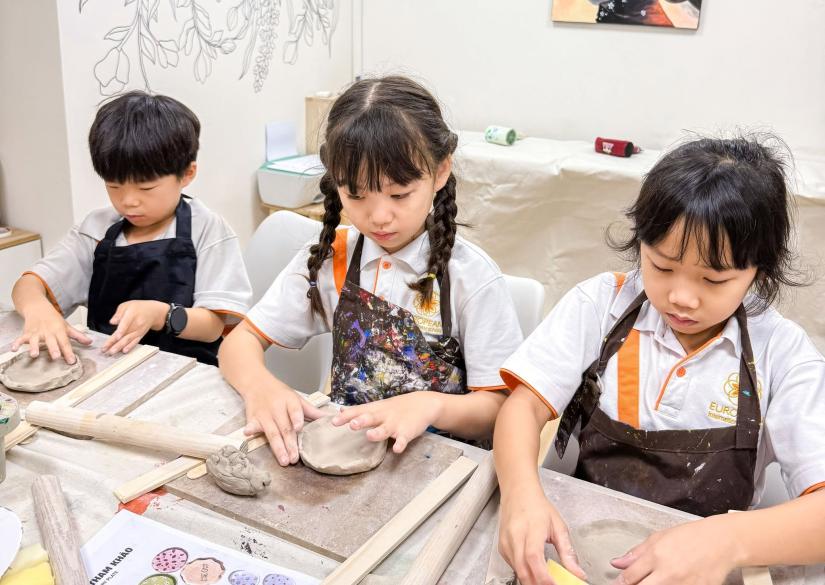
The students' schedule includes many outdoor activities during which they play, do sports, and conduct safe experiments. In the classrooms, various materials are prepared for drawing, modeling, sculpture, building with LEGO, and much more. Through play, creativity, and physical activity, the basics of the English language are also studied: grammar, vocabulary, speaking, and listening, as well as basic mathematical counting skills.
Upon completing kindergarten, children consolidate the necessary knowledge and skills to succeed in the more structured atmosphere of primary school.
Primary School
- Age of students — from 6 to 11 years old,
- Duration of study — five years.
The primary school program, aimed at students aged 6–11, covers grades 1–5. At this stage an exploratory approach to studying subjects, individual talents and abilities, and the surrounding world is supported. As students grow older, new subjects are added to their curriculum, and the extracurricular development program is supplemented with new circles of interest and activities.
The core of the program consists of English, mathematics, natural sciences, and humanities: history, geography. In addition to these, students attend classes in physical education, various areas of the arts, and study foreign languages: Vietnamese, German, and Chinese. The interdisciplinary teaching method helps them master theoretical knowledge and learn to apply it in real life, seeing the connection between the sciences and their practical applicability in life.
Middle School
- Age — from 11 to 15 years old,
- Duration of study — five years.
The grade 6–10 curriculum offers students a broad range of subjects to explore scientific fields of interest, achieve well-rounded development, and effectively prepare for upper school. Students' timetable includes:
- Languages and literature: English, Vietnamese, German, Spanish, Korean, French. Students study at least two languages simultaneously,
- Mathematics,
- Natural sciences: chemistry, biology, physics,
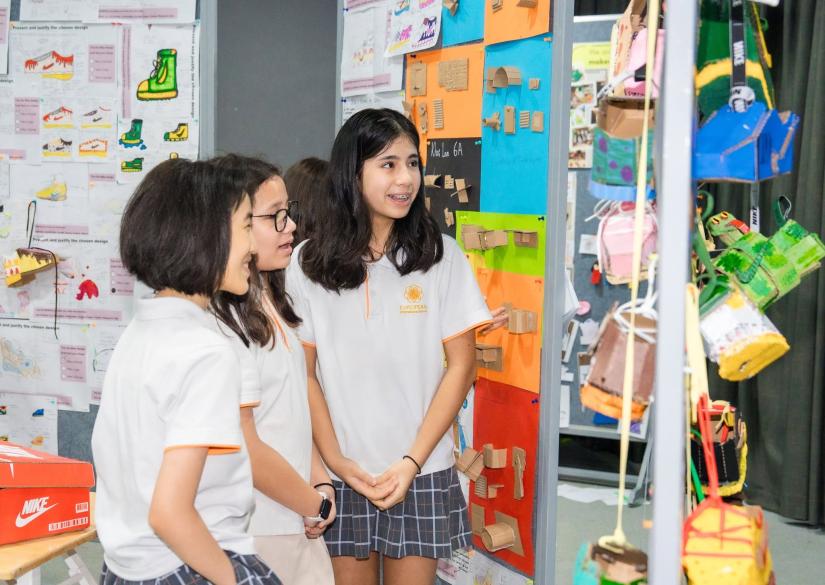
- Arts: drama, music, visual arts and design,
- History,
- Geography,
- Computer science and technology,
- Physical education and other subjects.
The rich academic program is complemented by dozens of extracurricular clubs and activities that allow students to develop their creative and athletic talents. The balanced curriculum will help students transition to upper school with outstanding achievements, valuable knowledge, and strong academic, social, and personal skills.
High School: International Diploma
- Age of students — from 16 to 18 years,
- Duration of study — two years.
Over two academic years, in grades 11–12, students study an individual curriculum of six subjects: three at standard level and three at advanced level. The disciplines are grouped into six subject groups:
- Language and Literature: English, Vietnamese, Korean,
- Language Acquisition: English, German, Spanish, French,
- Individuals and Societies: Psychology, Economics, Geography,
- Sciences: Biology, Chemistry, Physics,
- Mathematics: Mathematics AA, Mathematics AI,
- Visual Arts.
In addition to the chosen subjects, students complete several compulsory courses:
- Extended Essay (EE) — a written research paper on a topic related to one of the subjects in the curriculum,
- Theory of Knowledge (TOK) — reflection on the nature of knowledge, its perception and application,
- Creativity, Activity, Service (CAS) — active participation in extracurricular school life: sports, creative, and community clubs, sections, and events.
These courses add points to the overall academic achievements of senior students, increasing their competitiveness when applying to leading universities worldwide.
Description of European International School Vietnam HCMC, International European School in Vietnam
- Location: Ho Chi Minh City, Vietnam,
- Year of foundation: 2009,
- Number of students: approximately 600,
- Language of instruction: English,
- Type of education: mixed.
European International School Vietnam (EIS) is an international school offering international diploma programs at all stages of secondary education: from the preschool division through grade 12.
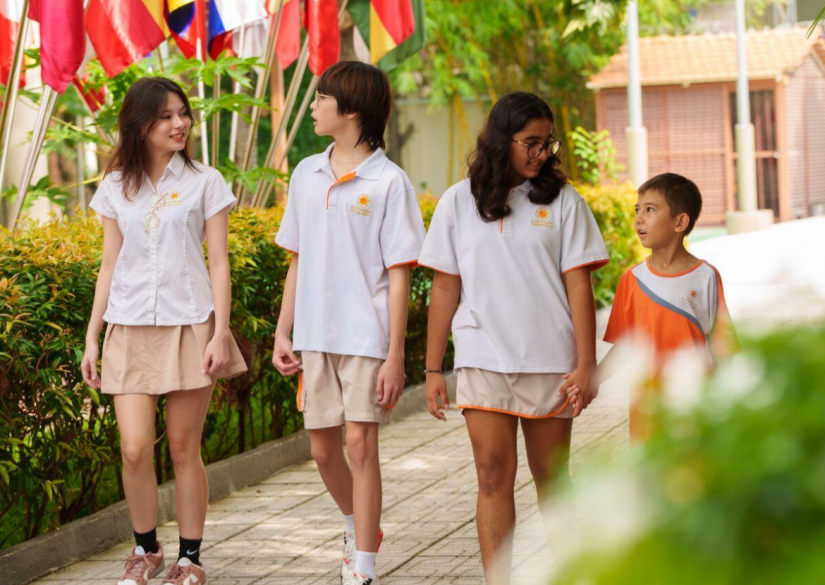
Founded in 2009, the institution positions itself as a «boutique school»: its distinguishing feature is a small number of students and a high level of individual attention to each one. Approximately 600 students aged 2 to 18, representing more than 40 nationalities, study at EIS each year.
The primary language of instruction is English, while the curriculum includes Vietnamese language study at various levels: for native speakers and foreign students, as well as a number of other foreign languages. In addition to academically rigorous programs rich in scientific disciplines, students are offered a wide range of extracurricular activities to develop their athletic, creative, and other interests.
EIS partners with dozens of local and international schools, supporting exchange, research, and travel programs. The educational process is aimed at helping students develop critical thinking and argumentation skills, leadership qualities, the ability to self-study, and a sense of responsibility — qualities that matter to admissions committees at leading universities around the world. Each year, EIS upper-school students demonstrate the high quality of their academic preparation through successful final exam results and admission to the world's best universities.
Educational process
Each student receives comprehensive support: specialized departments organize additional classes in subjects both in groups and individually, teachers run EAL electives for additional English language study, and personal tutors hold meetings on the topic of applying to colleges and universities. Subject departments work with each student individually, adapting the curriculum to their abilities and goals, selecting appropriate extracurricular clubs and activities that will help effectively bring out their strengths.
Faculties and colleges
The EIS academic system consists of four educational levels:
- Kindergarten — from 2 to 5 years old,
- Primary School: grades 1–5 — from 6 to 11 years old,
- Middle School: grades 6–10 — from 11 to 15 years old,
- High School: grades 11–12 — from 16 to 18 years old.
Accommodation, meals, prices
The school operates in a day format and does not have its own residence.
In the dining hall during the school week, a variety of dishes are served: full lunches, healthy snacks, beverages, desserts, and fruit. EIS works with Global Cafe: a team of 100 staff provides students with a balanced menu featuring dozens of national and international cuisine recipes, as well as dietary options.
Activities European International School Vietnam HCMC, International European School in Vietnam
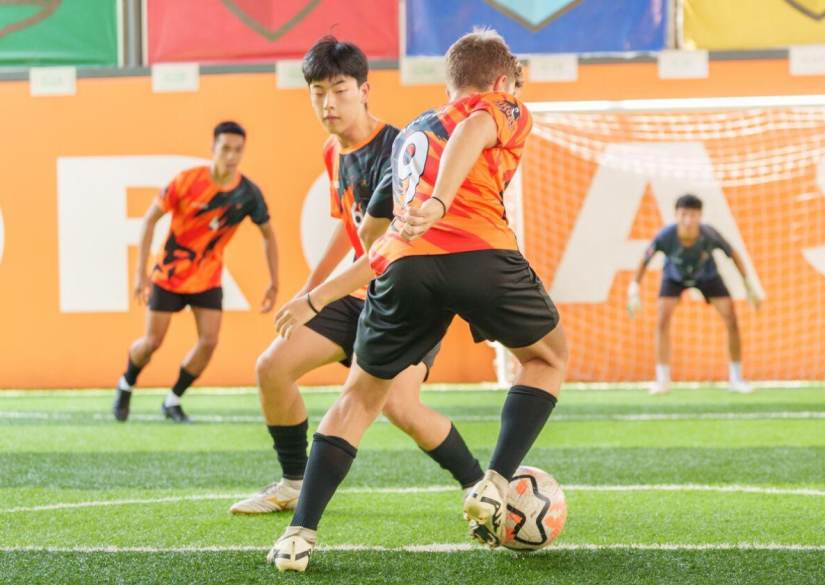
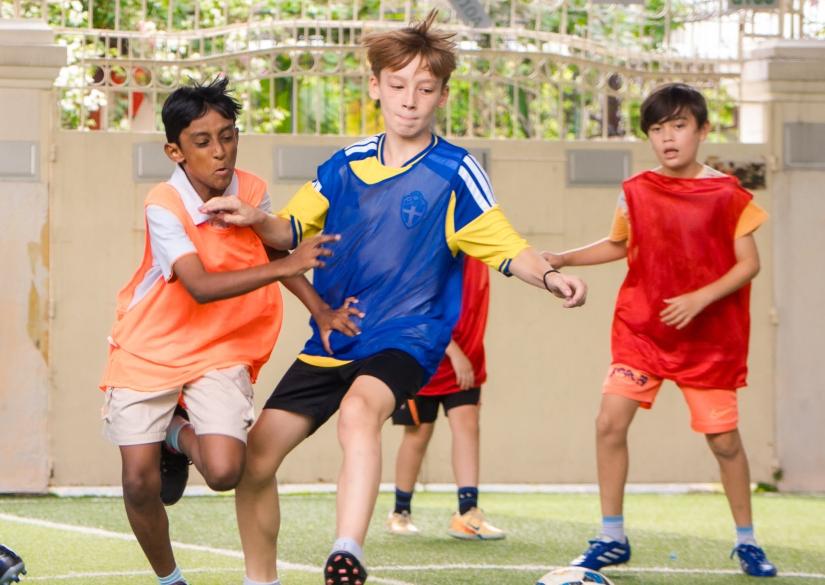
The two main areas of extracurricular development are performing arts and sports.
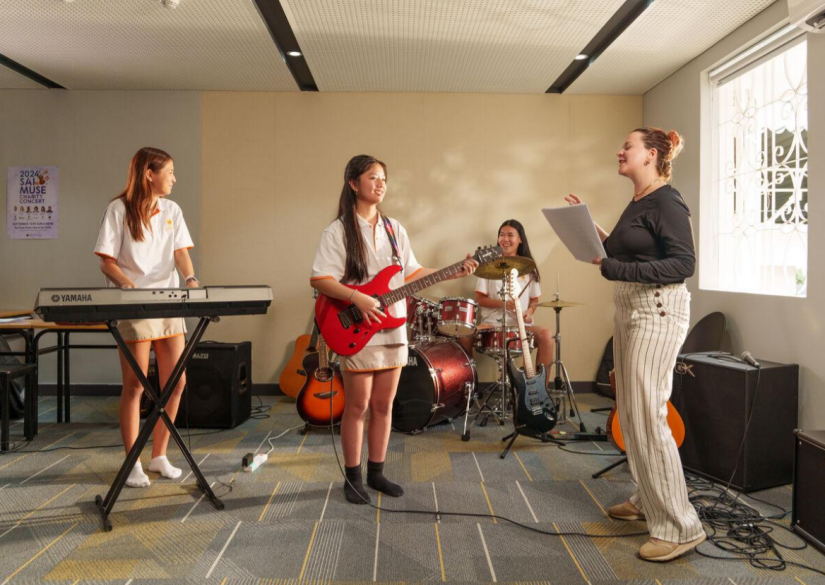
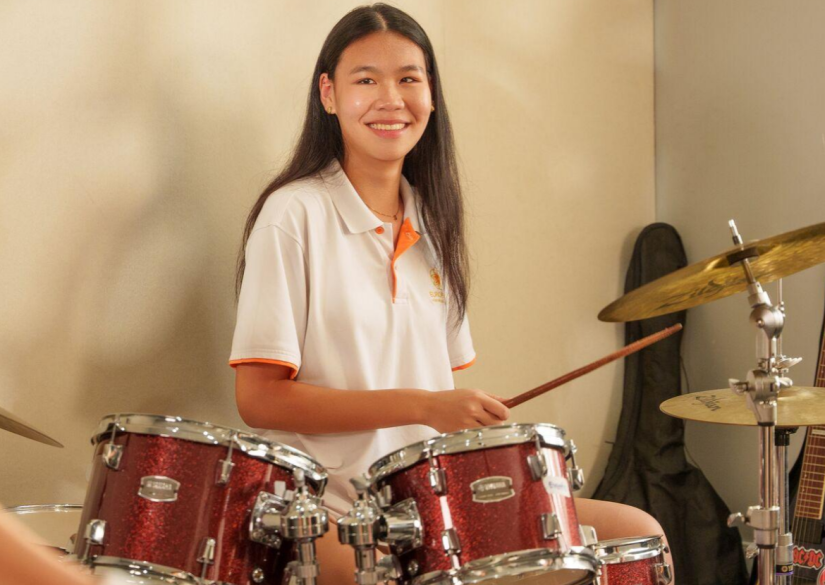
Students wishing to develop their creative talents focus on music and drama clubs, which have their own subdivisions: from vocals, participation in a choir and orchestra, and playing musical instruments to acting and public speaking skills, and the technical aspects of the stage. Music ensembles, theatre groups, and solo performers take part in almost every school event and frequently travel to performances outside not only the school, but the city as well.
The sports programme is represented by dozens of sections covering individual and team sports. More than 30 EIS teams participate in the annual SISAC competitions, contests ranging from U11 to U19 level, and travel to international events. List of available sports is represented by:
- Volleyball,
- Athletics,
- Swimming,
- Basketball,
- Badminton,
- Football,
- Netball,
- Cross-country,
- Table tennis.
Many other interests and hobbies are offered in the form of electives and themed communities. Under the guidance of mentors and teachers, children of all ages try their hand at new activities, find like-minded peers, and showcase their talents. The list of circles of interests includes:
- Cultures of the World,
- Sculpture,
- Fine arts, handicrafts,
- Book club,
- Yoga, meditation,
- Chess,
- LEGO,
- Comedy,
- Cookery,
- Filmmaking.
Advantages
- Accreditation for teaching full-cycle international diploma programmes, from CIS and WASC agencies,
- Teachers have an average of 11 years of experience, 42% of them hold a master's degree or higher,
- Excellent exam results — 16% above the global average,
- 90% of graduates are admitted to their chosen universities, often to their first-choice institutions,
- Intensive English language study with additional EAL electives for international students,
- A diverse extracurricular programme with dozens of clubs and activities in sports, creative, and other areas.
Facilities and equipment at European International School Vietnam HCMC, International European School in Vietnam
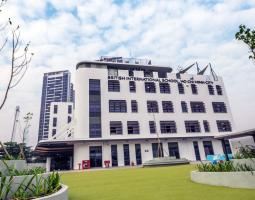
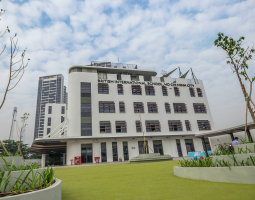
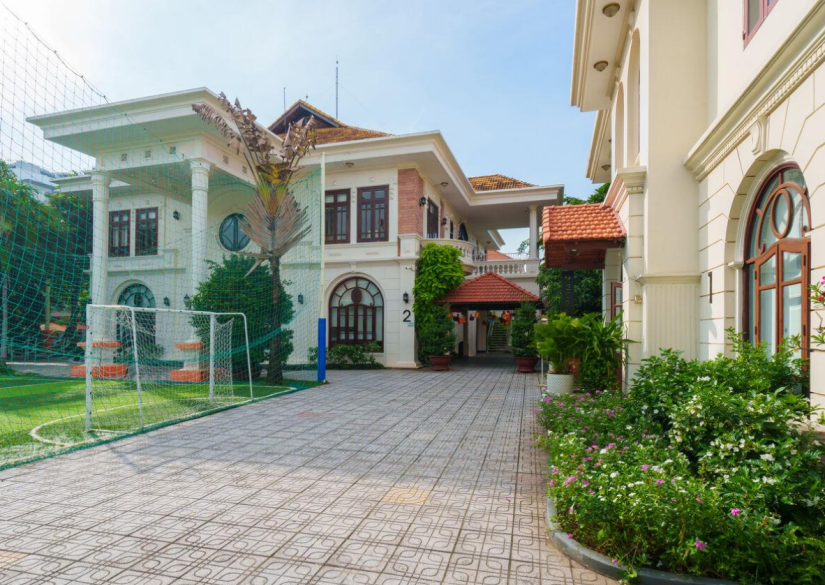
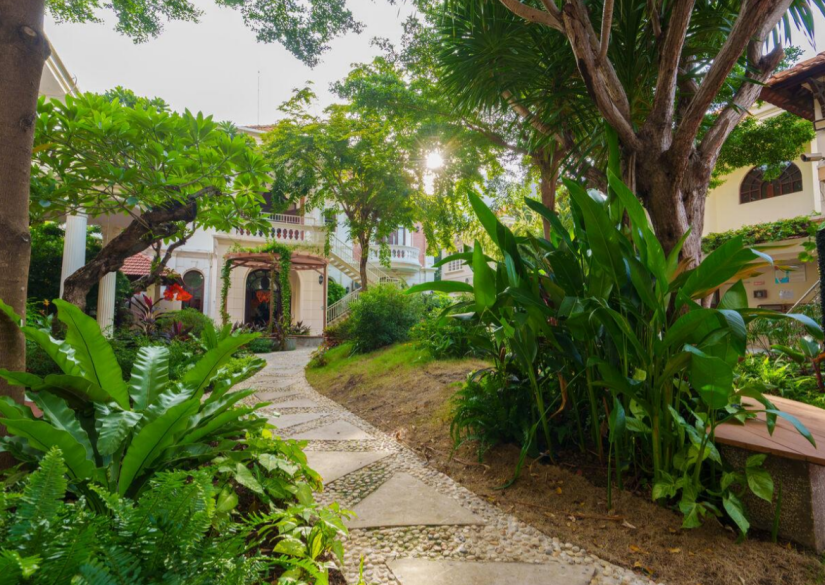
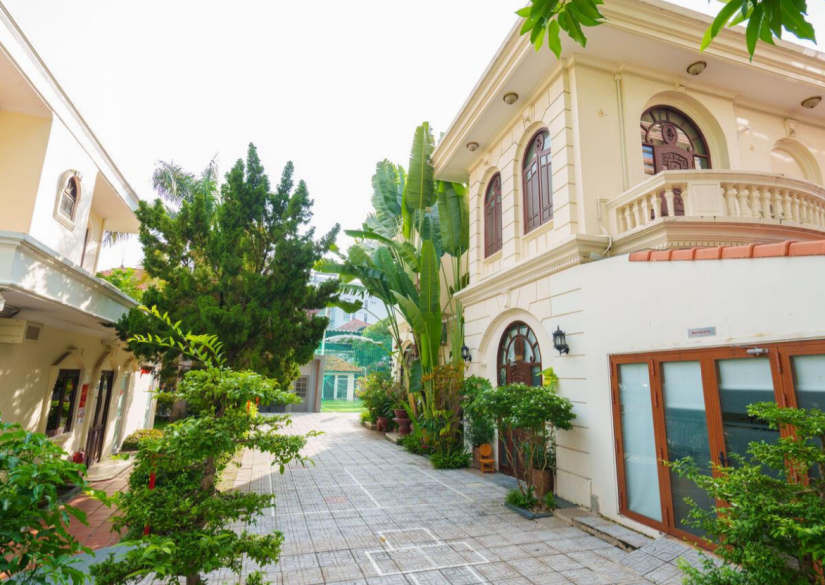
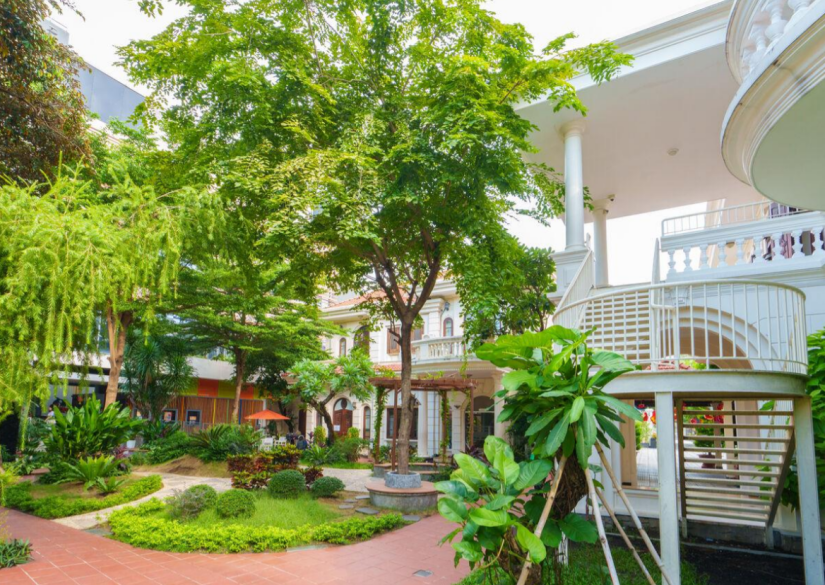
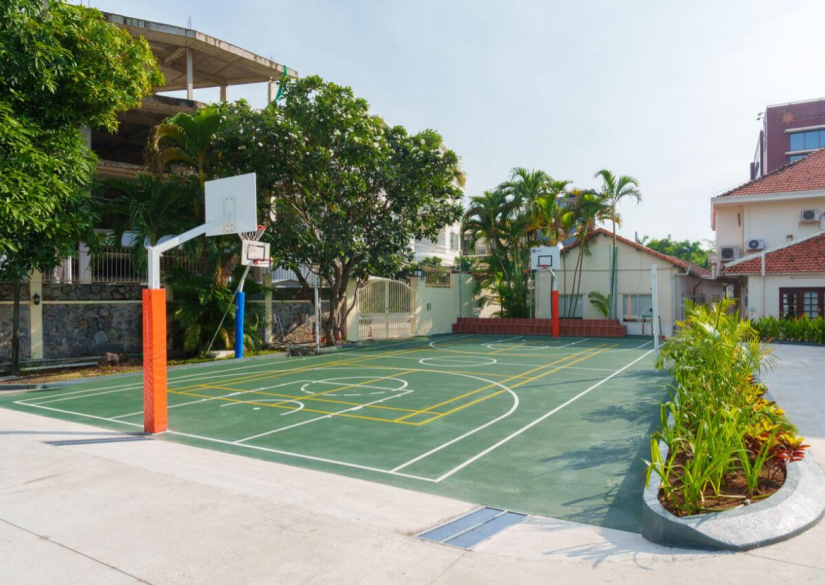
EIS is located in Ho Chi Minh City, in southern Vietnam, and is a compact green campus with 12 low-rise villas. Between the buildings there are walking paths, benches, and courtyards for outdoor recreation. The infrastructure includes:
- High-tech classrooms with interactive equipment,
- Science laboratories with experiment kits and project work,
- Art, music, and theater studios,
- Specialized rooms for individual sessions and self-study,
- Multimedia libraries for the junior and senior sections,
- Dining hall,
- Medical center.
The campus features indoor and outdoor sports facilities:
- 25-meter heated swimming pool,
- Tennis and pickleball courts,
- Multi-purpose sports hall,
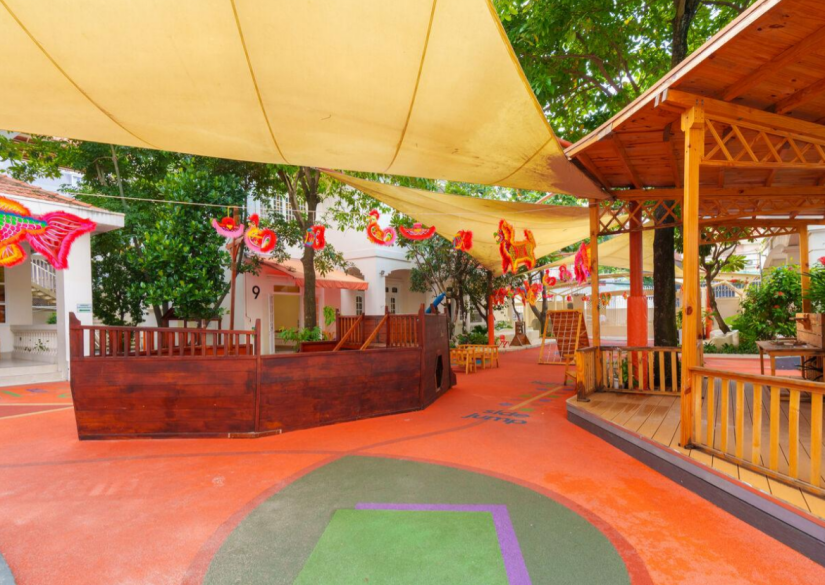
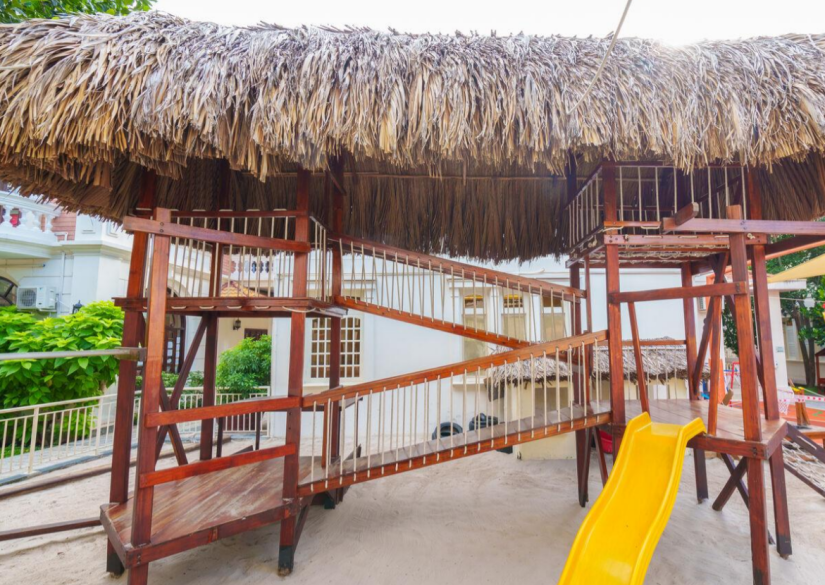
- Playgrounds for younger students,
- Two football fields,
- Three multi-purpose team sports courts.
EIS operates several minibuses serving residential areas of Ho Chi Minh City and its nearby suburbs: the buses transport children to and from school, following pre-registered routes that can be supplemented with stops on request.
Admission dates and extra charges
The academic calendar consists of two semesters:
- Fall: August–December,
- Spring: January–June.
Classes are held on weekdays; rest days include weekends, national and international holidays, and seasonal breaks.
The tuition fee already includes textbooks, most stationery for younger students, some extracurricular activities and most excursions, accident insurance, and English language support. Additional expenses include:
- Administrative and registration fees, deposits,
- Meals,
- Some extracurricular activities,
- School uniform,
- School bus,
- Individual tutoring,
- Exams,
- Personal expenses.
Enrolment process
EIS welcomes new students throughout the entire academic year, regularly organizes Open Days to familiarize prospective students with the campus, educational staff, and curriculum.
The admission process includes several stages:
- Submission of the registration form and required documents,
- Taking tests in core subjects and an interview,
- Receiving an official letter of acceptance,
- Payment of fees and tuition.
Enrolment statistics
EIS is very popular among local and international students, so applicants often end up on the waiting list. The admissions office recommends submitting an application well in advance of the actual start of studies according to age.
Perspectives
Thanks to academic achievements, active participation in sports and creative activities, students gain valuable knowledge and skills, successfully pass their final exams and enter their chosen universities:
- University of Calgary,
- University of Sydney,
- University of Amsterdam,
- King’s College London,
- University College London,
- Monash University,
- University of British Columbia and many others.
Entry requirements, how to apply, what is required to enrol
Applicants to EIS must provide:
- Personal documents of the child and one of the parents/guardians: international passport, medical insurance, visa or residence permit,
- Academic transcripts for the last two school years,
- A recommendation letter from the previous place of study.
Admission is based on entrance examinations.
Scholarships European International School Vietnam HCMC, International European School in Vietnam
The annual tuition fee can be reduced by 1.5–6% when paid in several installments or with full coverage of the academic year cost at once.
EIS provides family benefits:
- 50% discount on the enrollment fee and 5% off the tuition course cost for the second child,
- 100% discount on the enrollment fee and 10% off the tuition fee for the third and subsequent children from the same family.
A limited number of scholarships are awarded to students who are active in all areas of school life: academics, sports, social life, and creative pursuits. Awards cover from 15 to 100% of the cost of one year of study.
EIS participates in the international Nsuli scholarship program: 50 outstanding students from the network are sent to study at schools abroad, receiving full funding.
Institution on the map
Residence permits, citizenship and other services
- Guardianship services during the studies
- Student supervision
Review about European International School Vietnam HCMC, International European School in Vietnam
Recommendations on when to apply
| Language courses, schools and children's language camps | Primary and secondary education - private schools | Preparation programmes for entering universities - higher education | Higher education (after completing accredited programs A-level, IB, High School) - Bachelor, Master, MBA |
| - we recommend to apply 6-9 months before the start of the course (some camps and schools offer discounts for early booking or for lengthy study programs) - there are some very popular and high demand children's camps, where the applications need to be submitted 1 year in advance (in particular Switzerland , Great Britain , USA , Canada , Austria) | - we recommend to apply one year before the start of the training program, - some schools have a specific time frame (September-November - please specify an individual school) - some schools require tests in several stages (UKISET, internal tests of the school: English, mathematics, logics, subjects, interview, some require a personal visit) | - we recommend to apply one year before the start of the program, - for Foundation and Pathway programs, IELTS and TOEFL certificates are usually required, respectively | - recommended submission one year before the start of the program, - the deadline normally closes in January, for TOP HEIs and, as a rule, in March in other universities - for a bachelor, a Foundation or Pathway preparatory program a completed A-level, IB, High School + IELTS / TOEFL are required - for Masters you need a graduated higher education, in some cases you need a pre-Masters program - MBA requires completed higher education, work experience preferably at least 2-3 years, etc. |