Dulwich College


In the process of preparing the material, we referenced the following sources: Wikipedia, GOV.UK
Programs and prices, tuition fees in Dulwich College


About the educational progam: international students are offered a deeper program of studying the basic school subjects, a higher level of complexity, a greater amount of knowledge for mastering. This is a period of laying a solid foundation of knowledge, which will subsequently be supplemented and deepened.
The proposed disciplines are included in the program:
- English;
- Physical Culture and sport;
- Geography;
- The Basics of Religion;
- Dramatic art and theater;
- Music;
- Art;
- Mathematics;
- Design;
- Latin language;
- Design;
- Computer techologies;
- Foreign language (you can choose between French or Spanish).
About the educational program: At this age, the focus is on quality, effective preparation for GCSE testing. Obtaining a profile certificate with high scores means successful mastering of the secondary school program, suitable for preparation for entering the selected university - the certificate is highly regarded worldwide and is valued by the admission commissions.
International students study the following disciplines:
- Chemistry;
- English;
- Biology;
- Physical culture and sport;
- Geography;
- Physics;
- Drama and theater;
- Foreign language (optional - Spanish or French);
- Design;
- The Basics of Religion;
- History;
- Music;
- Art;
- Mathematics;
- Computer techologies.
Also, each student chooses additional (elective) subjects for the personal curriculum:
- English literature;
- A foreign language (Greek, Chinese, German or Latin).
About the educational course: At this stage of education, students are deliberately preparing to enter the chosen higher education institution for a priority specialty, taking into account the requirements for entrants. An individual curriculum is drawn up: it contains only 4 of the highest-priority disciplines, and in the second year of training (grade 13), complexity can be facilitated.
International students can choose desciplines from the following list:
- Ancient history;
- Music;
- English;
- Computer science;
- Biology;
- History of art;
- Geography;
- Mathematics;
- Design;
- Art;
- Physics;
- History;
- Economy;
- Policy;
- Chemistry;
- The Basics of Religion;
- Physical culture and sport;
- Theatrical art and craftsmanship;
- Classical languages: Greek, Latin;
- Foreign languages: Chinese, German, Spanish, Italian, French.
Description of Dulwich College
- Language of instruction: English
- Established: in 1619
- Location of Dulwich College: United Kingdom, England, London
- Student age: 11 to 18 years
- Studying programs in Dulwich College: Elementary and Secondary School, A-level, GCSE
- Total number of students: 1670 people, 130 of them on the boarding school
- Type of study: single (only young men)
- Type of accommodation: residence.
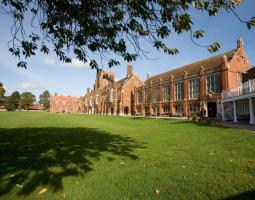
Dulwich College is one of the male best college in UK, an elite and prestigious educational institution whose history has more than 380 years of successful work. The institution has an excellent reputation, respect among colleagues and students from all over the world. Many well-known personalities have studied at its walls: for example, the author of detectives Raymond Chandler, cricket champion Trevor Bailey, public and political figures, athletes and artists. Dulwich College ranks 61st among 450 participants in the non-state schools ranking according to The Sunday Times. The total area of the school reaches 70 acres of picturesque, well-maintained, well-equipped land with everything necessary for comfortable living and learning.
The main goal of schooling is full preparation for successful admission to the chosen university of Great Britain, Europe and the world, comprehensive development and the formation of a unique personality. They honour the age-old traditions of British classical education, practice mentoring, create the most comfortable conditions for children to develop and grow. Among the graduates the most popular universities are the following:
- University of London
- Cambridge
- Business High School
- Oxford and other high schools of Britain and the world, including prestigious European and American ones.
Dulwich College provides a powerful knowledge base for entering the best, most prestigious universities. Graduates of the educational institution enter even universities with strict selection and high requirements. The main specializations are exact and natural sciences, as well as economic disciplines. Thanks to an individual, personal approach, deep and thorough study of subjects, students enter the chosen university without any problems. Teachers are always ready to help with advice, advice, to fill out the application and compile a package of documents, to gather information about admission and university requirements to their applicants.
The number of pupils reaches 1,670 people - these are boys of 7-18 years old. Approximately 130 of them - foreign students are studied on the terms of a full board, enjoying full support for full adaptation to the linguistic and academic conditions of the new country.
The academic building is divided into 4 sectors:
- Preparatory school (7-10 years)
- Junior school (11-11 years)
- Secondary school (13-16 years)
- High school (17-18 years).
Differentiation by age groups make learning more pleasant, comfortable and effective, creates a friendly atmosphere. The gradual development of students corrects the curriculum. Each level of education is made up of its own list of subjects and disciplines for study - compulsory for students of any age is art, languages, exact and humanitarian (social) sciences. Each student also determines for himself the priority kind of sports and physical activity, which he is constantly engaged in. At the end of the course, all students undergo a full test, which determines their readiness to continue their education at the next level.
Dulwich College is very strict discipline. Much attention is paid to the formation of full-fledged leisure, comprehensive development, a large number of electives and clubs of interest. The pupils are brought up valuable social qualities: independence, ambition, education and courtesy, initiative, responsibility.

Educational process
As students progress, they can specialize in the areas that interest them most. Curriculum enrichment encourages students to explore connections across academic disciplines and with their extracurricular interests in addition to preparing for exams. The Laboratory initiative brings science and the arts together. The Art department collaborates with British artists, architects, and designers.
The disciplines offered in Year 7 are:
- Art,
- Chinese,
- Design and Technology,
- Drama,
- English,
- French or Spanish,
- Geography,
- History,
- Informatics,
- Latin,
- Mathematics,
- Music,
- Physical Education,
- Religion & Theology,
- Science,
- Wellbeing.
In Year 8, students continue French or Spanish and can choose Latin, Chinese, or German. All students in Years 7–8 have two Games sessions. Year 10 students visited Tate Modern as part of their GCSE Art course, exploring contemporary art and making sketches.
Throughout the Senior School, each student receives around 100 hours of personal development sessions. Topics include mental health, emotional literacy, resilience, responsible digital citizenship, careers, and life skills. Students have access to confidential counseling. Additional support comes from safe spaces, including the Yelcho Room, trained wellbeing staff, chaplaincy, and peer mentoring.
Scientific achievements
School teams have reached national finals in football, hockey, swimming, and water polo.
Things to know about
- The current Blew House building was constructed in 1934. It has been reserved exclusively for Senior Boarders since 1979, and its interior was rebuilt in 2000,
- The first school-wide Academic Enrichment Day was called Dulwich Creative.
Accommodation, meals, prices
The school has 4 comfortable and cozy boarding houses: Blew House, Ivyholme, Old Blew, and The Orchard. The rooms are fully furnished and equipped with everything necessary. Boarding is available from Year 9, with Full Boarding, Weekly Boarding, and Occasional Boarding options. The boarding community represents more than 20 nationalities.
Blew House accommodates 40 students in Years 12–13 in single study rooms with en-suite facilities. Ivyholme accommodates 40 students in Years 12–13 and offers study rooms with en-suite facilities. It is located at the heart of the campus, with views of the playing fields from its eastern side. Old Blew and The Orchard together accommodate 60 students in Years 9–13. The houses are located next to the campus and are surrounded by gardens.
Constantly on duty are experienced and qualified educators: they monitor the observance of cleanliness, order and discipline, are responsible for the safety of children, form their leisure, are always ready to help with the solution of any issue. Showers and toilets are located on each floor, as well as common lounges with board games and a media center. For each student there is a private place for independent studies, quiet and peaceful. Housemasters are supported by resident tutors and visiting tutors. Each boarding house has a matron who cares for students’ health and wellbeing and manages cleaning and laundry.
The on-site Medical Centre provides boarders with access to qualified nursing care and advice 24/7. A doctor visits every weekday. A boarding link nurse visits regularly and gives talks on health issues. The center can provide catch-up vaccinations and annual flu vaccines. Resident boarding staff are trained in first aid.
Meals are also organized according to the boarding house system. The menu is regularly updated taking into account the wishes and requests of students: the diet includes dishes of various national cuisines, including Muslim, vegetarian and Jewish foods. Breakfast offers fruit, cereal, toast, and several cooked options. Dinner offers three main courses to choose from, a salad bar, and desserts, including fruit and yogurt. Special diets are catered for. The Boarders’ Catering Committee meets regularly to discuss students’ requests.
Students can meet regularly with their parents, contact them by phone or internet at any time. Parents can always turn to teachers and educators, discuss the achievements and progress of the child, his involvement in extra-curricular, sports or creative activities. Especially such support is important for foreign students and for parents who first sent a child to study in another country, and school staff understand this perfectly. Absence of isolation and constant contact with parents forms a healthy school atmosphere and moral comfort for each student, makes adaptation quicker and easier.
Subjects and sports
Activities Dulwich College
Every month, students are planned to stay in advance, by day: every day they are given ample opportunities for interesting, diverse employment. Contests, quizzes, competitions, thematic evenings, walks and city tours, sports, talent shows and concerts, trips to entertainment and education centers are constantly arranged. Seasonal (summer and winter) camps for scouts, adventure shifts and combined courses are based on the college.
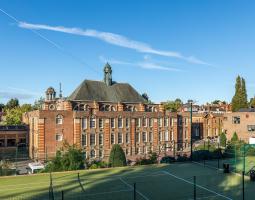
There are wide opportunities for active recreation and sports development of children: professional instructors and coaches work with them, so you can start learning a new sport from scratch. On the campus teams are assembled for hockey, rugby, football and basketball, and there is a section of martial arts. There is a spacious indoor pool, football and rugby fields, a cricket lawn, tennis courts, a private boat station. Among the students there are constantly held competitions, relay races and competitions, demonstration performances and team matches are organized, including with young men from other schools.
From the creative circles and studios as the most popular one can note:
- The debate,
- The game of poker,
- The cinematography,
- The magic,
- The chess club,
- The political circle,
- Japanese animation,
- Music studio.
The cadet corps works: here boys learn archery, martial arts, methods of first aid and survival in extreme situations.
Dulwich College is an active participant in the Duke of Edinburgh Award Scheme (for an additional fee): it is an opportunity to fully demonstrate its abilities in the field of public works, physical abilities and achievements, hikes and expeditions, significantly increase endurance and personal potential.
All Year 9 students take part in a program offering the Combined Cadet Force, Duke of Edinburgh Award, and Scouts. The entire program was planned to run jointly with James Allen’s Girls’ School from 2025. Senior students devote around 5000 hours a year to community projects. The house system brings students from Year 3 through the final year of Sixth Form together in more than 150 sporting and cultural competitions.
Boarders go on trips around London to museums, restaurants, cinemas, and theaters. They attend Crystal Palace matches and go karting, visit Go Ape, and play paintball. There are introductory visits to Oxford, Cambridge, and other leading universities. The boarding houses also organize their own concerts, cultural celebrations, and formal and informal dinners.
Trips are available to students in all years and take place in the evenings, on weekends, and during vacations. Expeditions include scientific fieldwork in Geneva, language immersion in China, and leadership development on Dartmoor. Examples of half-term activities include a rowing camp, a debating competition, Duke of Edinburgh Award preparation in Wales, studying French in Paris, and a trip to a rugby tournament.
The annual vacation program offers:
- Water sports,
- Sailing,
- Trips to battlefields,
- Skiing,
- Language exchanges,
- Theater tours,
- Music tours,
- Sports tours,
- Art trips,
- Combined Cadet Force and Scout preparation camps on weekends.
School societies usually meet at lunchtime or after classes. Politicians, historians, poets, and musicians are invited to speak. Many societies are run by students, with staff helping to organize activities. Students can start new societies to reflect their interests. Teams from the Chemistry Extension Club and Debating regularly take part in national and international competitions.
The Union Fair takes place at the start of the fall term in the Auditorium in the Laboratory. Union meetings take place twice a term, and a new Union Secretary is elected annually from Year 12 candidates. Friends of Dulwich College regularly provides grants to school clubs. Dulwich Mechanic received a grant to buy resources to start the society.
The club program offers activities in the following areas:
- Natural sciences: Biology Breakfast Club, BioMedSoc, ChemSoc (Chemistry Society), CAPS (Chemistry Advanced Problem Solving) Club, Science Research Society, and International Young Physicists’ Tournament,
- Technology: Aviation Society, Physics, Engineering and Formula One Society, Engineers Club, and Dismantling Society,
- Computing: Lower School Code Club, Coding Society, Middle School A.I Society, and Upper School AI Society,
- Mathematics and business disciplines: Middle School Maths Enrichment, Business Analytics Society, Corporate finance society, Economics Society, Finance Society, and Investment Society,
- Humanities: Law Society, Linguistics Society, Philosophy Circle, Psychology Society, Geography Society, and History Society (US) for Upper School students,
- Languages and culture: MFL Society, Francophone Society, African & Caribbean Society, Ancient Theatre Society, and Senior Classics Society,
- Art: Art Society, Middle School Art Club and Social, Architecture society, and Knitting Club,
- Literature: LitSoc, Chameleon Creative Writers, the Upper Case creative writing group, Word of Mouth Book Club, and Book Award Shadowing Club (TSBA),
- Reading: separate Year 7 Book Club and Year 8 Book Club,
- Games: Mahjong Society, Board Games Society, Historical Board Games Society, Warhammer Society, and GeoGuessr Society,
- Sports and practical skills: SportSoc, Ultimate Frisbee, First Aid Society, and Football Debating Society,
- Social and religious interests: Model UN, Exploring Christianity, Hindu Society, and PrideSoc,
- Research and the environment: Astronomy Society, Climate Change Society, and CREST Award,
- Media: Blog Society, The Despatch, The Pursuit of Knowledge Magazine, and Upper School Film Society,
- Other groups: DCRC, RS Gym, Rollercoaster Society, Dillettantes Society, and Snorri's Society.
The Art department organizes major exhibitions of students’ work throughout the school and regular trips to New York, Berlin, and St Ives. School productions have been staged at the Sam Wanamaker Playhouse at the Globe Theatre and Queen Elizabeth Hall on the South Bank. Student actors and technicians regularly take part in the Edinburgh Festival Fringe.
The concert program offers classical, world, jazz, and contemporary music. Performance venues include Pizza Express Live in the London districts of Holborn and Soho.
Advantages
- In 2018, under the A Level program - 62.62% of students received marks A - A *; 84.44% of GCSE program participants passed the final exams for A - A *,
- The Good Schools Guide published a review of the Senior School, highlighting its distinctive strengths and range of opportunities,
- The annual program offers 150 concerts and performances. Venues include Southwark Cathedral and Cadogan Hall,
- The College has 200 sports teams that play in 1200 inter-school matches each year,
- The inter-school sports program offers 17 sports,
- The trips program offers more than 90 expeditions,
- The Union of Societies coordinates more than 50 active clubs and societies.
Facilities and equipment at Dulwich College
There is everything necessary for comfortable training and stay of students on the campus: spacious and bright classrooms for classrooms, scientific laboratories for practical lessons, as well as numerous studios and studios for art and creativity (dance, music, photography, etc.). The school has the Edward Alleyn Theatre. Boarders use the Sports Centre.
Vehicle access to the College is only from Dulwich Common, the South Circular A205. Visitor parking is limited.
| Train station | Walk to the school |
|---|---|
| West Dulwich | 5–10 minutes. The train journey from Victoria takes 12 minutes |
| Tulse Hill | 15 minutes |
| North Dulwich | 15 minutes |
| Gipsy Hill | 20 minutes |
Bus routes 3, P4, P13, and 115 pass close to the College. Stops for the following services are within walking distance:
- 12,
- 37,
- 40,
- 63,
- 68,
- 176,
- 185,
- 227.
On school days, Foundation Schools' Coach Services provides transport between the College and the following areas:
- Keston, Orpington, Petts Wood, Bromley, Shortlands, Beckenham, and Penge,
- West Wickham, Lancaster Gate, Bayswater, Notting Hill Gate, Kensington, and Knightsbridge,
- Chelsea, Victoria, Pimlico, Westminster, London Bridge, Lambeth, and Battersea,
- Kennington, Stockwell, Clapham, Wandsworth, Balham, Tooting, and Putney,
- Wimbledon, Mitcham, Streatham, Rotherhithe, Surrey Quays, and Deptford,
- Greenwich, Blackheath, Lewisham, Brockley, and Honor Oak.
Admission dates and extra charges
Charges for Years 3–8 include education services and a compulsory charge for school lunches. For Years 9–13, lunch is excluded from tuition and can be booked and paid for separately. Weekly Boarding and Full Boarding include education services, school lunches, accommodation, and applicable meals.
The academic year is divided into traditional trimesters, interspersed with vacations for students' leisure:
- Autumn: from September to December,
- Spring: from January to March,
- Summer: April - July.
Please note that there are some surcharges and fees not included in the basic cost of the program:
- Registration fee,
- Deposit for confirmation of place on the program,
- Semester deposit,
- Supporting English language courses for foreign boarders,
- Registration in the guardian agency and guardian services.
A Breakfast Club is available from 8:00 to 8:45 for Pre-Reception, Reception, Year 1, and Year 2.
Extras:
- Registration fee (for a programme/course) 300 GBP
- Deposit for a course/programme 3800 GBP
Enrolment process
Admission to Dulwich College is academically selective for both day students and boarders.
Entry requirements, how to apply, what is required to enrol
Applicants must submit a minimum package of documents:
- a character from a previous place of study certified by the school board
- report card for the last 2 years.
Remember that, as in all music schools in London, the number of vacant seats is limited, so it is worthwhile to attend to the filing of documents in advance.
Scholarships Dulwich College
The College offers scholarships for academic, sporting, and cultural achievement. Academic scholarships are awarded to boys who achieve the highest results in the entrance examinations and interviews.
Literature and references

Institution on the map
Residence permits, citizenship and other services
- Guardianship services during the studies
- Student supervision
Review about Dulwich College
Recommendations on when to apply
| Language courses, schools and children's language camps | Primary and secondary education - private schools | Preparation programmes for entering universities - higher education | Higher education (after completing accredited programs A-level, IB, High School) - Bachelor, Master, MBA |
| - we recommend to apply 6-9 months before the start of the course (some camps and schools offer discounts for early booking or for lengthy study programs) - there are some very popular and high demand children's camps, where the applications need to be submitted 1 year in advance (in particular Switzerland , Great Britain , USA , Canada , Austria) | - we recommend to apply one year before the start of the training program, - some schools have a specific time frame (September-November - please specify an individual school) - some schools require tests in several stages (UKISET, internal tests of the school: English, mathematics, logics, subjects, interview, some require a personal visit) | - we recommend to apply one year before the start of the program, - for Foundation and Pathway programs, IELTS and TOEFL certificates are usually required, respectively | - recommended submission one year before the start of the program, - the deadline normally closes in January, for TOP HEIs and, as a rule, in March in other universities - for a bachelor, a Foundation or Pathway preparatory program a completed A-level, IB, High School + IELTS / TOEFL are required - for Masters you need a graduated higher education, in some cases you need a pre-Masters program - MBA requires completed higher education, work experience preferably at least 2-3 years, etc. |