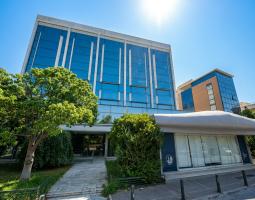
Costeas-Geitonas School, Private school Costeas-Geitonas



Programs and prices, tuition fees in Costeas-Geitonas School, Private school Costeas-Geitonas

Pre-School & Kindergarten
- Age of students — 4–6 years.
The goal of the program is to give young children a confident start and help unlock their abilities. Learning is structured in a play-based format: children explore the world and interact in a special learning environment, actively familiarizing themselves with the Greek and English languages.
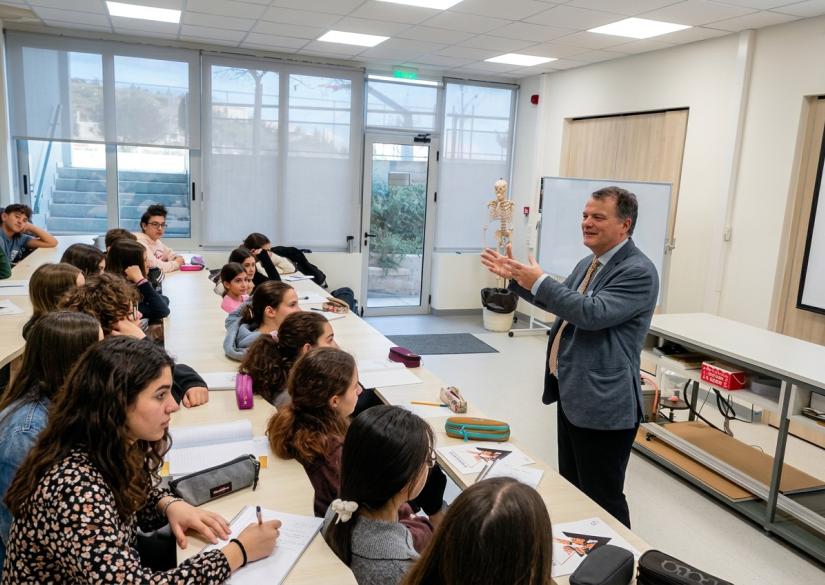
Each class has two specialists: a kindergarten teacher and an English language teacher. Great attention is paid to the children's interaction with the surrounding environment: students spend a lot of time on the beautiful grounds, outside the classroom, and outdoor play and activities are encouraged. The school courtyard was designed using eco-friendly materials by award-winning architect Paraskeva Polyanova.
The foundation of the curriculum consists of 6 interdisciplinary themes that are combined with the subject areas of the National Curriculum: mathematics, natural sciences, language, social studies, and art. Inquiry units are included in the program.
Each year, the entire teaching staff collaboratively develops the inquiry program: both the annual plan (horizontal planning) and the connections between different grade levels of the program (vertical) are planned.
Classes in the international diploma preschool department begin with morning reception from 8:00 to 8:30, and the main program ends at 14:55. After that, until 17:00, the SMART zone (science, music, art, relaxation for the future, technology) operates, where children can:
- Pursue their interests,
- Develop their talents,
- Discover hobbies,
- Develop their personality through sports, music, and art.
Classes in the SMART zone are held in small groups, which are formed taking into account the age, abilities, and interests of the children. Classes are led by experienced teachers and coaches.
For parents who want to leave their child in care for longer, supervision services are available. During this time, children participate in a rich program: they play, engage in creative activities, and develop social skills in a group.
To keep parents always informed about their child's school life, two main communication channels are used:
- Personal student diary: teachers record important information about the day's events and observations in it daily.
- Monthly email: parents learn about upcoming events, holidays and important dates, and the breakfast and lunch menu.
In early July, the CGS preschool program launches a special summer program for young children, and it is open not only to students of the school, but also to children from other institutions. The program includes a wide range of exciting activities both indoors and outdoors:
- Swimming,
- Dancing,
- Cooking,
- Storytelling,
- Puppet shows,
- Library visits,
- Visual arts,
- Crafts,
- Ceramics,
- Gardening,
- Short excursions.
In addition, breakfast, lunch, and school bus transfer are included — all to make children's summer rich, creative, and carefree.
Primary School
- Age of students — from 7 years old.
It combines an interdisciplinary approach and a national curriculum developed by the Ministry of Education, Lifelong Learning and Religious Affairs in collaboration with the International Baccalaureate Organization. Its main goal is to ensure the well-rounded development of children, teaching them not merely to acquire knowledge, but to apply it in real life.
Instruction is conducted primarily in Greek, while significant attention is given to the study of English. The program places emphasis on developing student independence and their active participation in the educational process.
Through lessons, children develop key skills in five areas:
- Communication,
- Self-organisation,
- Research skills,
- Thinking,
- Social skills.
CGS students study English as their first foreign language from the very beginning, and from the third year they can choose a second foreign language: French, German or Spanish. The teaching methodology is designed to suit every child:
- Students are divided into groups with similar knowledge levels — this helps make the process more effective,
- Teachers use modern methods that take into account different educational needs.
Language learning gives students valuable social experience: children learn to communicate with people from other countries, understand that different peoples have their own traditions, ways of life and worldviews, develop respect for other cultures, and improve their intercultural communication skills. For newcomers entering the CGS preparatory class, a special language introduction program is provided. Students can start with English or immediately choose a second language — depending on their preferences and level of preparation.
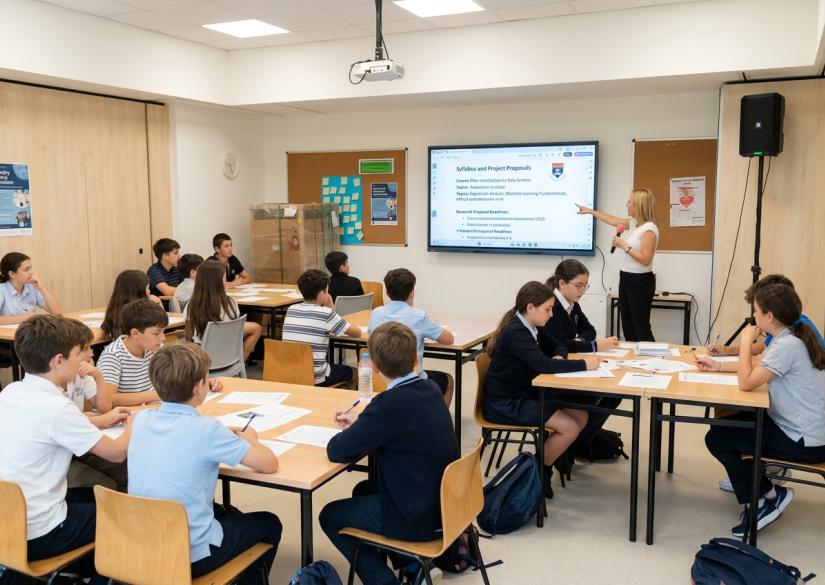
As part of the school curriculum, children participate in interdisciplinary and subject-based research projects: this helps them learn to analyze information, work with sources, and present the results of their work.
Extracurricular activities are organized with students' age in mind. Students from first to fourth grade can sign up for clubs that run in the morning in two cycles per academic year:
- First cycle: October — February,
- Second cycle: February — May.T
Each student chooses 2 clubs by priority: one for the first cycle, another for the second. The school endeavours to place students in the club they chose first, in one of the two cycles.
Students in grades 5–6 participate in clubs and school teams that run in the morning from October to May. Here each child chooses 3 clubs by priority, but attends only one for the whole year — the one they like most. If a child wants to join a school team, they are selected by a coach within the morning program.
Special attention is paid to physical development. In third grade, during a physical education lesson, all children are assessed for readiness to participate in the school athletics team. If a child does not wish to take part in athletics, they are placed in their desired academic group — for this purpose the administration contacts the parents.
Middle School
- Age of students — 11–16 years.
This is a continuation of the Primary Years Program and preparation for the Diploma Program. At the same time, the course is fully self-contained: students can simultaneously complete the Geniko Lykeio program and sit the pan-Greek exams.
The program includes 8 subject groups studied by all students:
- Language and literature (Modern Greek),
- Mathematics,
- Social studies,
- Sciences,
- Foreign languages (English, French, German and Spanish available),
- Visual arts,
- Physical education and healthy lifestyle fundamentals,
- Design.
All subjects are taught and assessed in accordance with the guidelines of the international diploma system. Learning is structured around 6 global contexts — broad themes that make learning modules relevant and engaging. For example, the context «Fairness and Development» may be explored:
- In social studies classes — through examining the role of women in society's development,
- In mathematics lessons — within a statistics module, etc.
Each student develops a variety of approaches to learning — a set of foundational skills and dispositions that support academic success. These skills are developed across all subjects and find practical application in the personal project, which is a key milestone of the curriculum (completed by all students in their final year of the MYP).
Another key element of the program is «Service as Action». Students apply their knowledge in practice: they help those around them and participate in social projects independently or under a teacher's guidance.
Students record their actions and reflections on the Managebac platform. The program is overseen by a dedicated coordinator who helps students make sense of their experiences and see the connection between learning and real life.
High School
- Age of students — 15–18 years old.
The senior school operates under the Greek Lyceum Program: it is based on the recommendations of the Ministry of Education, Lifelong Learning and Religious Affairs of Greece. The program prepares students for entering universities — both in Greece and abroad — and provides all the necessary knowledge for successful university studies.
CGS recently introduced an innovative curriculum with a focus on individual support: each student is helped to unlock their potential through well-designed teaching methods. Classes run 5 days a week, 8 academic hours each day; in addition to the main program, students can attend supplementary classes from 15:00 to 16:50.
A' Lyceum students (the first year of senior school) have 5 more hours per week than the Ministry of Education requires. Here is how the additional hours are distributed:
- 4 English language lessons,
- The option to choose classes in French, German, Mathematics, or Modern Greek (2 lessons),
- Interest-based clubs — attended by all students,
- Special courses within the MYP programme, as this is the final year of study under that programme,
- Additional opportunities after school (from 15:00 to 16:50):
- The SMART School extracurricular program,
- The Pre‑DP program,
- Foreign language club,
- The Academia program (by teacher recommendation).
B' Lyceum students (the second year of senior school) also have 5 more lessons per week than set by the Ministry of Education. The additional hours are distributed as follows:
- 4 elective lessons in addition to the compulsory ones (9 lessons in total),
- 1 lesson dedicated to essay writing.
C' Lyceum students (the third year of senior school) have 8 more hours per week than provided for by the Ministry. Distribution of additional hours:
- 6 elective classes in addition to the compulsory subjects,
- 2 additional essay writing lessons.
Diploma Program
- Age of students — 15–18 years old.
This is a two-year pre-university program in English, recognized worldwide. Students can enrol at the end of Year 10 (A' Lykeiou) — it corresponds to Years 11–12 (B' and C' Lykeiou). It is aimed not only at preparing students for entering the world's leading universities (without additional exams), but also at a successful life after graduation, helping future students develop intellectually, socially and emotionally.
It includes 6 subject groups:
- Studies in language and literature,
- Language acquisition,
- Individuals and societies,
- Sciences,
- Mathematics,
- The arts.
Students choose one subject from each group — 6 disciplines in total; 3 of them are studied at higher level, 3 at standard level. Instead of an arts subject, students may choose an additional course in natural sciences, social studies or foreign languages.
At the heart of the curriculum are 3 core elements that connect all subjects:
- Extended essay,
- Theory of Knowledge,
- Creativity, Activity, Service.
At the end of the course, students sit final examinations and undergo external and internal assessment.
Each student is assigned a personal mentor who monitors academic progress and personal development and maintains communication with the student and their family.
The program offers many additional opportunities:
- Summer courses — held every year for those who will begin DP studies in the following academic year,
- Seminar on applying to universities abroad — held at the end of the first year of study: over two days, prospective students are introduced to the application process,
- Preparatory classes for SAT, TOEFL, BMAT, UKCAT, HPAT, TestDaF exams,
- Mock interviews — for applicants who have been invited to entrance interviews at foreign universities,
- Portfolio preparation courses «Architectural Design and Space» — for those interested in architecture or art and design. A portfolio is required for entering a relevant university.
90% of graduates were admitted to their first-choice universities and are currently studying in 1 different countries. Among the universities where CCS graduates study or have already completed their studies:
- USA: Harvard, Princeton, Yale, Stanford, Brown, NYU.
- UK: Cambridge, Oxford, UCL, Imperial College, LSE, King's College, Warwick, St. Andrew's, Edinburgh, Glasgow.
- Canada: University of Toronto, McGill, University of British Columbia.
- Netherlands: Erasmus University, University of Maastricht, Technical University of Eindhoven, University of Amsterdam, Technical University of Delft.
- Germany: Technische Universität München, Karlsruhe Institute of Technology.
- Belgium: KU Leuven.
- Italy: Bocconi University.
Description of Costeas-Geitonas School, Private school Costeas-Geitonas
- Location: Pallini, Greece,
- Year founded: 1973,
- Language of instruction: English,
- Type of education: mixed.
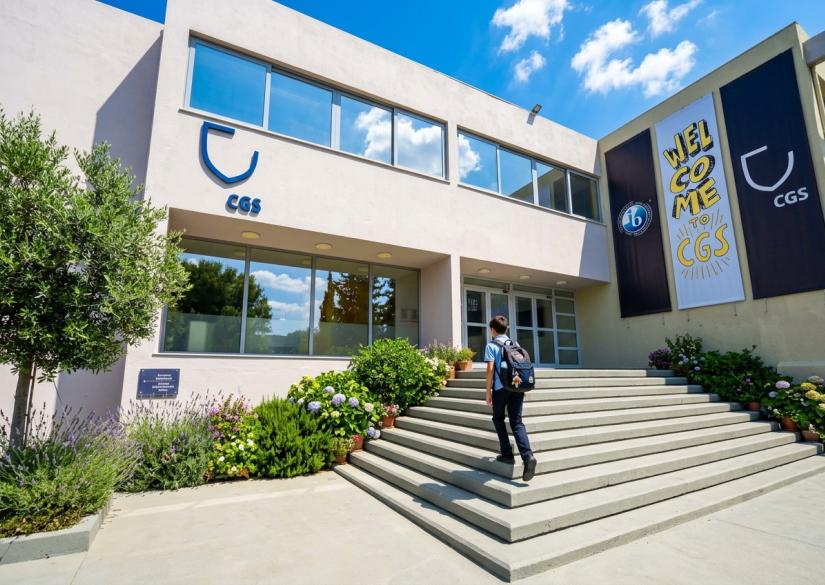
Costeas-Geitonas School — this is a large private school where you can study at all stages: from preschool age to senior classes (all 3 levels of the international diploma are available). It is one of the oldest and most respected private schools in Greece.
Currently, 1,910 students study here: the majority of them are Greek, but there are also students from other countries and children from mixed families. The school team includes 231 teachers and 278 staff members.
Officially accredited by the Ministry of Education, Research and Religious Affairs of Greece. International exams can be taken here: SAT, EDEXCEL, ECDL, IFA Grèce.
Part of the international Inspired Education Group: this network already unites 110+ schools in 24 countries and provides education to 80,000+ students worldwide.
Educational process
In the middle school years at Costeas-Geitonas School, students follow the Greek national curriculum, but instruction is based on International Baccalaureate standards. At the end, students receive the Apolytirio Gymnasiou certificate and the international MYP certificate; in tenth grade (MYP 5), students can additionally take the Pre-DP course.
In the upper school, each student chooses their own path: to study under the Greek national program and receive the Apolytrio Genikou Lykeiou certificate, or to complete the Diploma Program (DP) and receive the corresponding qualification.
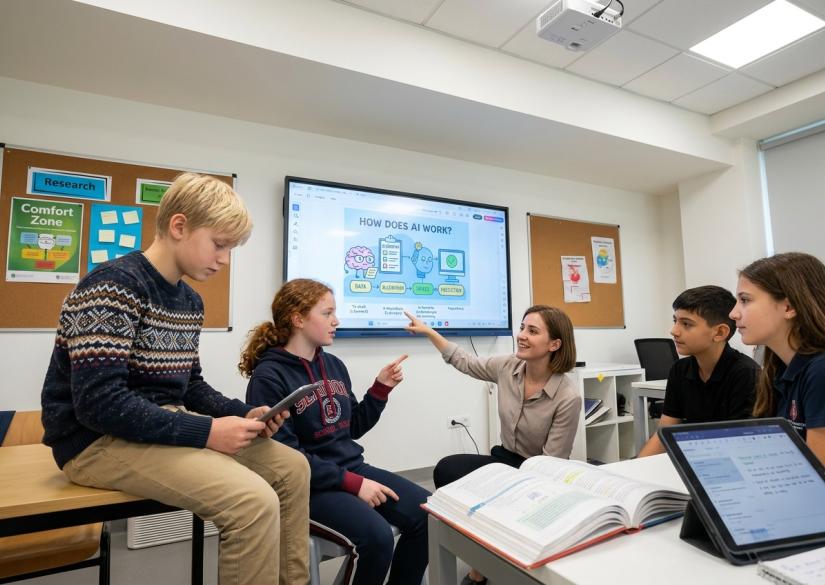
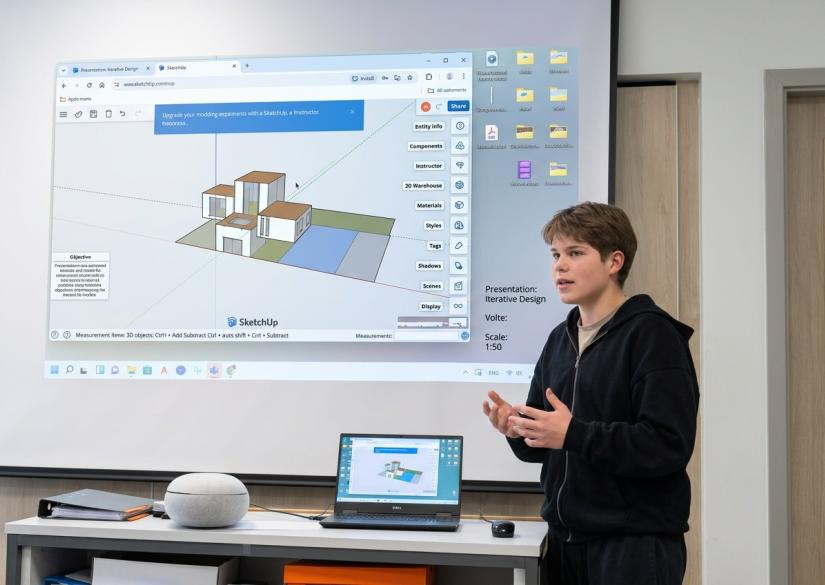
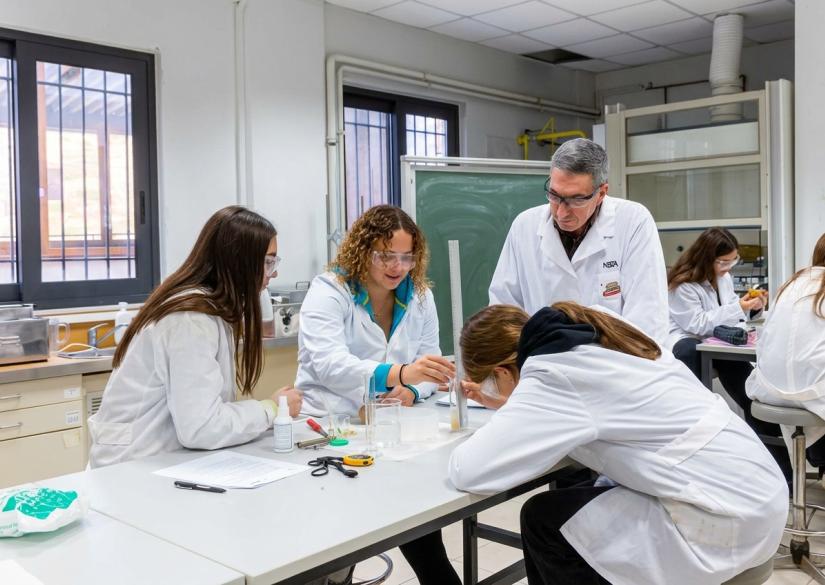
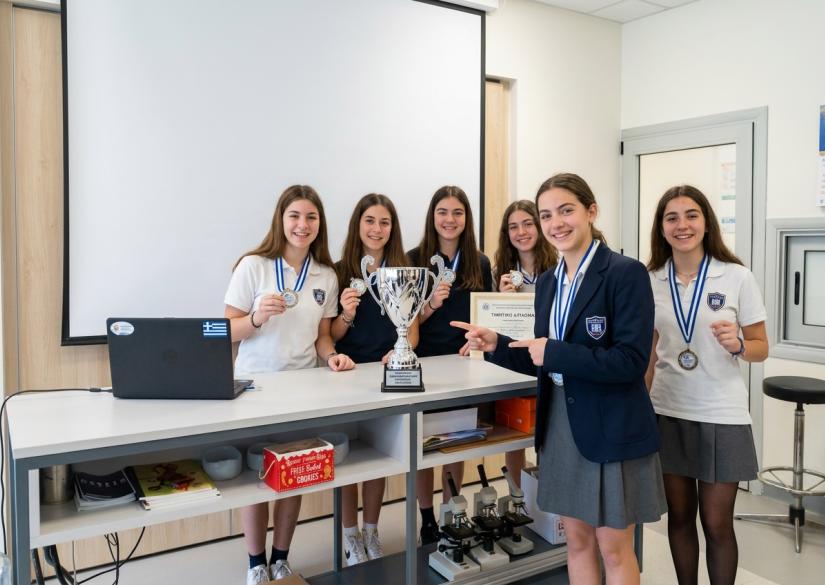
Hands-on learning is an important part of education: experiments in science classes, programming, robotics, design and 3D printing — from kindergarten through upper school and DP programmes.
The Junior Elite Athlete Programme and Elite Athlete Programme are the only programmes in Greece for those who want to combine studies with serious sporting achievement.
The CGS Conservatory provides high-quality music education recognized by the state: students learn to play a wide variety of instruments, from classical to contemporary music, study music theory, and are prepared for entry into musicology faculties. Classes are available for children from preschool age and for adults.
CGS actively collaborates with international and national organizations, runs teacher preparation programs, exchanges with European schools, conferences and seminars.
It operates as an official testing centre for English and French language examinations, as well as for preparation and passing of the International Baccalaureate, GCE, A-level, SAT I, and TOEFL certificates.
Things to know about
- November 2011: Costeas-Geitonas School became the first school in Greece to be authorized to deliver the international diploma program for preschool and primary school children in the Greek language.
- June 2012: together with the University of Dundee, one of the most prestigious universities in Europe, the school founded the Greek Association of Education (HAEd). This is an innovative program that provides the opportunity to obtain the first international degree in education right in Greece.
- January 2014: the school was the first in Greece to mark 20 years of operating international diploma programs. All 3 levels are currently offered here for children aged 3 to 18.
- June 2022: the school, Lamda Development SA (through its subsidiary ELLINIKO MAE) and PRODEA Investments signed a Memorandum of Understanding (MoU) to create a modern primary and secondary school with instruction in Greek. The new project — CGS Ellinikon — will become an educational and architectural landmark, combining the history, values and experience of CGS: it will be possible to choose a national or international program, with instruction conducted in Greek or English. The first students are expected to arrive at CGS Ellinikon in September 2026.
Accommodation, meals, prices
The Costeas-Geitonas School cafeteria provides full three-meal-a-day catering for everyone. The menu is designed taking into account children's nutritional needs, under the supervision of a dietitian. Dishes are prepared from fresh, carefully selected ingredients (nuts are not used due to allergenicity), and seasonal vegetables are grown organically. Each month the menu is updated to reflect students' tastes, while also introducing them to new dishes. A vegetarian menu is available upon request.
There is a cafeteria on each floor where you can have a snack or get a drink. All products meet government standards.
On birthdays, light and healthy treats for classmates may be brought from home, such as fruit platters or simple snacks. Cakes are not permitted in either primary or secondary school. Treats containing nuts are also prohibited — this is necessary to ensure the safety of children with allergies.
Activities Costeas-Geitonas School, Private school Costeas-Geitonas
All extracurricular formats in the «Daily Zone» (SMART) at Costeas-Geitonas School are based on scientific principles, taking into account the interests, age, and schedules of the children: students not only gain new knowledge, but also learn to work as a team and develop their creative abilities.
Throughout the year, students perform concerts at the conservatory and other venues, participate in school events, and regularly attend meetings, master classes, and seminars with renowned musicians who perform both classical and contemporary music.
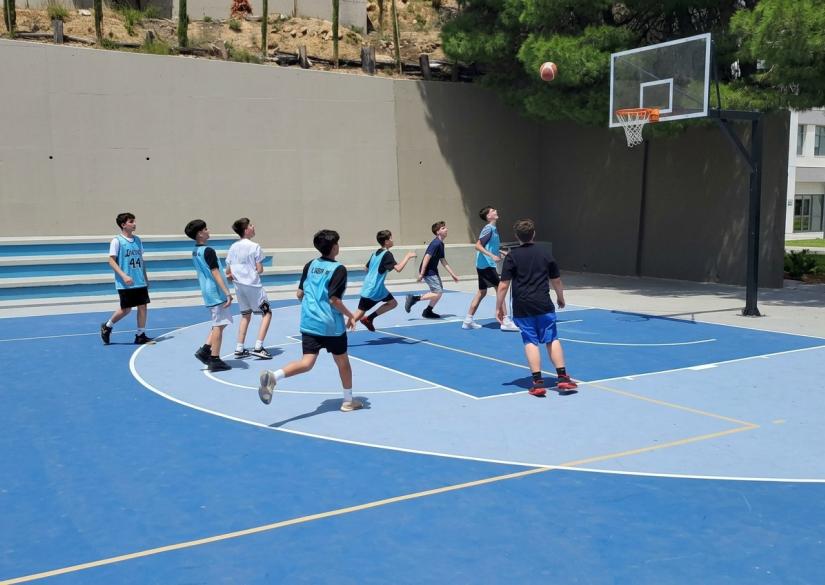
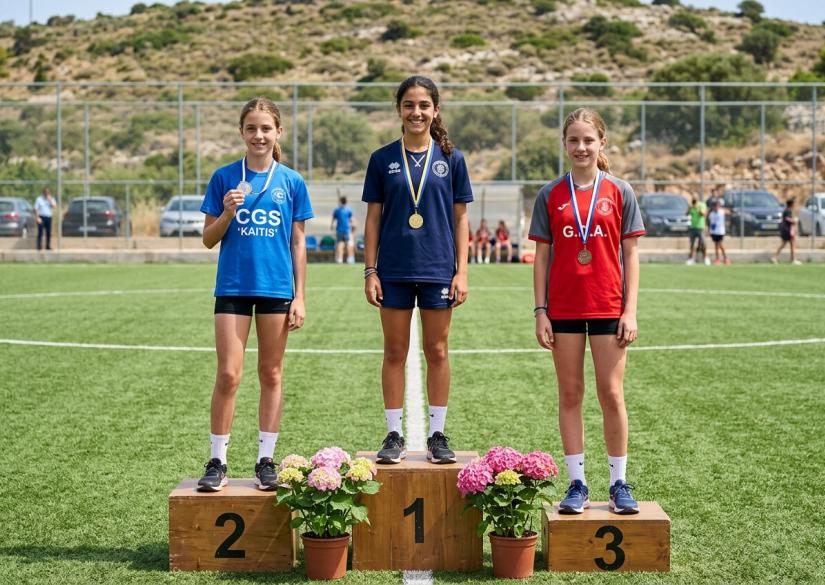
The CGS sports association has 250+ athletes, many of whom have achieved high results, especially in fencing, basketball, and football. The sports association is important not only for the school's students, but also for all the youth of the region.
Current clubs are:
- Football,
- Basketball,
- Volleyball,
- Fencing,
- Swimming.
Advantages
- At Costeas-Geitonas School, students can study under the International Diploma programme at all stages — each academic level maintains the same high standards, and the quality of education does not decline.
- The programme is designed to meet the requirements of leading international universities, and the diploma graduates receive is recognized in many countries.
- The ability to analyze, research, and make independent decisions is valued here; students learn to defend their point of view and work effectively with information.
- It is important not only how students study, but also how they grow as individuals: attention is given to the development of social skills, emotional intelligence, and responsibility.
- Collaboration with well-known international educational organizations.
- The curriculum is very diverse: it includes both humanities and natural sciences. Close attention is paid to the study of several foreign languages.
- Many extracurricular and special programmes are available for students, helping to reveal individual abilities and interests.
Facilities and equipment at Costeas-Geitonas School, Private school Costeas-Geitonas
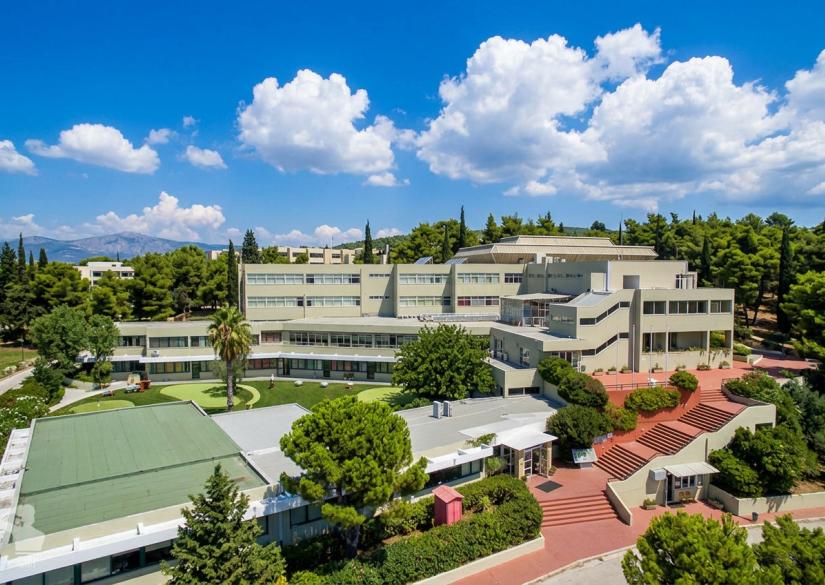
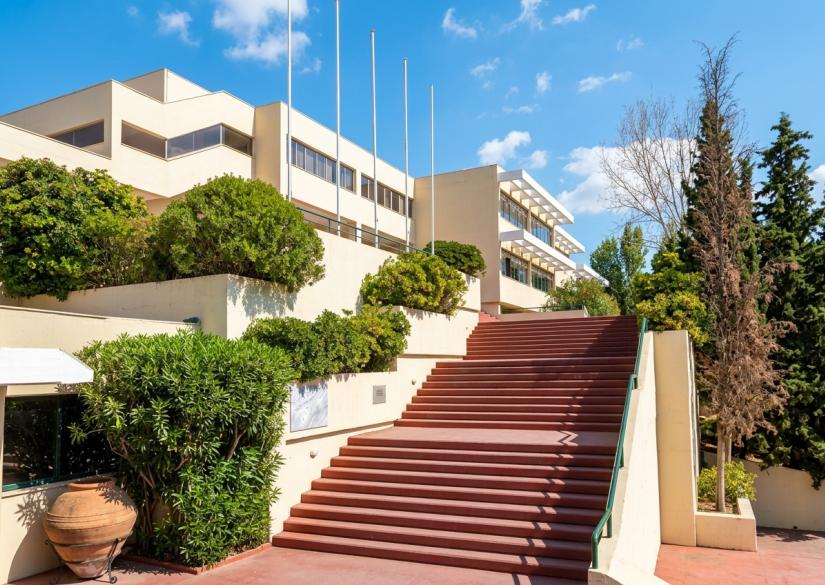
Costeas-Geitonas School occupies a spacious campus of 67,000 m², offering excellent conditions for study and development. Students have access to modern sports facilities, computer labs, a natural sciences laboratory, a conservatory, and a fine arts room. The school also collaborates with well-known athletes and sports clubs, such as the Nikos Boudouris Basketball Academy and the «Juventus» football school.
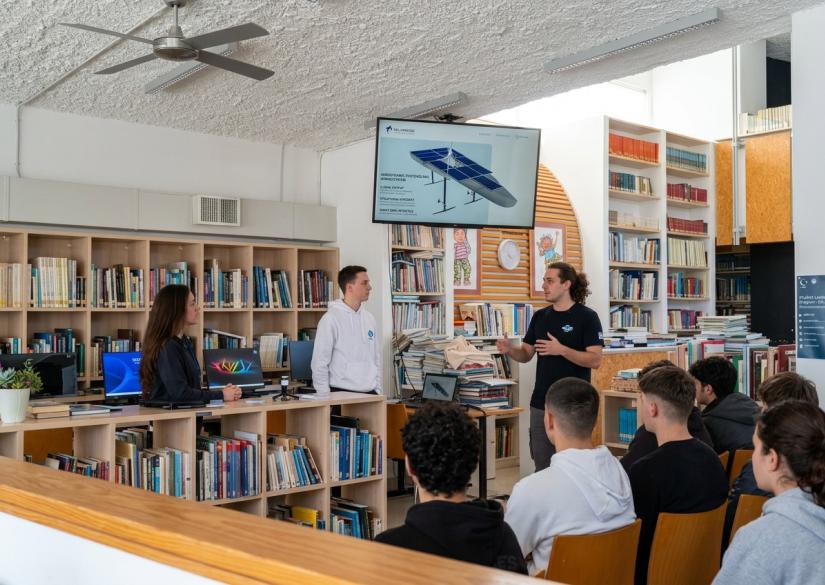
The library was recently renovated, is located at the very center of the campus, is open throughout the school day, and serves as a convenient space for everyone: students and teachers alike. It is a pleasant place to read and prepare for classes — a reading room is set aside for study and research. Various events are also held here regularly.
Infrastructure by the numbers:
- 103 classrooms,
- 3 science laboratories,
- 6 computer labs,
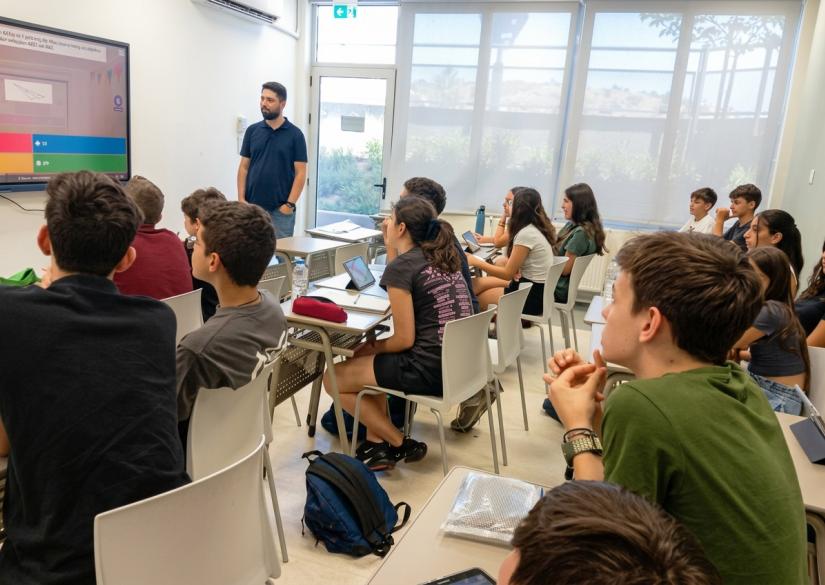
- Interactive walls for learning and research,
- A research library with a collection of more than 25,000 books,
- An open-air amphitheater,
- A music conservatory,
- A dance studio,
- A fine arts studio,
- Its own radio station,
- Two heated indoor swimming pools,
- An outdoor stadium and running track,
- 4 basketball courts,
- Tennis and handball courts,
- A bookstore,
- A restaurant,
- 57 school buses.
Enrolment process
Admission takes place in 4 main stages:
- Preliminary consultation
First, you need to contact the admissions office by phone or email to find out the details and schedule a meeting, and to fill out and submit an application in advance. Individual meetings are held Monday through Friday from 9:00 to 15:30 and last approximately 45 minutes. Entry to the premises is by ID only, and only parents or guardians may attend the meeting. During the consultation, guests will be informed about programs, the admissions procedure, and required documents, and will receive informational materials. A school tour is not conducted during this visit. The application must be submitted before or during the meeting.
- Interview and testing
At this stage, the student meets with the principal and a specialist, undergoes an interview, and completes diagnostic tasks in mathematics, Greek and/or English (depending on the grade level). At this time, parents or guardians submit all required documents: recommendations, school reports, and others. The school may contact the previous educational institution to verify information, including financial matters.
- Admission decision
Approximately one week after all stages are completed, the admissions coordinator notifies the parents of the decision; the family then has about one week to accept or decline the admission offer.
- Completion of enrollment
If the parents agree, they are sent an official letter and a Registration Approval Form with detailed information about programs and services for the following year. The form must be completed, signed, and returned along with confirmation of payment of the registration fee within 10 days.
A few days before the start of the academic year, the school invites new students to an orientation day: on this day, students meet their teachers and get accustomed to the new educational environment.
Perspectives
Graduates of Costeas-Geitonas School enter leading universities around the world: popular options include European universities such as LMU Munich, KU Leuven, University of Amsterdam. About 83% of graduates become students at their first-choice university, and approximately 40% of them enter the top 150 universities in the world.
Entry requirements, how to apply, what is required to enrol
The decision on entering Costeas-Geitonas School depends on the availability of places, the school's policies, and the requirements of the Greek Ministry of Education. When enrolling, age, academic performance, attitude to learning, personal qualities, and how the new student will fit into the community are taken into account. Depending on the child's age and year of study, admission may include various stages: review of grades, a personal interview, school readiness testing, assessment of reading and numeracy skills, and review of medical records and information about special needs.
Enrollment is conducted on the basis of:
- An interview with the candidate,
- The results of diagnostic tasks selected according to age and level of preparation,
- Past achievements (if any),
- A pedagogical report from current teachers or the school principal (if required).
Scholarships Costeas-Geitonas School, Private school Costeas-Geitonas
Scholarships at Costeas-Geitonas School are available for students of gymnasium A’ / MYP2, lyceum A’ / MYP5, and the International Baccalaureate Diploma preparation program.
- In gymnasium A’ / MYP2, up to 5 full scholarships may be awarded.
- In lyceum A’ / MYP5 — up to 2 full scholarships.
- For the IB Diploma programme, 1 full and up to 3 partial scholarships are provided.
Scholarship requirements are the following:
- For a full scholarship, a grade point average of at least 80% is required, along with a successful personal interview. The student's profile must meet the program requirements.
- For a partial scholarship (30–80%), a grade point average of at least 60% is required. The scholarship is awarded to the top 10 candidates with the highest scores among those who have passed the interview and meet the IB Diploma profile.
Institution on the map
Residence permits, citizenship and other services
- Guardianship services during the studies
- Student supervision
Review about Costeas-Geitonas School, Private school Costeas-Geitonas
Recommendations on when to apply
| Language courses, schools and children's language camps | Primary and secondary education - private schools | Preparation programmes for entering universities - higher education | Higher education (after completing accredited programs A-level, IB, High School) - Bachelor, Master, MBA |
| - we recommend to apply 6-9 months before the start of the course (some camps and schools offer discounts for early booking or for lengthy study programs) - there are some very popular and high demand children's camps, where the applications need to be submitted 1 year in advance (in particular Switzerland , Great Britain , USA , Canada , Austria) | - we recommend to apply one year before the start of the training program, - some schools have a specific time frame (September-November - please specify an individual school) - some schools require tests in several stages (UKISET, internal tests of the school: English, mathematics, logics, subjects, interview, some require a personal visit) | - we recommend to apply one year before the start of the program, - for Foundation and Pathway programs, IELTS and TOEFL certificates are usually required, respectively | - recommended submission one year before the start of the program, - the deadline normally closes in January, for TOP HEIs and, as a rule, in March in other universities - for a bachelor, a Foundation or Pathway preparatory program a completed A-level, IB, High School + IELTS / TOEFL are required - for Masters you need a graduated higher education, in some cases you need a pre-Masters program - MBA requires completed higher education, work experience preferably at least 2-3 years, etc. |