Colegio San Ignacio de Loyola, College of San Ignacio de Loyola


Programs and prices, tuition fees in Colegio San Ignacio de Loyola, College of San Ignacio de Loyola


Infantil, Early Childhood Education
- Age of students – from 0 to 6 years,
- Cost per year - check with the manager.
The preschool department of CSIL includes two stages: early for children from 0 to 3 years old, preparatory - for students from 3 to 6 years old. Teachers personalize the learning process, which takes place in the format of games and research, in order to gradually develop the individual talents and strengths of each student.
The basis of preparatory education will be the study of the Spanish language, mathematics and the world around us. By gaining knowledge of grammar, vocabulary, arithmetic, and science, students build a strong foundation with which to successfully transition into primary school.
Educación Primaria, Primary Education
- Age of students – from 7 years old,
- The period of study is five years,
- Cost per year - check with the manager.
In primary school, the educational process is based on project-based learning, with the help of which students gain applied skills in various scientific fields: humanitarian, technical, social. By studying Spanish, mathematics, science, art and music, students gain important skills and realize their talent that they will develop in the future.
Secundaria, Secondary Education
- Age of students – from 12 years old,
- The period of study is five years,
- Cost per year - check with the manager.
In the middle grades, students will be offered a wide range of disciplines, including several types of art, computer science, mathematics, Spanish and other languages. Personalized learning allows students to devote more time to the disciplines they enjoy, gradually preparing for the transition to high school.
Bachillerato Nacional Diploma
- Age of students – from 16 years old,
- The duration of studying is two years,
- Cost per year - check with the manager.
High school students can choose a national diploma program to prepare for admission to universities in Spain.
Students study a range of compulsory disciplines, and also choose one of three specialized areas:
- Science
- Humanities, Social Sciences,
- Art.
On the basis of specialization, students go through specialized disciplines, gaining in-depth knowledge and applied skills, and under the guidance of teachers, they can attend extracurricular and external events to gain additional abilities.
A personalized approach to each student provides high school students with effective preparation, career mentoring before entering the university.
International Baccalaureate Diploma
- Age of students – from 16 years old,
- The duration of studying is two years,
- Cost per year - check with the manager.
The IB Diploma qualification is highly regarded among leading universities around the world. Students who want to receive it study a personalized curriculum assembled from disciplines of five subject groups and additional electives.
There are three specializations available at CLIS in which you can earn an IB Diploma:
- Technical Sciences,
- Biomedicine
- Social sciences, humanities.
Subject groups, from which you need to choose three disciplines to study at the standard level, three more at the advanced level:
- Language, literature: Spanish,
- Language Acquisition: English,
- Personalities, Societies: Business Management, History,
- Experimental Sciences: Physics, Chemistry, Biology, Ecological Systems and Societies,
- Mathematics: Analysis and Approaches, Applications and Interpretations.
In addition to the curriculum, students master three electives:
- Theory of knowledge (TOK) is a written discourse on the nature of knowledge,
- Extended essay is a written research paper on a free topic of 5,000 words,
- Creativity, Activity and Service (CAS) – community service, participation in sports and creative areas.
Formación Profesional Básica, Basic vocational education
- Age of students – from 15 years old,
- The duration of studying is two years,
- Cost per year - check with the manager.
At CSIL, a program of basic professional education in the field of agricultural gardening, flower design is available. During the course of two years, students will study a wide range of modules, participate in practical exercises:
- Irrigation, fertilization and treatment of agricultural crops,
- Auxiliary work on land preparation, planting and sowing of crops,
- Basic operations for growing and caring for plants in nurseries and garden centers,
- Auxiliary operations in the production of compositions with flowers and plants,
- The main works on the arrangement of gardens, parks and green areas,
- Basic operations for the maintenance of gardens, parks and green spaces,
- Floral materials,
- Applied Sciences,
- Communications, Social Sciences.
Upon completing studying, students can move on to career activities, employing workers of various qualifications in the field of horticulture.
Formación Profesional Grado Medio, Secondary vocational education
- Age of students – from 16 years old,
- The duration of studying is one to two years,
- Cost per year - check with the manager.
At CSIL, students can obtain post-secondary vocational qualifications in the following areas:
- A guide to the natural environment, leisure,
- Technician for caring for people in addiction situations.
The studying lasts one or two academic years, in the first case, a mandatory internship in the specialty is added to the program. The curricula of the programs include specialized modules that are taught by qualified industry specialists, practice hours on campus and at partner institutions.
Formación Profesional Grado Superior, Higher Professional Education
- Age of students – from 18 years old,
- The duration of studying is two years,
- Cost per year - check with the manager.
Higher professional education is available at CSIL in several specializations:
- Pedagogy, social and sports animation,
- Physical training,
- Preschool education,
- Social inclusion,
- Plastic Arts, Design in the Field of Projects and Management of Decorative Works,
- Plastic art, showcase design,
- Plastic art, ephemeral architecture.
The program takes two academic years to complete, during which students will gain high-quality applied skills, allowing them to start their careers.
Summer Programs
- Age of students – from 3 to 18 years,
- Dates — June-July,
- The duration of studying is from one week,
- Check the cost with the manager.
Designed for students aged 3-13, 9-16, 8-18 and 5-12, the summer programs offer an exciting schedule of themed workshops, sports activities, socialising and entertainment.
- Multi-Camp (3-13 years old) – It stipulates craft and music lessons, sports activities, horse riding classes and more,
- Acting in the theater (9-16 years old) - Participation in productions and musicals, such as "The Lion King", "The Greatest Showman", "Aladdin". Under the guidance of teachers, children will master the basics of acting, gain confidence in their creative talents,
- Dancing (5-12 years old) – master classes of various dance styles, individual and group classes under the guidance of qualified athletes, participation in competitions and entertainment events.
Some programs provide accommodation in a partner residence, everything is a balanced diet, healthy snacks between classes. The courses include thematic excursions with visits to iconic sights, master classes and seminars by leading industry experts, and entertainment centers.
Description of Colegio San Ignacio de Loyola, College of San Ignacio de Loyola
- Location: Torrelodones, Spain,
- Year of foundation: 1964,
- Number of students: about 1800,
- Language of instruction: Spanish,
- Type of studying: mixed.
- Founded: 1964,
- Students: about 1800,
- Type of school: mixed.
The Colegio San Ignacio de Loyola (CSIL) is a school of Christian philosophy belonging to the parish of San Ignacio de Loyola in Torrelodones. The academic system covers all stages of school education, including vocational preparation after completing high school.
Founded in 1964, CSIL still follows the fundamental principles in education: innovation, learning modern languages, and personal development of students. The qualified teaching and administrative staff of the college have many years of experience, thanks to which they quickly find a common language with students, paying individual attention to each of them. Personalization of curricula is one of the features of learning at CSIL, allowing students to study those scientific areas that interest them, prepare for subject exams and admission to specialized universities. Academic support is provided both within scheduled classes and outside of classrooms.
The school’s international focus involves the systematic development of digital competence among students and teachers in line with DigComp 2.1. Intercultural competence and active citizenship are integrated into school policies.
Educational process
In preschool, children learn through projects, independent activities in play areas, and hands-on experiences. The program for ages 3–6 develops reading and writing readiness and introduces math through practical activities. Psychomotor development sessions combine physical, sensory, and social experiences. Children learn to recognize and express emotions and cope with frustration. A digital diary supports communication with families in the 0–3 age group.
In elementary school, projects, collaborative activities, and experiments followed by reflection connect classroom material with real life. Math follows the Singapore method, moving from concrete objects and activities to abstract concepts. The Plan Lector reading program develops oral and written expression, reading comprehension, and an interest in books. Tutorías Verticales sessions bring different grades within the same educational stage together to work on a shared topic. The Cuéntame un cuento project combines classic literature, mentoring across grades, and outdoor activities.
Every student in ESO and upper secondary school has a personal iPad for classroom materials and assignments. Education incorporates research, the scientific method, oral assessments, presentations, and discussions across all disciplines, with particular attention to the humanities. In ESO, students work collaboratively and help create educational content. Teachers connect materials with real life and current events. Under the Aula Materia model, students move between dedicated classrooms according to their timetable. Each room is prepared by teachers and departments responsible for that discipline.
The IB program offers small-group classes and extensive practical work, with an emphasis on foreign languages, research skills, critical thinking, and creativity. Students take externally assessed exams at the end of the second year. Across the school, students develop their English through drama, music, art, physical education, and dedicated language classes. Drama classes in English are offered in elementary school and ESO. Preschool projects introduce children to cinema and the work of famous artists. In ESO, the Just Dance project develops coordination, creativity, and musical skills during physical education classes.
Children ages 3, 4, and 5 take weekly violin classes in small groups as part of the regular school timetable. They explore music theory and develop their vocal and listening skills. Five-year-olds attend a workshop introducing orchestral instruments. At the end of preschool, each child chooses an orchestral instrument to continue studying through Grado Musical in elementary school. The music program also offers visits to educational concerts, followed by classroom work on their content.
The student support department serves preschool, elementary, secondary, and vocational education. Support services include:
- Psychoeducational assessments, individual curriculum adaptations, adjustments to teaching methods, and advice for families,
- A dedicated classroom for students with autism spectrum disorders, for whom the school is a designated priority center,
- An Aula Estable classroom in collaboration with Gil Gayarre,
- Rooms for therapeutic pedagogy and hearing and speech support at the relevant educational stages,
- The PROA+ program for educational guidance and enrichment,
- An Aula Enlace classroom for up to 12 students of any nationality, helping them learn Spanish, become familiar with the culture, and take part in school life,
- The San Ignacio Impulsa program for students with high motivation, strong academic performance, or high intellectual ability. Implementation involves teacher preparation, specialist teams, student selection and assessment, and preparation of enrichment classrooms,
- Tutor sessions on self-esteem, emotional intelligence, decision-making, study skills, substance use prevention, and responsible use of technology. Group work addresses cohesion, acceptance of diversity, mediation, and conflict resolution,
- Support for students with chronic conditions and health education sessions with the school nurse, who also provides first aid instruction for staff,
- Collaboration with the TÁNDEM and CPL therapeutic centers to address special educational needs and learning difficulties,
- Prevention of mental health problems and psychological support for students and families through an agreement with Emmooti,
- Regular parent education sessions with psychologists, educational psychologists, speech therapists, and other specialists.
Academic and career guidance is available at every stage, with particular attention to secondary school and students’ individual interests and abilities. The annual plan follows approaches developed by Fundación Bertelsmann and the Excellence Escuelas que Inspiran program. Two career guidance events take place during the year: one with university representatives and one with professionals. Students visit companies, discuss careers with professionals, and receive help choosing disciplines and support from teachers. CSIL Emprende develops entrepreneurial initiative, self-awareness, and teamwork.
Faculties and colleges
The institution covers all stages of school education, and professional post-secondary education is additionally available.
- Preschool serves children ages 0–6. The 0–3 cycle is privately funded through tuition, while the 3–6 cycle receives government subsidies,
- Elementary school receives government subsidies,
- Compulsory secondary education (ESO) spans years 1–4 and receives government subsidies,
- Upper secondary education offers first- and second-year classes funded privately through tuition.
The IB Diploma program is designed for students ages 16–19. The curriculum comprises six groups of academic disciplines, theory of knowledge, creative, sporting, and community service activities, and independent research.
The Creciendo Juntos project connects preschool with the first two grades of elementary school. Grado Musical and Aprendiendo con Nota music programs have been introduced in preschool and elementary education. Grado Musical is being introduced gradually in elementary school, beginning with first grade.
The music qualification comprises eight instrumental levels and a preliminary preparatory level. Instrument options include:
- Flute,
- Clarinet,
- Oboe,
- Percussion,
- Trumpet,
- Violin,
- Viola,
- Double bass,
- Cello,
- Piano.
Scientific achievements
Third-year ESO students won the Mola tu Flow music competition with their song Mar abierto.
Things to know about
- The Ecoescuela program brings environmental care and sustainability principles into school projects and everyday life,
- Cardinal José Cobo, Archbishop of Madrid, visited the school and met preschool and elementary students,
- Families can purchase school uniforms online.
Accommodation, meals, prices
The college does not have its own residences.
The dining room serves a variety of hot and cold meals, snacks and drinks each school day. CSIL's educational model not only includes an academic aspect, but also teaches children to eat a balanced diet and respect the environment.
Families can choose whether to use the school dining service, which operates on a nonprofit basis for the school. Children learn table manners during meals.
Activities Colegio San Ignacio de Loyola, College of San Ignacio de Loyola
Extracurricular activities at CSIL are diverse and extensive, offering students to try their hand at various areas of the arts, sports, and social sciences.
Artistic activity is presented in the format of circles and thematic communities in the following areas:
- Drawing, painting,
- Music,
- Dancing,
- Acting, theater,
- Ceramics.
Sports sections are taught by professional coaches who use an individual approach to each student, highlighting his strengths. Thanks to the sports infrastructure on campus, it is possible to engage in activities such as:
- Basketball,
- Judo,
- Volleyball,
- Taekwondo,
- Ice skating.
After completing the main classes, students have a wide range of opportunities to gain additional knowledge and skills. The college provides specialized electives, allowing you to learn a lot about technology, languages, and research activities:
- English language,
- Mathematical Thinking,
- Scientific games,
- Laboratory tests,
- Robotics.
The school has its own sports club. Its extracurricular programs and activities are also open to children who do not attend the school. Arts activities are offered from preschool through upper secondary school, with choir among the options. The Orquesta San Ignacio welcomes Grado Musical participants and other students at the school who have studied an instrument. The school’s arts activities also involve a cultural week, a talent show, exhibitions, and workshops.
Elementary students go on cultural field trips and participate in activities outside the classroom. Aula el Mundo offers trips that help students connect with one another and reinforce classroom material. International projects and off-campus activities have included:
- The two-year Erasmus project Active Global Citizenship: Bridges of Interculturality with educational institutions in Italy, Lithuania, and Turkey,
- Participation by female students in a production of the musical Sueña, muchacho, sueña in Pesaro, led by Liceo Musical Marconi,
- The weeklong Engineering Girl program at Universidad Autónoma de Madrid, in which female students from the school participated in robotics, video game, and image editing activities,
- The Bridges of Peace gathering in Madrid with Fondazione Sacro Cuore from Milan, involving 28 students aged 14 and five teachers from the two institutions,
- The Primacy of the Human project in Istanbul in 2024, when 18 students and four teachers from San Ignacio spent a week hosted by Haci Sabanci High School, its students, and their families,
- The On the Traces of Europe project with Oscar Romero in Albino: first-year IB students hosted Italian students in their homes and worked on quality education. During a visit to Albino, 24 students and three teachers from San Ignacio explored European identity and youth participation,
- The Power of Cinema project in Paris, with a screenwriting workshop led by a director and visits to the Cinémathèque and the Méliès Museum,
- The Inhabiting Space: Person and Place project in Siena, which combined literature, psychology, art, and history to explore how the environment shapes identity and human interaction,
- The Building a We to Care for Our Common Home project in Milan, in which students explored sustainability, social inclusion, and heritage conservation, collaborated with a social cooperative, and completed scientific activities,
- The first international Erasmus KA2 Educ-art gathering at San Ignacio, exploring music and dance as forms of self-expression,
- Participation by first-year IB students in the second part of Culture takes care of me, I take care of culture in 2024, together with the linguistic high school of the Oscar Romero Institute of Albino.
Spiritual education involves:
- Praying the rosary,
- Preparation for communion and confirmation,
- The Eucharist,
- Pilgrimages,
- Retreats,
- Group trips,
- Educational gatherings,
- Camps for children and young people.
In 2026, ESO and upper secondary students attended Talitha Qumi gatherings, where guests shared their life experiences. The school and the AMPA parents’ association organized the first San Ignacio cooking competition for families.
Advantages
- One of the 25 academic centers in the Western Zone in terms of student outcomes. In 2023, the school received recognition from UC3M for the third consecutive year as one of its 25 affiliated centers with the best results in the compulsory section of the university entrance exam,
- Two High School Diploma Options: National and International Baccalaureate,
- Erasmus+ exchange programs,
- High results of high school students in passing final exams,
- The Applied Professional Training Unit, allowing you to start a career after completing the courses,
- A wide range of additional services, including medicine,
- Accreditation to offer the IB Diploma program,
- Bilingual center status within the Comunidad de Madrid,
- Participation in the BEDA program run by Escuelas Católicas at Nivel de excelencia,
- Cambridge examination center status,
- Accreditation as an official ABRSM examination center, allowing students to obtain an international music qualification at school,
- Participation in Programa Artes, an arts program run by Escuelas Católicas.
Facilities and equipment at Colegio San Ignacio de Loyola, College of San Ignacio de Loyola
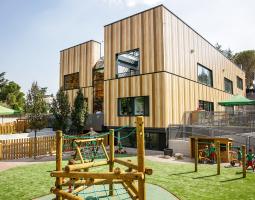
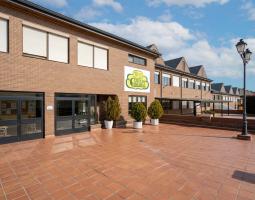
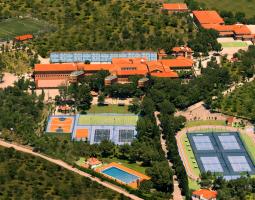
There are two centres in Torrelodones, one for vocational students and the other for students in school programs. The infrastructure of both buildings stipulates modern equipment, specialized premises, including:
- Classrooms prepared for teaching children of different ages,
- Computer classrooms with PCs, printing equipment,
- Scientific laboratories,
- Playrooms for younger schoolchildren,
- Recreation areas, self-study,
- Sports and gymnastics halls,
- Theater room with rehearsal rooms,
- Music studios,
- Cafeteria, dining room.
The CSIL Medical Center employs qualified doctors and nurses who provide a wide range of services: from first aid and psychological support to preventive procedures, interventions.
The college cooperates with the city council, thanks to which it provides several buses for the safe travel of students from home to campus.
Admission dates and extra charges
The academic year for most programs lasts from the beginning of September to the end of June. The school is open on weekdays: from Monday to Friday, and on weekends, holidays and during vacations, students rest.
The list of extra costs will include meals and accommodation, additional academic support (if necessary), some extracurricular activities.
Families can use the Primeros del Cole morning service and the Tardes de septiembre/junio afternoon service in September and June. Since September 2026, preschool children ages 3–6 have also been able to stay from 16:30 to 17:30. Extracurricular activities are optional for families and are offered on a nonprofit basis by the school.
Regular reception hours are Monday through Friday, from 9:00 to 17:00.
Enrolment process
Applicants can use the support of the Smapse manager to go through the admission process and get additional information about admission.
Perspectives
Thanks to the choice of diploma programs, the support of qualified teachers, students receive a wide range of knowledge and skills, allowing them to continue their academic path at universities and colleges in Spain and other countries.
The school achieved a 99% pass rate on the PAU university entrance exam in 2026. 15 students scored above 12, and 3 scored above 13. The highest score was 13.62.
In 2023, students in the school’s XI graduating class of Bachillerato achieved a 100% pass rate on the EvAU exam. The highest score was 13.64, and 10 students scored at least 13. The school’s average in the general section was 7.25.
In BEDA tests, the school’s results exceeded the Comunidad de Madrid average in the Starters and Senior categories and the national average in Senior and Junior.
Entry requirements, how to apply, what is required to enrol
Admission criteria vary depending on the chosen educational stage. Foreign applicants must have a passport, health insurance, visa or residence permit. The general requirement for admission will be academic certificates from the previous place of study, letters of recommendation from teachers of the main subjects.
While entering, all applicants are tested in Spanish, if they have not taken the exam before.
Admission to the IB program requires:
- English proficiency at B2 or above,
- An average grade of at least 7 in the fourth year of ESO, with no failed disciplines,
- A letter of recommendation from the previous school,
- A personal interview.
Applicants to preschool for ages 0–3 and the national upper secondary program also attend an interview.
Scholarships Colegio San Ignacio de Loyola, College of San Ignacio de Loyola
The college provides means-based financial support to students in difficult life situations. A wide range of external scholarships are also available to students, covering part of the educational costs.
The Contigo podremos seguir campaign raises funds to help students with limited financial resources meet the monthly tuition payments for the privately funded Bachillerato stage.
Institution on the map
Residence permits, citizenship and other services
- Guardianship services during the studies
- Student supervision
Review about Colegio San Ignacio de Loyola, College of San Ignacio de Loyola
Recommendations on when to apply
| Language courses, schools and children's language camps | Primary and secondary education - private schools | Preparation programmes for entering universities - higher education | Higher education (after completing accredited programs A-level, IB, High School) - Bachelor, Master, MBA |
| - we recommend to apply 6-9 months before the start of the course (some camps and schools offer discounts for early booking or for lengthy study programs) - there are some very popular and high demand children's camps, where the applications need to be submitted 1 year in advance (in particular Switzerland , Great Britain , USA , Canada , Austria) | - we recommend to apply one year before the start of the training program, - some schools have a specific time frame (September-November - please specify an individual school) - some schools require tests in several stages (UKISET, internal tests of the school: English, mathematics, logics, subjects, interview, some require a personal visit) | - we recommend to apply one year before the start of the program, - for Foundation and Pathway programs, IELTS and TOEFL certificates are usually required, respectively | - recommended submission one year before the start of the program, - the deadline normally closes in January, for TOP HEIs and, as a rule, in March in other universities - for a bachelor, a Foundation or Pathway preparatory program a completed A-level, IB, High School + IELTS / TOEFL are required - for Masters you need a graduated higher education, in some cases you need a pre-Masters program - MBA requires completed higher education, work experience preferably at least 2-3 years, etc. |