

Study history in Switzerland - 22 institutions
-
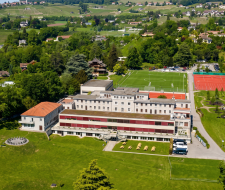 In 2023: 37 IB average, 43 highest point, 100% pass rate
SwitzerlandMontreuxCurrently watching: 8from 31900.00 CHF / year
In 2023: 37 IB average, 43 highest point, 100% pass rate
SwitzerlandMontreuxCurrently watching: 8from 31900.00 CHF / year -
 One of the best only-girl school in Europe
SwitzerlandMontreuxCurrently watching: 9from 56000 CHF / semester
One of the best only-girl school in Europe
SwitzerlandMontreuxCurrently watching: 9from 56000 CHF / semester -
 School is in top 3 best bilingual boarding schools in French speaking part of Switzerland
SwitzerlandLausanneCurrently watching: 10from 5400 CHF / 2 weeks
School is in top 3 best bilingual boarding schools in French speaking part of Switzerland
SwitzerlandLausanneCurrently watching: 10from 5400 CHF / 2 weeks -
 One of the best preparatory boarding schools in Europe
SwitzerlandMontreuxCurrently watching: 9from 31000 CHF / semester
One of the best preparatory boarding schools in Europe
SwitzerlandMontreuxCurrently watching: 9from 31000 CHF / semester -
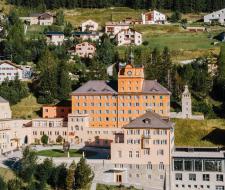 School is in top 3 best bilingual boarding schools in German speaking part of Switzerland
SwitzerlandSt. MoritzCurrently watching: 10from 79500.00 CHF / year
School is in top 3 best bilingual boarding schools in German speaking part of Switzerland
SwitzerlandSt. MoritzCurrently watching: 10from 79500.00 CHF / year -
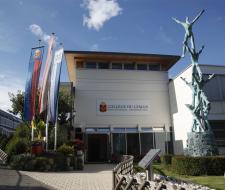 In 2024 100% graduates achieved IB Diploma
SwitzerlandGenevaCurrently watching: 7from 24900.00 CHF / year
In 2024 100% graduates achieved IB Diploma
SwitzerlandGenevaCurrently watching: 7from 24900.00 CHF / year -
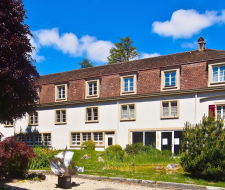 In 2023an average IB&FB score was just over 36 points.
SwitzerlandLausanneCurrently watching: 6from 69300.00 CHF / year
In 2023an average IB&FB score was just over 36 points.
SwitzerlandLausanneCurrently watching: 6from 69300.00 CHF / year -
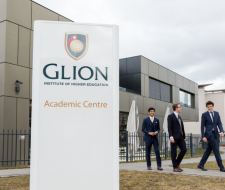 #3 for Hospitality and Leisure Management in the world
SwitzerlandMontreuxCurrently watching: 9from 20350.00 CHF / semester
#3 for Hospitality and Leisure Management in the world
SwitzerlandMontreuxCurrently watching: 9from 20350.00 CHF / semester -
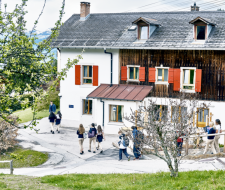 In 2023 an average IB score was 35.2
SwitzerlandMontreuxCurrently watching: 6from 31800 CHF / term
In 2023 an average IB score was 35.2
SwitzerlandMontreuxCurrently watching: 6from 31800 CHF / term -
 Accreditation: Swisslearning; SFPS; International Baccalaureate; ISO; AVEDP; BSA
SwitzerlandLausanneCurrently watching: 9from 20600.00 CHF / year
Accreditation: Swisslearning; SFPS; International Baccalaureate; ISO; AVEDP; BSA
SwitzerlandLausanneCurrently watching: 9from 20600.00 CHF / year
The history lesson in Switzerland is organized in accordance with cantonal rules, in addition, there is a framework developed by the conferences of directors of education in regional languages and the conference of federal directors of education. History classes are conducted in primary schools, secondary schools, vocational schools and Swiss private schools. In some cases, and depending on the canton, history lessons are offered only within the framework of various integrated subjects.
Alternative destinations
Studying history in Switzerland at the beginner level
The status of history education varies across Switzerland’s cantonal school systems. Differences between cantons primarily concern curricula, weekly lesson hours, the availability of supplementary subjects, and whether history is included in the Matura (university entrance) examination. At the federal level, however, framework conditions are defined by the regulations on the recognition of the MAR school-leaving certificate (1995) and the recommended framework curriculum for Swiss Matura schools (1994). Under these guidelines, history is a compulsory core subject for all students in Swiss secondary schools. Together with other humanities and social sciences—such as geography, and possibly economics, law, and/or philosophy—it accounts for 10% to 20% of total teaching time. Lessons are designed to be competence-oriented and focus primarily on topics from the early modern period and contemporary history. Additionally, cantonal regulations require that civics (political education) be integrated into history instruction.
Primary level
German-speaking Switzerland: Department of Nature, People, Society (NMG)
Under Curriculum 21, historical education is assigned to the "Nature, People, Society" (NMG) department as a learning component. This department encompasses four thematic areas:
-
Nature and Technology (NT)
-
Economics, Work, and Household Management (WAH)
-
Times, Spaces, and Societies (RZG)
-
Ethics, Religions, and Community (ERG)
By the end of primary school, the four thematic perspectives are merged into a single integrated subject. Rather than focusing on rote memorization of facts, the curriculum emphasizes competence development and hands-on learning. Through the NMG framework, students are encouraged to observe their surroundings, make their own discoveries, broaden their viewpoints, and confidently engage with and shape the world around them.
French-speaking Switzerland (Romandy): Humanities and Social Sciences
In the 1st cycle (grades 1–4), the studying plan includes the subject area "Human and Social Sciences." History is an essential component of this domain, alongside geography and civics. During history lessons, students are introduced to foundational concepts such as comparing different periods of time, recognizing the stages of human life—birth, childhood, adulthood, and death—and identifying historical traces in their everyday environment.
Italian-speaking Switzerland (Ticino): Environmental Dimension
According to the canton of Ticino’s Piano di studio, primary-level humanities, social sciences, and natural sciences are all brought together under the subject heading "Environment." History in a narrower sense is introduced in the 2nd cycle (grades 3–5), with particular attention given to contrasting traditional rural ways of life with modern urban society, as well as examining the technological, economic, and social transformations brought about by the Industrial Revolution.
Lower Secondary Level
At the lower secondary stage, history lessons fall under the broader theme "Times — Spaces — Societies," which combines historical and geographical perspectives. Through this interdisciplinary approach, pupils gain essential skills in understanding spatial and chronological relationships, alongside a basic grounding in civic education.
Upper Secondary Level (General Education Schools)
In upper secondary education—specifically at grammar schools (Gymnasien)—history curricula are determined solely at the cantonal level. This decentralized approach grants considerable leeway to individual schools, student communities, and even teachers, who traditionally exercise a significant degree of freedom in shaping the specific content and focus of their history instruction.
In contrast, history studying at vocational upper secondary schools is regulated at the national level. Here, the share of civic education (political education) is higher than in general education schools. Teachers have considerable creative freedom, and the curriculum is dominated by topics from the early modern period and contemporary history.
Best Swiss history schools for international students
- St. George's School Montreux,
- College Du Leman,
- Brillantmont International School,
- College Champittet,
- Surval Montreux boarding school for girls
Graduate Prospects
Studying history in Switzerland for international students opens up broad career prospects. Graduates of history departments work in a wide range of professions: in the field of research, public administration, private industry, journalism, media/communications, or teaching in schools. Employers particularly value the thinking of history graduates, their ability to quickly grasp the essence of things, their ability to independently handle complex tasks and convincingly present the solutions they have chosen. This makes them sought-after employees who can make their mark in a dynamic work environment thanks to their resourcefulness and structured approach to work.