

Language test preparation in Spain for international students
- Everything about DELE exam
- Preparation programs for language exams in TOP-30 Spainish schools and colleges
- Make the right choice with SMAPSE experts
- DELE vs SIELE: how the two Spanish exams compare
- DELE and SIELE by the numbers
- How much do DELE and SIELE exams cost in Spain?
- Literature and references
-
 School is in a large, modern campus with comfortable, large and bright classrooms
SpainBarcelonaCurrently watching: 1from 490.00 € / 2 weeks
School is in a large, modern campus with comfortable, large and bright classrooms
SpainBarcelonaCurrently watching: 1from 490.00 € / 2 weeks -
 from 1387.00 € / 2 weeks
 -
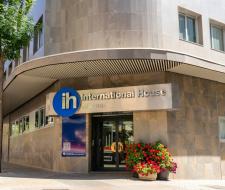 from 1340.00 € / month
 -
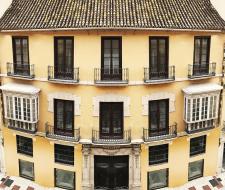 The school has a developed internal infrastructure.
SpainMalagaCurrently watching: 2from 490.00 € / 2 weeks
The school has a developed internal infrastructure.
SpainMalagaCurrently watching: 2from 490.00 € / 2 weeks -
 from 490.00 € / 2 weeks
 -
 from 490.00 € / 2 weeks
 -
 from 490.00 € / 2 weeks
 -
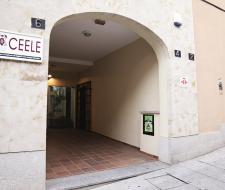 The school teaches are "pure" Spanish
SpainSalamancaCurrently watching: 1from 774 € / 2 weeks
The school teaches are "pure" Spanish
SpainSalamancaCurrently watching: 1from 774 € / 2 weeks -
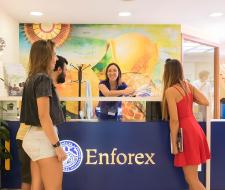 Individual approach to teaching students
SpainBarcelonaCurrently watching: 1from 749 € / 2 weeks
Individual approach to teaching students
SpainBarcelonaCurrently watching: 1from 749 € / 2 weeks -
 from 1240.00 € / 8 weeks
Nowadays, everyone who plans further education or work in Spain can pass essential language exams and tests. In addition, studying in Spanish language schools allows you to improve command of foreign languages that will help in the international business environment. DELE exam allows to test your Spanish proficiency. It includes several levels and each level has a number of features.
Thanks to the list of 35 Spanish schools and colleges, you will find the most appropriate option.
Alternative destinations
Everything about DELE exam
DELE is the official exam approved by the Ministry of Education of Spain. The diplomas are issued by the Instituto Cervantes on behalf of the Spanish Ministry of Education, and the certificate confirms the language proficiency at a defined level. The availability of this document determines the opportunity to work and study on the territory of Spain. The certificate is also accepted by employers and educational institutions of all Spanish-speaking countries in the world, and it is recognized in 48 countries. It has an unlimited validity period and the diplomas do not expire, so no periodic confirmation is required. Every year above 60,000 exams are taken at over 800 examination centres in more than 100 countries.

It is not easy to pass exams without preliminary preparation, the test has a number of features. It allows you to confirm the language proficiency at different levels. The DELE consists of six levels, each corresponding to a level of the Common European Framework of Reference (CEFR):
- A1 and A2 - basic language proficiency
- B1 and B2 - independent command of the language
- C1 and C2 - proficient language level.
To enter and study at a Spanish university, regardless of specialization, status, or rankings, an applicant usually needs at least a DELE B2 certificate tocomply with the language requirement. Specialized medical preparation requires a higher level - DELE C1 or C2, and the DELE B2 is no longer accepted for those places.
Preparation programs for language exams in TOP-30 Spainish schools and colleges
Modern programs and courses, like tests themselves, are classified by levels. They provide essential topics needed for exams, as well as help to develop specific skills important to perform test tasks. Duration of studying can be different. SMAPSE catalogue includes courses that take mainly 4 - 8 weeks.

All preparation courses in TOP-10 Spanish schools include following blocks:
- grammar and vocabulary (assignments for the selection of necessary phrases, words);
- communication (development of colloquial speech, pronunciation, training of conversation skills);
- reading (perception of written texts, ability to work with the material provided: analysis of information, choice of answers to questions, etc.);
- writing (essays, review of the text) ;
- listening (listening to audio materials, performing exercises based on the information received).
Also, the preparation programs provide trial testing. The last is carried out taking into account the time allotted for the exercises on the official exam.
Make the right choice with SMAPSE experts
In this catalogue SMAPSE experts have collected the most famous and rating educational institutions, all schools and centers were checked by the company's specialists. They offer effective courses for students over 15 years old.

You can choose an educational institution by using the simple search form. On the left panel of this page you can filter out information on the location of the school (city in Spain), type of programme, type of educational institution. In the general list, the data is sorted by the name of the language center.
If there are any difficulties, SMAPSE experts can help you individually. For consultation, please, contact us using any of the methods listed on the website.
What are language tests in Spain?
The Spanish Language Test is a standardized exam designed to assess the Spanish language skills of international students. These tests are developed by official institutions such as the Instituto Cervantes and SIELE. They serve to determine the level of language proficiency of students and may be necessary for admission to Spanish-language educational institutions or to improve career prospects.
What language tests are common in Spain?
In Spain, the most common language tests are DELE (Diploma de Español como Lengua Extranjera) and SIELE (Servicio Internacional de Evaluación de la Lengua Española). DELE is developed and administered by the Instituto Cervantes, while SIELE is a multilevel test provided by several universities that assesses different aspects of the Spanish language.
What international English exams can be taken in Spain?
In Spain, you can take various international English exams, such as IELTS, TOEFL, Cambridge English, Pearson Test of English (PTE) and others. These exams can be useful to confirm your level of English and will be valuable when looking for a job or applying to educational institutions.
What sections does DELE and SIELE include?
Both tests assess reading, listening, writing and speaking skills. For example, the speaking section may include dialogues, monologues, or discussion of topics. The structure and details of the sections may differ slightly between DELE and SIELE, so it is important to prepare for your specific test.
What documents will I receive after passing the test?
After successfully passing the DELE, you will receive an official diploma issued by the Instituto Cervantes, which is recognized in many countries and educational institutions. SIELE issues a certificate confirming the test results, which can also be recognized by various institutions and companies.
How long does it take to take the test?
The length of language tests in Spain may vary depending on the level you choose. Tests usually take from 1.5 to 5 hours. For example, more advanced levels such as C1 and C2 may require more time than A1 and A2 levels. It is important to familiarize yourself with the time limits for your chosen level in advance so that you can give each section of the test enough time.
What materials can be used during the test?
Generally, language tests do not allow the use of any supporting materials other than those provided by the examiners themselves. This is done to ensure the integrity and reliability of the results. Students are usually provided with writing paper, pencils, and computers if the test is administered electronically.
How long is the certificate valid after passing the test?
DELE and SIELE certificates are usually valid without any time limit. This means that they retain their power and significance regardless of the time that has passed since the exam was taken. However, in some cases, schools or organizations may require your results to be updated, especially if many years have passed since you took the test.
Can I use the test results to apply to universities in Spain?
Yes, DELE and SIELE results are often used at universities in Spain to determine the language skills of applicants, especially for international students who want to study in Spanish. Many universities require a certain level of Spanish language proficiency, such as B2 and above, in order to be admitted.
What language levels are required to enter universities in Spain?
Spanish language requirements for admission to universities in Spain may vary. However, applicants are usually required to be at level B2 or above. Some specialized programs or departments may also require a C1 or C2 level for more in-depth study of scientific subjects in Spanish.
DELE vs SIELE: how the two Spanish exams compare
Spain offers two official Spanish-proficiency certificates created with the involvement of the Instituto Cervantes. DELE diplomas are issued by the Instituto Cervantes on behalf of the Spanish Ministry of Education, while SIELE was created and developed jointly by the Instituto Cervantes, UNAM, the University of Salamanca and the University of Buenos Aires. The table below shows the key differences.
| Parameter | DELE | SIELE |
|---|---|---|
| Issued by | Instituto Cervantes on behalf of the Spanish Ministry of Education | Instituto Cervantes, UNAM, University of Salamanca, University of Buenos Aires |
| Format | Fixed-level paper-based exam | Fully digital exam adapted to each candidate |
| Levels | 6 CEFR levels (A1–C2) | Result placed on a CEFR scale — there is no «fail», the candidate always receives a level |
| Results | Issued after grading | Delivered in a maximum of three weeks, fully managed electronically |
| Validity | The diploma does not expire | Certificate confirms the level achieved at the time of the exam |
| University admission | A DELE B2 certificate is normally enough to meet the language requirement for Spanish universities | Recognized confirmation of Spanish proficiency for study and work |
DELE suits applicants who need a permanent, non-expiring diploma at a specific level, while SIELE fits those who want a fast, flexible digital test with results within three weeks.
DELE and SIELE by the numbers
The DELE certificate remains the most widely recognized confirmation of Spanish proficiency. More than 60,000 DELE examinations are taken each year at over 800 examination centres in more than 100 countries, which gives candidates in Spain a clear sense of how international and standardised the qualification is.
The SIELE certificate offers an even broader network. It can be taken at more than 1,000 authorised examination centres in over 85 countries, with the date, time and venue chosen by the candidate. SIELE was created and developed jointly by Instituto Cervantes, the National Autonomous University of Mexico, the University of Salamanca and the University of Buenos Aires, which underpins its academic credibility across Spanish-speaking regions.
How much do DELE and SIELE exams cost in Spain?
The cost of taking a language exam in Spain depends on the level you choose and the institution where you register. Higher levels are priced above the elementary ones, since they require more extensive assessment.
For example, in the 2022 academic year Charles III University of Madrid charged €130 ($150) for the A2 DELE diploma and €205 ($230) for the C1 diploma. Other test centres set their own registration fees within similar ranges, so it is worth comparing several institutions before booking a date.
Preparation courses are paid separately from the exam fee. The final amount depends on the school, the intensity of the program and the duration of study.
Statistics of English courses in England
| Programs | Intensity | Group | Language requirements | The minimum cost of the week |
|---|---|---|---|---|
| General English | 15-20 | 8-10 | Starter | £240+ |
| Intensive English Course | 28-30 | 6-12 | Beginner | £310+ |
| Super Intensive English Course | 35-40 | 6-10 | Beginner | £350+ |
| Exam Preparation Courses | 20-25 | 6-12 | Intermediate | £355+ |
| Business English | 20-25 | 7-10 | Intermediate | £355+ |
| Intensive Business English | 25-30 | 7-10 | Intermediate | £380+ |
| Academic English | 20-25 | 6-12 | Beginner | £280+ |
| English plus | 10-15 | 5-10 | Intermediate | £355+ |
| English for Work | 25-30 | 10-14 | Beginner | £355+ |
| Vacation English | 10-15 | 5-10 | Beginner | £270+ |
| One-to-One lessons | individual | 1 | Starter | £50+ - 1 lesson |
Statistics of English courses in the USA
| Programs | Intensity | Group | Language requirements | Cost of the week |
|---|---|---|---|---|
| General English | 15-20 | 8-10 | Beginner | 375 USD+ |
| Intensive English Course | 28-30 | 6-12 | Elementary | 430 USD+ |
| Super Intensive English Course | 35-40 | 6-10 | Intermediate | 475 USD+ |
| Exam Preparation Courses | 20-25 | 6-12 | Intermediate | 525 USD+ |
| Business English | 20-25 | 7-10 | Intermediate | 525 USD+ |
| English plus hobby | 10-15 | 5-10 | Intermediate | 550 USD+ |
| Study & Live in your Teacher's Home | 25-30 | 2-3 | Beginner | 1,000 USD+ |
| Vacation English | 10-15 | 5-10 | Beginner | 415 USD+ |
| One-to-One lessons | individual | 1 | Beginner | 70 USD+ - 1 lesson |
Statistics of English courses in Canada
| Programs | Intensity | Group | Language requirements | The minimum cost of the week |
|---|---|---|---|---|
| General English | 20 | 10-15 | Beginner | 310 USD+ |
| Semi-Intensive English | 24 | 10-13 | Beginner | 340 USD+ |
| Intensive English | 25-30 | 10-13 | Beginner | 350 USD+ |
| Academic English | 25-30 | 10-13 | Beginner | 370 USD+ |
| English for Business | 25-30 | 10-13 | Intermediate | 380 USD+ |
| English for Work | 30 | 10-13 | Intermediate | 380 USD+ |
| Cambridge Exam Preparation | 20-30 | 10-13 | Intermediate | 310 USD+ |
| IELTS/TOEFL/TOEICPreparation | 20-30 | 10-13 | Intermediate | 310 USD+ |
| One-to-One Lessons | individual | 1 | Starter | 85 USD+/lesson |
| Club 40+ | 20+ | 8-10 | Starter | 565 USD+ |
| English Plus | 20+ | 8-10 | Starter | 450 USD+ |
| Academic Semester/Year | 20-25 | 10-15 | Beginner | 285 USD+ |
