
 For partners
 IB: International Baccalaureate in Netherlands for international students
- What is International Baccalaureate?
- IB in the Netherlands: key advantages
- The IB school system in the Netherlands
- Tuition fees for schools with an IB in the Netherlands
- Admission requirements for International Baccalaureate schools in the Netherlands
- IB in the Netherlands is an informed choice for a global future
- Literature and references
This content was developed and approved with active participation of Dr Samuel De León.
In the process of preparing the material, we referenced the following sources:
- https://en.wikipedia.org/wiki/List_of_universities_in_the_Netherlands
- https://www.iamexpat.nl/education/education-news/netherlands-ranks-top-10-best-student-countries
-
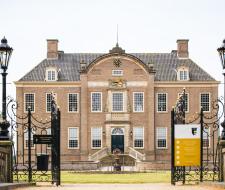 Accredited by Council of International Schools (CIS)
NetherlandsEnschedeCurrently watching: 6from 20000 € / termsProgram namedateAgeFeesPrimary schoolLast booking 6 weeks ago
Accredited by Council of International Schools (CIS)
NetherlandsEnschedeCurrently watching: 6from 20000 € / termsProgram namedateAgeFeesPrimary schoolLast booking 6 weeks ago All year round4-11Check with our specialistsMiddle school
All year round11-14GCSE
All year round14-16IB program
All year round16-18
All year round4-11Check with our specialistsMiddle school
All year round11-14GCSE
All year round14-16IB program
All year round16-18
-
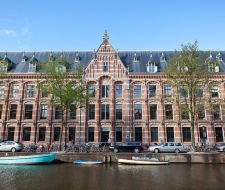 Program namedateAgeFeesInternational foundation
05.01.2021 - 13.08.202121.09.2020 - 06.06.202117+Bachelor's Courses(english)
All year round18+Master's program (english)
All year round21+Pre-Masters
01.09.2025 - 01.09.202617+
Program namedateAgeFeesInternational foundation
05.01.2021 - 13.08.202121.09.2020 - 06.06.202117+Bachelor's Courses(english)
All year round18+Master's program (english)
All year round21+Pre-Masters
01.09.2025 - 01.09.202617+ -
 INTERNSHIPS AT NIKE, GOOGLE AND MICROSOFT
NetherlandsAmsterdam
INTERNSHIPS AT NIKE, GOOGLE AND MICROSOFT
NetherlandsAmsterdam -
 Program namedateAgeFeesBachelor's Courses(english)
All year round17+Master's program (english)
All year round21+MBA
All year round21+
Program namedateAgeFeesBachelor's Courses(english)
All year round17+Master's program (english)
All year round21+MBA
All year round21+ -
 Program namedateAgeFeesBachelor's Courses(english)
All year round18+Master's program (english)
All year round21+
Program namedateAgeFeesBachelor's Courses(english)
All year round18+Master's program (english)
All year round21+ -
 Program namedateAgeFeesDutch + entertainmentLast booking 4 weeks ago
All year round3+Dutch + holidaysLast booking 6 weeks ago
All year round3+
Program namedateAgeFeesDutch + entertainmentLast booking 4 weeks ago
All year round3+Dutch + holidaysLast booking 6 weeks ago
All year round3+ -
 Program namedateAgeFeesBachelor's Courses(english)
All year round18+Master's program (english)
All year round18+International foundation
All year round17+Academic english
All year round18+
Program namedateAgeFeesBachelor's Courses(english)
All year round18+Master's program (english)
All year round18+International foundation
All year round17+Academic english
All year round18+ -
 Program namedateAgeFeesBachelor's Courses(english)
All year round18+Master's program (english)
All year round21+International foundation
17+
Program namedateAgeFeesBachelor's Courses(english)
All year round18+Master's program (english)
All year round21+International foundation
17+ -
 ranking is #39 in the Best Global Universities list
NetherlandsAmsterdamProgram namedateAgeFeesBachelor's Courses(english)
All year round18+Short university programs
All year round18+Check with our specialists
ranking is #39 in the Best Global Universities list
NetherlandsAmsterdamProgram namedateAgeFeesBachelor's Courses(english)
All year round18+Short university programs
All year round18+Check with our specialists
International Baccalaureate (IB) programs are now chosen by families all over the world — from Singapore to Switzerland, from Canada to the UAE. Why? Because IB is not just a "school with advanced English," but an integrated educational system recognized by universities in more than 100 countries.
For parents planning their child's secondary education abroad, the IB becomes a logical choice: the program develops academic skills, critical thinking, global thinking and independence — everything that is required not only at university, but also in life.
The Netherlands is becoming an increasingly popular destination among foreign families interested in IB — the country offers excellent quality education, a high level of security, affordable prices by European standards, and hundreds of programs in English. International Baccalaureate schools in Amsterdam, The Hague, Utrecht and Eindhoven may be particularly interesting in this regard.
Alternative destinations
What is International Baccalaureate?
The International Baccalaureate (IB) is, without exaggeration, a global academic model; it includes four levels of programs for different ages, designed to prepare students for global education and life in an international environment.
These are the PYP and MYP elementary and secondary schools, for children aged 3-12 and 11-16 years old, respectively; the Diploma Program high School (for children from 16 to 19 years old) and the complementary DP CP – a career applied track for high school students who find practice closer and more important than theory.
The IB Diploma Program (DP) remains the most popular among foreign students in the Netherlands. It is a two—year course that ends with international exams and allows them to enter leading universities around the world without additional entrance tests.

What other factors should be considered when choosing a school, besides teacher qualifications?
Look into the campus facilities, like sports fields and gyms, and the quality of the boarding accommodations, including room conditions and occupancy rates. Consider the diversity of the student body, the educational programs offered (especially regarding diplomas and graduation), the list of universities graduates typically attend, the school's reputation, and the backgrounds of the staff. The school's location is also a key factor.
IB in the Netherlands: key advantages
These are the key reasons why IB programs are increasingly being chosen in the Netherlands.:
- Excellent quality of education
Schools in the Netherlands are strictly accredited, and IB programs are reviewed by the International IB Organization. This means high academic quality and a standardized approach that is recognized worldwide.
- Multicultural environment
The Netherlands is an international country. Children from dozens of countries often study in IB classes, and the teaching is conducted in English, and in some schools also in Dutch. This gives children the opportunity to develop language and intercultural skills.
- Geographical location and accessibility
Amsterdam, The Hague and Rotterdam are within an hour's drive of each other. The Netherlands provides easy access to the UK, Germany, France and Belgium, making the country a convenient option for families planning frequent trips or relocations.
- The opportunity of continuing education in Dutch universities
Over 450 bachelor's degree programs at Dutch universities are taught in English. IB graduates have the right to enroll directly, without entrance exams (and most importantly, without Dutch language testing).
- Pleasant price level
Compared to international schools in Switzerland or the UK, studying in the Netherlands is much more affordable. At the same time, many schools offer a similar level of quality and infrastructure.
The IB school system in the Netherlands
According to official IB data, there are more than 50 schools in the Netherlands accredited for one or more IB programs. Some of them are private international schools, some are public schools with English—speaking departments.
90% of schools are located in large cities such as:
- Amsterdam is the largest center, it is home to the International School of Amsterdam, Amity International School, and others.
- The Hague is known for The British School in the Netherlands and The Hague International School.
- Utrecht, Eindhoven, Maastricht, Haarlem — offer less overloaded, but high-quality IB programs.
- Maastricht is the United World College Maastricht (UWC), which accepts students from all over the world through a scholarship program.
Let's emphasize once again: in the Netherlands, along with private schools, public schools with international branches also deserve attention; they are more affordable, but they are often open only to children of temporary foreigners (expat status), and require documents confirming that the family has recently moved.
When choosing a school, it is important to pay attention to:
- IB program levels offered (not all schools in the Netherlands offer all four),
- Language of instruction,
- Studying format: full-time only or with accommodation,
- Exam results and graduate admissions.
Some facts about schools with IB in the Netherlands:
- The language of teaching is almost always English; in some schools, a Dutch track is also available.
- Most schools provide career consultants who help with choosing universities, writing motivation letters, and applying through UCAS/Studielink.
- The strength of IB schools is flexibility; many schools allow you to choose a unique combination of subjects — for example, biology at the highest level and art at the standard level, so that your child will learn what he likes and useful – no more and no less.
- International environment – students from dozens of countries, teachers with international experience.
One of the main advantages of studying at an IB school in the Netherlands is a smooth, "barrier—free" transition to the country's higher education system. The IB diploma is recognized by the Dutch Ministry of Education as a full-fledged equivalent of the Dutch VWO certificate, which opens up access to universities without having to retake exams.
This means that:
- Dutch language exams are not required if the university's curriculum is in English.;
- IB points are awarded when applying through Studielink, the national admission platform.;
- IB graduates often receive credits in their first year;
- IB graduates have the opportunity to apply for a scholarship (in some universities — up to 50% based on academic success), and in 37% of cases the school satisfies such a request more often than in the case of graduates of public schools.
Tuition fees for schools with an IB in the Netherlands
One of the key advantages of the Netherlands compared to other European countries is the relatively affordable cost of international education. This is especially true for IB programs, which can cost 1.5–2 times more expensive in Switzerland or the UK.
If we are talking about a private school in the Netherlands, the cost ranges from €16 to 25 thousand; public international schools are much more modest in their expectations, prices here range from €4 to 7 thousand.
Additional expenses include:
- Textbooks and materials: €500-1 thousand per year
- Excursions, trips: €300-800
- IB exam fees: up to €700
- School lunches: €3-6 per day In addition, in some schools it is also customary to pay for entrance exams and interviews (from €50 to € 300).
In some private schools: entrance exam or interview fees.
Admission requirements for International Baccalaureate schools in the Netherlands
Each school sets its own admission criteria, but in general, the following stages can be distinguished::
- Online application form,
- Preparation of documents (you need an academic certificate for the last 1-2 years of study, a letter of motivation from the student (sometimes also from parents), letters of recommendation from teachers and the principal, etc.),
- A video or face-to-face interview,
- Testing in mathematics and English (not always),
- Preparation of documents for obtaining a visa (a copy of a passport or birth certificate, photos and medical certificates).
Some schools request Cambridge English (B2/C1) results, especially if the language of instruction is English and the student did not have English in school before.
IB in the Netherlands is an informed choice for a global future
Choosing an IB program in the Netherlands is a strategic step, it can have a decisive impact on the quality of a child's professional trajectory and determine his future. Due to its high level of teaching, multicultural environment, logistical accessibility and friendly society, the Netherlands is becoming an increasingly sought-after destination among families from Europe, Asia and the CIS.
International Baccalaureate schools in the Netherlands are an excellent choice for:
- Those who plan to study at a university abroad (especially in Europe, the UK, Canada or the USA),
- Families considering moving,
- Independent students with a high level of English,
- Those who appreciate the flexibility of the program and do not want to limit themselves to one narrow specialization.
In the context of increasing globalization, high-quality secondary education is becoming the basis for a flexible, competitive future. Also the programs of the IB schools in the Netherlands, with their strong academic base, respect for individuality and focus on global success, are a great start on this path.
Learning programs-summary information
| Name | Meaning | Equivalent | Min. age | Duration, years |
Next stage | Cost |
|---|---|---|---|---|---|---|
| GCSE | General certificate of secondary education | secondary education (non-accomplished) | 14 | 1–2 | A-Levels | 15,000 USD+ |
| A-Levels | Advanced level | secondary education (accomplished) | 16 | 2 | University | 15,000 USD+ |
| BTEC | Business and Technology Education Board | secondary special education | 14 | 2–3 | University/ work | 15,000 USD+ |
| Oxbridge Preparation | Preparing for Oxford and Cambridge | secondary education (accomplished) | 17 | 1 | University | 15,000 USD+ |
| International Baccalaureate | International baccalaureate | secondary education (accomplished) | 16 | 2 | University | 18,000 USD+ |
| Foundation/ Pathway Year | Preparatory year | admission to the 1st year of university | 17 | 1 | University | 14,000 USD+ |
| NCUK | The Northern consortium | 2 year university | 17,5 | 1 | 2 year University of NCUK | 13,000 USD+ |
| Special Preparation (Medics/Math/Business) | Specialized training | - | 14 | optional | optional | 4,000 USD+ |
| Academic English | Academic English | Language school | 8 + | 6–12 months | School or University | 8,000 USD+ |
Advantages and disadvantages of English schools
| Advantages | Disadvantages |
|---|---|
| The opportunity to enter the best universities in England, USA, Canada, Switzerland, Europe, the world | Expensive |
| High quality of education and academic standards | Strong workload |
| Perfect English after graduation | The need to change the social environment; it takes time to adapt |
| Useful contacts | The difficulty of choosing the most suitable school for the child, requires a qualified specialist |
Top 21 boarding colleges in England 2026
| 1 | Cardiff Sixth Form College |
| 2 | National Mathematics and Science College |
| 3 | Abbey College Cambridge |
| 4 | d'Overbroeck's College |
| 5 | MPW London |
| 6 | CATS Cambridge |
| 7 | Kensington Park |
| 8 | DLD London |
| 9 | King's College St Michael’s |
| 10 | Bellerbys Cambridge |
| 11 | Chelsea Independent College |
| 12 | MPW Cambridge |
| 13 | Bellerbys Brighton |
| 14 | CATS London |
| 15 | St Clare's Oxford |
| 16 | Bishopstrow College |
| 17 | CATS Canterbury |
| 18 | Bellerbys London |
| 19 | Ealing Independent College |
| 20 | Cambridge Tutors College |
| 21 | Abbey Manchester |
