ACG School Jakarta, Private school ACG Jakarta








Programs and prices, tuition fees in ACG School Jakarta, Private school ACG Jakarta


Kindergarten
- Age of students: 3+.
- Duration: 2 years.
- Language of instruction: English; Indonesian is also available.
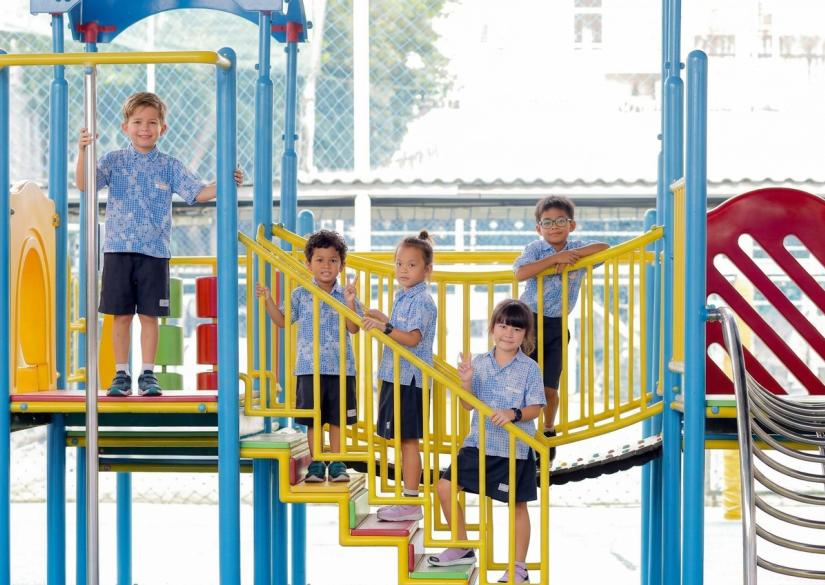
Kindergarten at ACG School Jakarta is designed for children aged 3–4 and serves as an early preparation stage before primary school. The campus is located in Pasar Minggu, in South Jakarta: for young children, this is a daytime format with classes, care, play, and a gradual introduction to the school environment.
The educational program is based on the Reggio Emilia approach: the child explores, experiments, asks questions, and expresses their ideas through play, speech, movement, drawing, music, and working with materials.
From Kindergarten 3, children begin working with the inquiry units of the primary international program. At age 3, they explore the themes «Who We Are», «Where We Are in Place and Time», «How We Express Ourselves», «How the World Works». In Kindergarten 4, the themes shift slightly: «Who We Are», «How We Express Ourselves», «How We Organize Ourselves», «Sharing the Planet».
The program includes English language, mathematics foundations, six inquiry units, physical education, swimming, visual arts, music, and Indonesian language. In Kindergarten 4, children undergo a progress assessment: the school evaluates how the child is developing language skills, social skills, and independence, and whether they show readiness for the transition to primary school.
Primary School
- Age of students: 5+.
- Duration of study: 6 years.
- Language: English; Indonesian and Chinese are also studied.
Primary School is designed for students aged 5–10 (Years 1–6). At this level, children learn through six inquiry units: «Who We Are», «Where We Are in Place and Time», «How We Express Ourselves», «How the World Works», «How We Organize Ourselves», «Sharing the Planet». Each unit connects reading, writing, numeracy, natural sciences, humanities topics, arts, and practical assignments.
The main feature of the primary program is inquiry-based learning. Students explore the central idea of each unit, search for information, discuss findings, use various materials, and gradually learn to explain their point of view. Classes extend beyond the classroom: the program includes trips to cultural and historical sites near Pasar Minggu and South Jakarta.
In addition to core subjects, children study music, physical education, visual arts, swimming, Indonesian, and Chinese. In primary school, digital resources, sports activities, clubs, and inter-school activities are available.
Secondary School
- Age: 11+.
- Duration: 3 years.
- Language of instruction: English; Indonesian and Chinese are additionally studied.
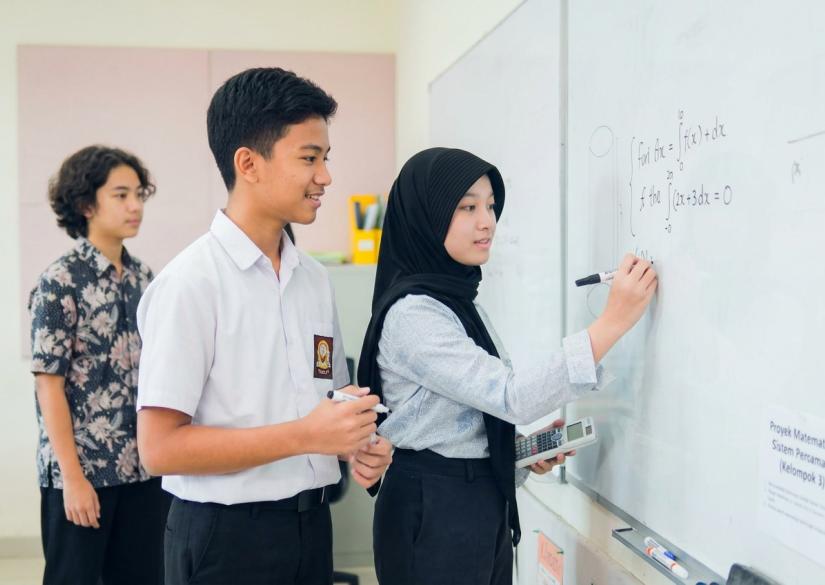
Secondary School covers Years 7–9 and serves as a transitional stage to upper academic programmes. Learning becomes more structured: subjects are taught by specialist teachers, the volume of written assignments, projects, and independent work increases, with a focus on analytical thinking and the ability to argue one's point of view.
The primary language of instruction remains English, Indonesian is studied as part of cultural integration, and Chinese is offered as an additional subject. Students gradually develop the skills necessary for further study in the Cambridge IGCSE programme: working with sources, planning, exam preparation, and applying knowledge in practice.
Cambridge IGCSE
- Age: 14+.
- Duration of study: 2 years.
- Language: English; Indonesian (optional).
Cambridge IGCSE is a key stage before the transition to upper secondary school. The programme is designed for students aged 14–16 and combines academic preparation with the development of independent study skills. Over two years, students choose some of their subjects, become familiar with the international examination format, and prepare for final assessments graded on the A*–G scale.
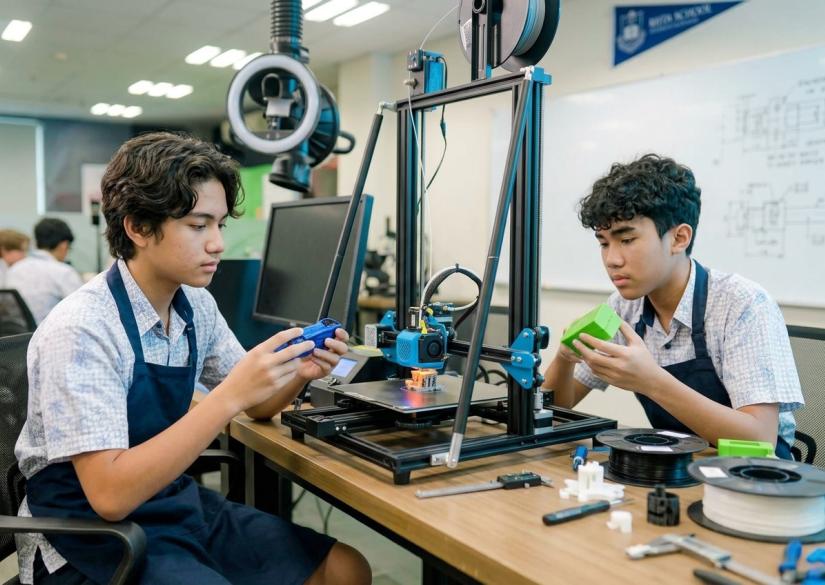
The compulsory component includes English (as a first or second language), English Literature where required, International Mathematics, and for advanced students — Additional Mathematics, the Global Perspectives course, and Coordinated Sciences. Optional subjects include Art and Design, Design and Technology, Indonesian, Physical Education, Music, and Economics.
The programme combines exam preparation with the development of academic skills: information analysis, argumentation, project work, and research. Teachers support students through regular consultations and examination preparation.
IGCSE is well suited to those who plan to continue their studies on a diploma programme and wish to form their subject profile in advance for future university admission.
Diploma Programme
- Age of students: 16+.
- Duration of study: 2 years.
- Language: English.
The Diploma Programme is designed for Years 12–13 students and serves as the final stage before entering university. Senior students choose six subjects from six academic areas: three studied at higher level and three at standard level. This approach allows students to build an individual academic profile aligned with their chosen direction, whether natural sciences, humanities, arts, mathematics, languages, or social sciences.
In addition to subjects, each student completes three mandatory components that develop key skills for further study and life. CAS (Creativity, Activity, Service) combines creative activities, physical activity, and participation in social projects: students can engage in art, sports, volunteering, develop their own initiatives, and work in teams, building leadership qualities and a sense of responsibility.
TOK (Theory of Knowledge) helps students understand how knowledge is formed across different fields — from science to the arts, teaches them to analyze sources of information, ask questions, and critically evaluate arguments. The Extended Essay is an independent research paper of up to 4,000 words: the student selects a topic within one of their subjects, formulates a research question, conducts analysis, works with sources, and — under the guidance of a supervisor — produces an academic paper that develops their writing, analytical, and independent thinking skills.
Description of ACG School Jakarta, Private school ACG Jakarta
- Year of foundation: 2004.
- Location: Pasar Minggu, South Jakarta, Indonesia.
- Number of students: 270.
- Type of education: co-education.
- Type of institution: private international day school.
- Language of instruction: English.
A private international school in the Pasar Minggu area of South Jakarta, whose history began with ACG English School in Kelapa Gading. Later, ACG opened a full-fledged international school in South Jakarta offering education from Kindergarten to Year 13. The school grew gradually: first opening a primary programme and receiving authorization for the International Baccalaureate Primary Years Programme, then adding middle and senior stages, joining the Cambridge International system and gaining the right to offer the Diploma for upper school students, and eventually becoming a member of the Council of International Schools.
Today, children aged 3 to 18 study here — from Kindergarten to Year 13. In primary school, learning is built on an inquiry-based approach and interdisciplinary projects; in middle school, students transition to the Cambridge programme; and in upper school, they prepare for international examinations and university applications.
ACG School Jakarta is part of the Inspired Education group, which connects it to an international network of educational institutions, exchange programmes, and summer courses. For families, the school provides a convenient, unified pathway within a single campus: from the early years of education through to the final year and applications to overseas universities.
Educational process
At ACG School Jakarta, the learning approach gradually changes as the child grows older.
- In the lower grades, there is a lot of hands-on practice, play, observation, visual materials, and short research assignments. Children learn to ask questions, explain their findings, work in groups, and connect different subjects within a single theme. In primary school, the foundation is set by inquiry-based units: students explore a topic through reading, writing, arithmetic, natural sciences, art, physical activity, and discussion. This format helps children see the connections between subjects and apply knowledge in simple projects.
- In middle school, the share of subject-specific lessons increases, classes are taught by specialist teachers, assignments become longer and more complex, and there is more written work, presentations, laboratory observations, and preparation for exam formats.
- In upper school, educational process becomes more academic: students choose subjects aligned with their future specialization, write research papers, prepare for external exams, and receive guidance on individual university pathways. The school assists with material review, internal assessments, personalized recommendations, and even the preparation of academic documents.
Things to know about
- The history of ACG School Jakarta began with ACG English School in Kelapa Gading; later ACG opened an international school in South Jakarta.
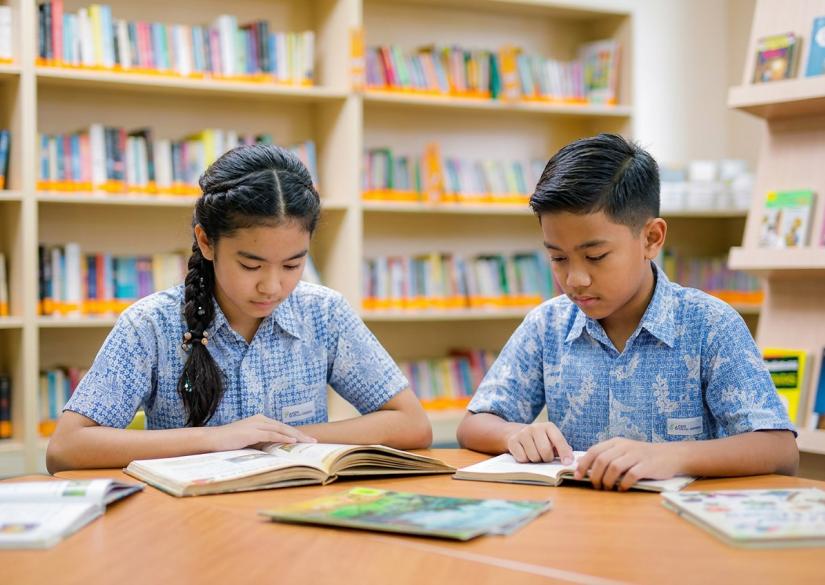
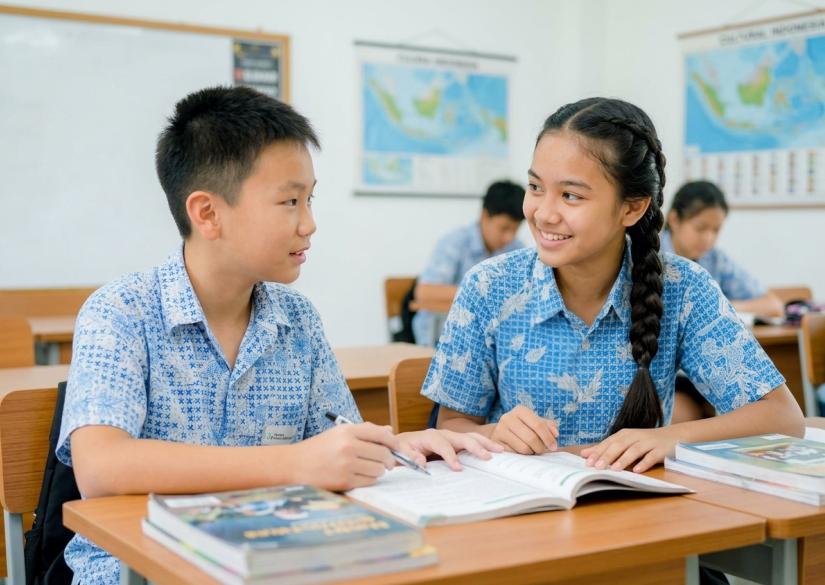
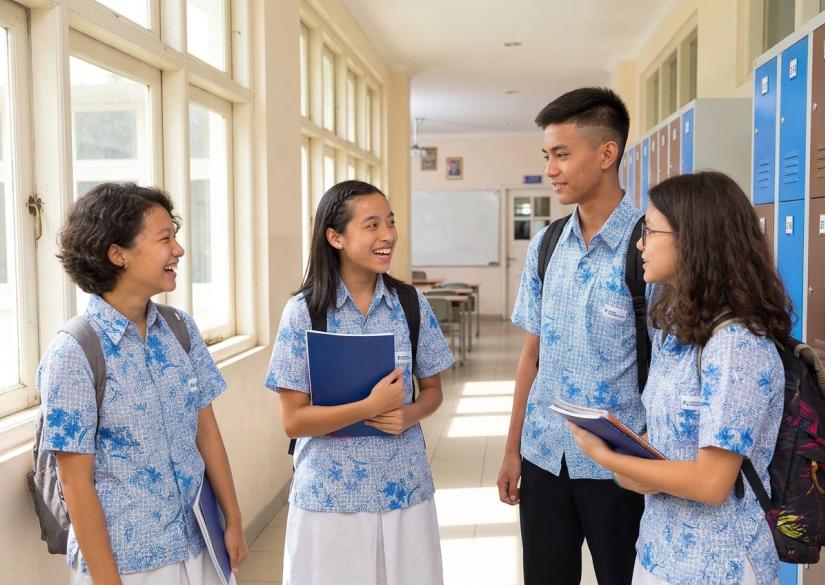
- The school has a uniform with a batik pattern: the design features a gecko and orchids — details connected to the nature and culture of Indonesia. Primary students wear dark blue batik shirts, while older classes wear light blue ones.
- In 2018, Radio Wolf was launched at the school: students write scripts, conduct interviews, find topics, and record audio materials using Rodecaster Pro equipment.
- Since 2019, a Model United Nations has been operating. Participants analyze international issues, prepare speeches, and draft resolutions following Model UN rules. That same year, the Yearbook Committee was established: students collect photos, write texts, edit materials, and publish a digital yearbook each year by July.
Accommodation, meals, prices
Students live off campus — with their family or legal guardians in Jakarta — commuting to classes every school day. This format assumes that parents independently arrange the child's accommodation: this may be their own home, a rented apartment/house near the school, or staying with relatives.
For daily commutes, the school offers a bus service. Confirmed pick-up zones: Pondok Indah, Kuningan, Senayan, Dharmawangsa, and Kemang. Additional routes are opened when there are at least five students; the transport service is paid separately each semester.
Meals are handled by the school canteen: during morning and afternoon breaks, students can get hot meals and light snacks. The menu is developed by a Jakarta-based catering company — the school sends it to parents in advance by email and publishes it in school newsletters every two weeks. A child may bring a packed lunch and snacks from home. Additional restrictions apply to younger classes: candy, chewing gum, and carbonated drinks, as well as food sharing between students, are prohibited in Kindergarten and Primary. Ordering food from cafes and restaurants is only permitted with a teacher's authorization.
Activities ACG School Jakarta, Private school ACG Jakarta
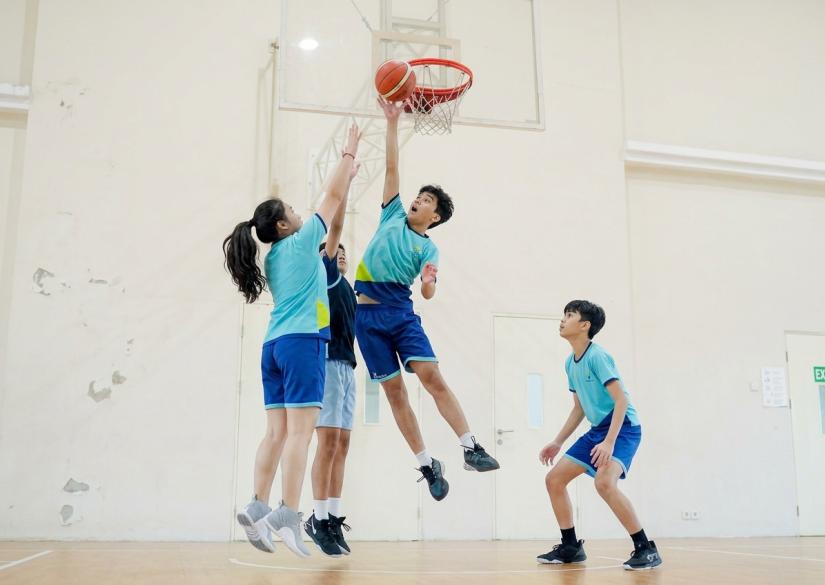
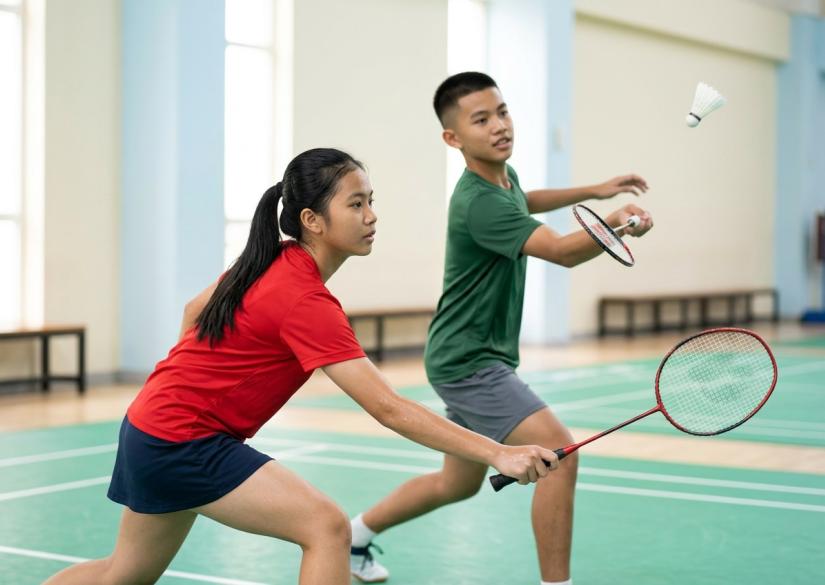
Extracurricular life at ACG School Jakarta revolves around sports, arts, different clubs, student leadership, and school initiatives. The sports program includes basketball, football, volleyball, swimming, badminton, and athletics: school teams compete in ASAC, JASIS, and JAAC tournaments, with matches held after school on weekdays and weekends.
In the creative area, music, the ACG choir, concerts, and lower school productions stand out. For students more drawn to media, the school runs Radio Wolf: it launched in 2018 and provides excellent hands-on practice in scriptwriting, interviewing, research, and audio recording using Rodecaster Pro equipment.
Since 2019, Model United Nations has been active: participants prepare opening speeches, discuss international issues following UN model rules, and draft resolutions. That same year, the Yearbook Committee was established — a student team that gathers content, edits texts, works with photos, and publishes the school's digital yearbook by June.
A separate area is school leadership: students can participate in the Student Council, represent class interests, help organize events, and take on roles in sports teams. The Eco Warriors environmental group conducts awareness activities within the school, promotes the principles of reduce, reuse, recycle, and participates in Earth Day, Clean Up Jakarta Day, and Hari Bersih Indonesia.
Field trips are primarily linked to the elementary school program: children travel to cultural and historical sites near South Jakarta for lessons and exploration. Near Pasar Minggu is Ragunan Zoo — a large zoological park in South Jakarta, connected to themes of animals, ecosystems, and nature conservation. For cultural and history lessons, Setu Babakan is an excellent destination — a Betawi cultural district with a museum, traditional houses, crafts, and local cuisine.
For larger outings, Jakarta offers Taman Mini Indonesia Indah — a park with pavilions from different provinces, museums, and recreational areas. Another popular destination is Museum Layang-Layang Indonesia in South Jakarta, a kite museum with a thematic collection.
For leisure and informal school outings, students can visit parks, sports grounds, shopping centers, cinemas, and exhibitions. The Kemang, Pondok Indah, and Senayan districts offer convenient venues for meetups, sports, creative activities, and parent events.
Advantages
- ACG School Jakarta covers the entire school journey: from early years to graduation.
- The curriculum combines three international formats: the International Baccalaureate Primary Years Programme, Cambridge International in middle school, and the Diploma Programme in upper grades.
- The school community is small: 270 students from 31 countries. This intimate scale helps maintain personal contact between teachers, children, and families.
- After classes, students can choose activities based on their interests: sports, music, the school radio Wolf, Model UN, a digital yearbook, the Eco Warriors environmental project, or participation in student government.
- Upper school students receive support with university selection, applications through UCAS and Common App, recommendation letters, predicted grades for admissions, and working with the Unifrog platform.
Facilities and equipment at ACG School Jakarta, Private school ACG Jakarta
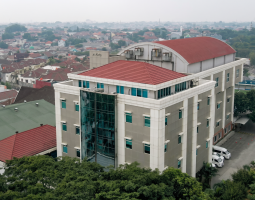
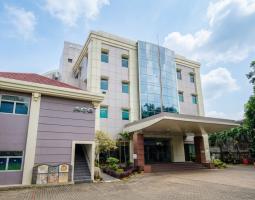
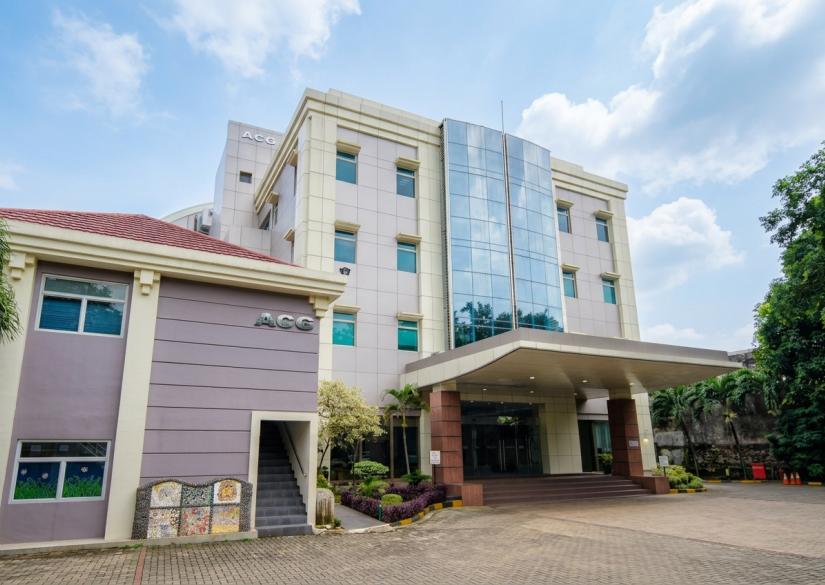
The campus is located in the Pasar Minggu district of South Jakarta. All levels are housed on the same grounds: junior, middle, and senior classes share a common campus. For the convenience of students and parents, there are well-arranged access roads and safe drop-off and pick-up zones. The academic infrastructure includes 30 classrooms, two science laboratories, a library, music and art rooms, a dance studio, and a design and technology classroom. On the grounds there is a Musholla — a prayer room for students and staff.
For sports activities, there is a multipurpose hall, a swimming pool, a covered playground, and a mini-football field; primary school students additionally have access to a swimming pool and a padel court. For middle school students, science laboratories, sports areas, music studios, a library, and a learning resource center are available.
The campus is situated in the urban part of South Jakarta. A school bus provides transportation connections to the Pondok Indah, Kuningan, Senayan, Dharmawangsa, and Kemang districts.
Admission dates and extra charges
The academic year begins in August and ends in June. It is divided into four terms, with breaks in between: a short autumn break, longer winter holidays, and a spring break. Indonesia's public and religious holidays are also included in the schedule.
List of additional expenses includes:
- registration fee,
- annual school development fee,
- school uniform,
- educational materials,
- technology fee,
- transportation,
- meals, accommodation,
- English language support,
- individual academic support (if required),
- Cambridge IGCSE and Diploma Programme examination fees,
- Diploma materials,
- online courses (if this format is chosen),
- fee for Residential Learning off-site educational activities.
Enrolment process
After the documents are submitted, the admissions committee contacts the family to clarify details and agree on the next steps, after which an interview is conducted with the school's principal or a member of the administration. If necessary, the child is offered a language assessment to determine their level of English proficiency.
If the school reaches a positive decision following the review, the family is sent an official offer letter, a contract, and an invoice. To confirm the place, the documents must be signed and returned, and the required payments made.
ACG School Jakarta accepts applications throughout the academic year, so a child can begin studying not only in August but also mid-year, provided places are available.
Perspectives
The senior school of ACG School Jakarta is focused on admission to foreign universities. In Years 12–13, students complete a diploma program, choose subjects according to their future specialization, prepare a research essay, build a portfolio of achievements, and earn academic recommendations.
The school helps senior students with the choice of countries, universities, and programs. For applications to the United Kingdom, UCAS is used; for the USA — Common App; for selecting universities and planning admissions — the Unifrog platform. Students receive assistance with recommendation letters, predicted grades, and academic transcripts. Through the Inspired network, students gain access to additional university counseling partners. Arete Educational Consulting assists with SAT preparation, university selection, essays, and admissions strategy. Finally, The Classroom Door works with academic subjects and exam preparation.
After graduation, students continue their studies at universities in Asia, Europe, the United Kingdom, Canada, the USA, and Australia.
Entry requirements, how to apply, what is required to enrol
List of documents for admission is presented by:
- passport or birth certificate of the child,
- current school reports,
- a photograph,
- results of tests and external exams, if already available,
- examples of academic work for senior grades, if the school requests additional materials.
All candidates undergo an interview with the principal or a senior administration representative: it assesses not only the academic level, but also the child's attitude toward learning, personal responsibility, and motivation. If necessary, a separate English language assessment is arranged for the applicant.
Scholarships ACG School Jakarta, Private school ACG Jakarta
ACG School Jakarta offers academic scholarships for students entering Year 12. The program is designed for strong Indonesian candidates living in Jakarta: the school considers grades, academic potential, English language proficiency, personal motivation, and achievements in arts, culture, or sports during the selection process.
The scholarship covers the full cost of tuition and the annual school development fee for the duration of study in Years 12–13. All other expenses remain the family's responsibility: school uniform, after-school activities, transportation, meals, examination fees, and other additional payments. The number of such scholarships is limited, so not all candidates receive them, even with high results. A scholarship applicant must:
- live in Jakarta,
- not be enrolled at another ACG school at the time of application,
- have a high level of English proficiency,
- have strong academic results,
- share the school's values and the Diploma student profile.
The application is submitted together with the enrollment documents. The candidate prepares a student resume with supporting materials, two letters of recommendation, and a 1,000-word essay explaining what the student will gain from studying in this program and how their participation will benefit the school community. The final stage is an interview with the school principal.
The scholarship is reviewed annually. The student must maintain a high academic level, as the school may discontinue funding if results are unsatisfactory.
The Nsouli Scholars Programme is also available separately — a global scholarship program from the Inspired group: it is designed for 50 outstanding students at a time (across the entire network) and provides full funding to study at Inspired schools.
Institution on the map
Residence permits, citizenship and other services
- Guardianship services during the studies
- Student supervision
Review about ACG School Jakarta, Private school ACG Jakarta
Recommendations on when to apply
| Language courses, schools and children's language camps | Primary and secondary education - private schools | Preparation programmes for entering universities - higher education | Higher education (after completing accredited programs A-level, IB, High School) - Bachelor, Master, MBA |
| - we recommend to apply 6-9 months before the start of the course (some camps and schools offer discounts for early booking or for lengthy study programs) - there are some very popular and high demand children's camps, where the applications need to be submitted 1 year in advance (in particular Switzerland , Great Britain , USA , Canada , Austria) | - we recommend to apply one year before the start of the training program, - some schools have a specific time frame (September-November - please specify an individual school) - some schools require tests in several stages (UKISET, internal tests of the school: English, mathematics, logics, subjects, interview, some require a personal visit) | - we recommend to apply one year before the start of the program, - for Foundation and Pathway programs, IELTS and TOEFL certificates are usually required, respectively | - recommended submission one year before the start of the program, - the deadline normally closes in January, for TOP HEIs and, as a rule, in March in other universities - for a bachelor, a Foundation or Pathway preparatory program a completed A-level, IB, High School + IELTS / TOEFL are required - for Masters you need a graduated higher education, in some cases you need a pre-Masters program - MBA requires completed higher education, work experience preferably at least 2-3 years, etc. |