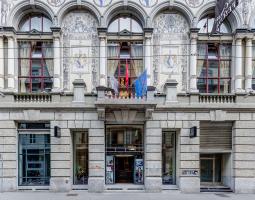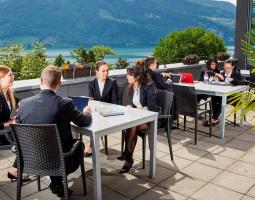
University of Lausanne (UNIL)




Programs and prices, tuition fees in University of Lausanne (UNIL)


Information on the program can be found on the official website of the school.
Information on the program can be found on the official website of the school.
Description of University of Lausanne (UNIL)
Lausanne University or University of Lausanne (UNIL). It is classified as a state non-profit, public educational institution. It was founded in 1537 and belongs to the category of the oldest universities in Europe. According to the rating, it is included in 5% of educational institutions of the world by the quality rating of education. This is an average size, an educational institution in which there are 12,000 students. The teaching staff consists of 2000 specialists, including foreigners.
The university runs a student and faculty exchange program that improves the quality of education. Details of campus life, research activities, and daily life are covered on official websites and social media. The University of Lausanne is renowned for its high quality of teaching, and UNIL carries out active research in the natural sciences and business.
In November 2024, UNIL rector Frédéric Herman, a professor of geology, announced he would not seek a second term so he could devote himself to research on glacial erosion, a field in which he is recognized as a world-class expert.
Educational process
The Graduate Campus offers free workshops for doctoral candidates, postdocs, and research supervisors from all faculties — UNIL, CHUV, and Unisanté.
Faculties and colleges
The University of Lausanne comprises the following faculties:
- Faculty of Theology and Religious Studies (Faculté de théologie et de sciences des religions),
- Faculty of Law, Criminal Justice and Public Administration (Faculté de droit, des sciences criminelles et d'administration publique),
- Faculty of Arts (Faculté des lettres),
- Faculty of Social and Political Sciences (Faculté des sciences sociales et politiques),
- Faculty of Business and Economics (Faculté des hautes études commerciales, HEC),
- Faculty of Biology and Medicine (Faculté de biologie et de médecine, FBM),
- Faculty of Geosciences and Environment (Faculté des géosciences et de l'environnement, FGSE).
The Faculty of Biology and Medicine (FBM) includes several teaching units: the School of Medicine (École de médecine), the School of Biology (École de biologie), the Institute of Higher Education and Research in Nursing Sciences (IUFRS), the Doctoral School (École doctorale), and postgraduate medical training (Formation postgraduée médicale).
Scientific achievements
The Faculty of Biology and Medicine (FBM) marked the FBM Awards 2022 at the faculty's summer evening, an event that also honored professors receiving emeritus status or retiring.
A three-member UNIL team from the Faculty of Biology and Medicine won the best storytelling prize at the world final of the Map the System competition, organized by the University of Oxford in the summer of 2026. Students from the Lausanne School of Medicine (École de médecine de Lausanne) took first place in The Move tournament, which uses facial expressions and role play to teach recognition of neurological symptoms, and also received a special jury prize.
A seven-member UNIL biology student team led by Professor Yolanda Schaerli won a gold medal at the international synthetic biology competition iGEM 2024 in Paris with the V.E.S.P.A. project, also earning nominations in three categories. Five research projects from the Faculty of Biology and Medicine were among the 61 projects selected by the Swiss National Science Foundation for Starting Grants, with total funding of about 9 million Swiss francs.
Faculty of Biology and Medicine animal caretaker Lisa Arlandi received the Prix 3R animalier·ères FBM 2024 award for promoting humane treatment of laboratory animals.
Things to know about
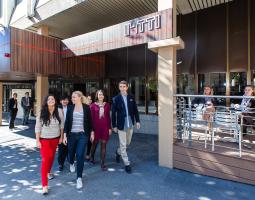
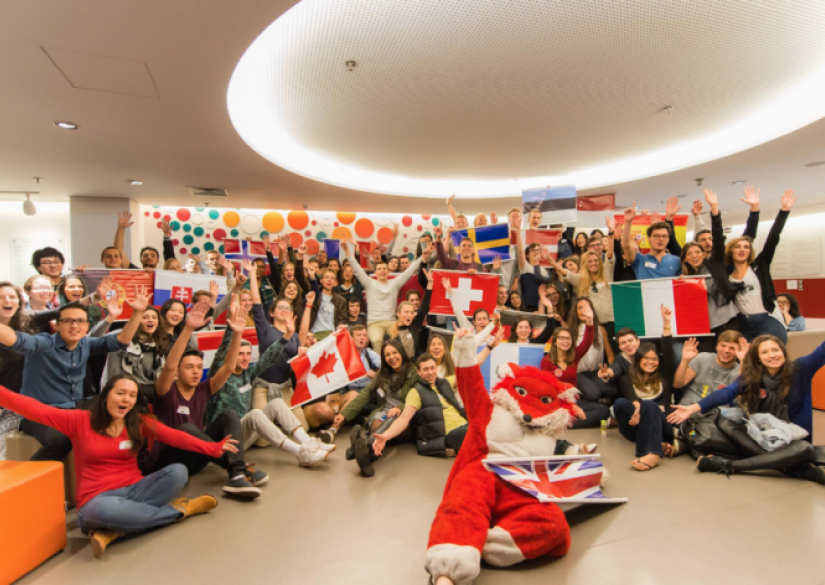
Students and staff at the University of Lausanne represent more than 120 nationalities.
Activities University of Lausanne (UNIL)
Extracurricular life at UNIL includes events for students and staff across different faculties:
- a one-day retreat for first-year students in the Quantitative Biology program, which helps them settle into Lausanne and meet other participants in the program,
- the annual Lausanne Shakespeare Festival, organized by the English department for local French- and English-speaking audiences of all ages,
- ML Day, an event where researchers present machine learning work as posters or oral presentations,
- regular joint dinners, mountain hikes, and away days for the English department's staff to discuss research and teaching work.
Advantages
- UNIL is home to the headquarters of the Swiss Institute of Bioinformatics (SIB), which is also listed as an affiliated organization of the Faculty of Biology and Medicine (FBM),
- the Faculty of Biology and Medicine (FBM) is affiliated with the Lausanne University Hospital (CHUV), which is structurally part of the faculty,
- two FBM professors were elected full members of the Swiss Academy of Medical Sciences (ASSM) among nine new members,
- FBM professor Claudia Bagni was elected a member of Academia Europaea, a learned society that advises governments and international organizations on scientific matters.
Facilities and equipment at University of Lausanne (UNIL)
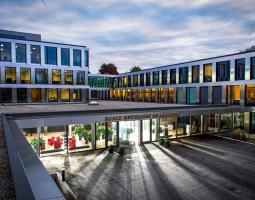
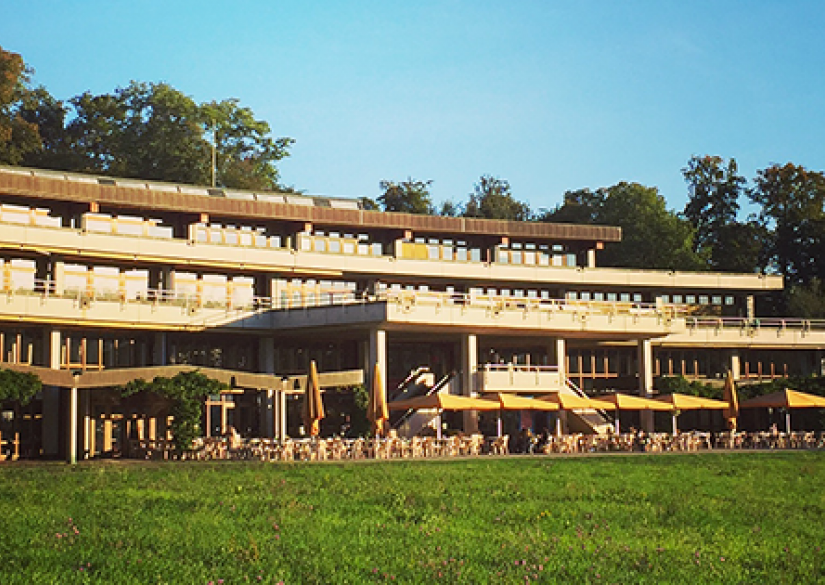
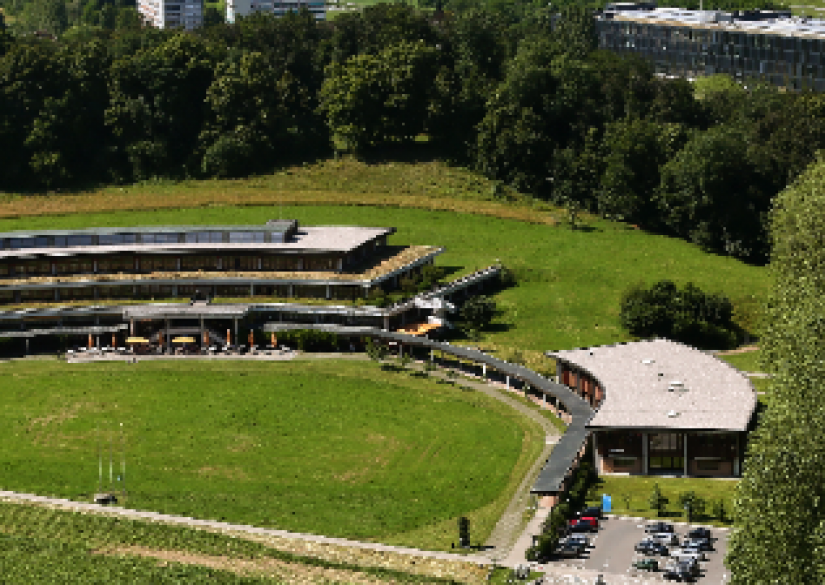
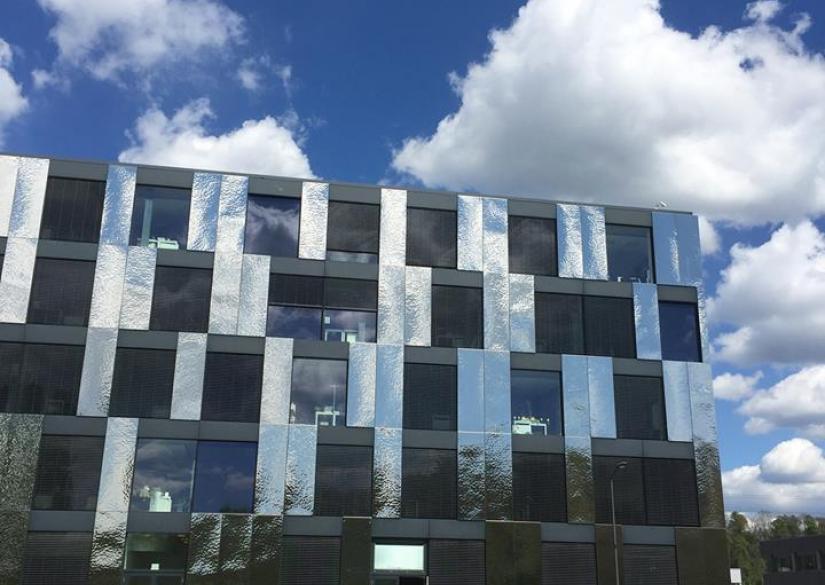
The university is located in the Swiss city of Lausanne. The campus is on the outskirts of the city. Since its founding, it has been surrounded by unspoiled Swiss countryside — beautiful, but not always convenient. Today's campus is well connected to the city and offers developed infrastructure that makes student life comfortable for both study and living. Students have access to a dormitory, a library, sports facilities, cozy cafes, and conference halls.
The UNIL campus sits on the shore of Lake Geneva, near the center of Lausanne, and works closely with the Swiss Federal Institute of Technology in Lausanne (EPFL), which shares the same site. The university employs more than 5,000 staff and enrolls 17,000 students across the Dorigny campus, the CHUV university hospital, and Epalinges. The campus is home to the Lausanne Genomic Technologies Facility (GTF), which gives users access to state-of-the-art nucleic acid analysis technologies and support in using them, as well as the Health 2030 Genome Center, a research and innovation center for genomics led by Professor Alexandre Reymond.
Enrolment process
After being admitted to the Cancer et Immunologie doctoral program, a candidate is required to begin studies within 6 months.
Smapse specialists will support you at every stage of enrollment.
Entry requirements, how to apply, what is required to enrol
The University of Lausanne offers prospective students bachelor's, master's, and doctoral programs. Applicants can choose programs in both the humanities and the natural sciences. Under the Bologna framework, the main course of study consists of two stages: a three-year bachelor's degree, followed by a master's degree (a second cycle of 3 to 4 semesters) that allows students to specialize in a research field and gain an interdisciplinary education.
Admission is open to both Swiss citizens and international applicants wishing to study at the university. A successful application requires a package of documents, listed on the university's official website, and a language test. Tuition is charged for the bachelor's and master's programs for international students. UNIL offers students financial support in the form of scholarships and grants awarded on a competitive basis.
The university enjoys an excellent reputation among employers, which helps its graduates find jobs at leading companies and corporations worldwide.
Scholarships University of Lausanne (UNIL)
Successful candidates for PhD positions in the Quantitative Biology program receive an employment contract with a competitive salary and social insurance for up to 5 years.
The Faculty of Biology and Medicine (FBM) doctoral school holds an annual competition for FBM scholarships for PhD applicants in life sciences working in the faculty's labs.
Institution on the map
Residence permits, citizenship and other services
- Guardianship services during the studies
- Student supervision
Review about University of Lausanne (UNIL)
Recommendations on when to apply
| Language courses, schools and children's language camps | Primary and secondary education - private schools | Preparation programmes for entering universities - higher education | Higher education (after completing accredited programs A-level, IB, High School) - Bachelor, Master, MBA |
| - we recommend to apply 6-9 months before the start of the course (some camps and schools offer discounts for early booking or for lengthy study programs) - there are some very popular and high demand children's camps, where the applications need to be submitted 1 year in advance (in particular Switzerland , Great Britain , USA , Canada , Austria) | - we recommend to apply one year before the start of the training program, - some schools have a specific time frame (September-November - please specify an individual school) - some schools require tests in several stages (UKISET, internal tests of the school: English, mathematics, logics, subjects, interview, some require a personal visit) | - we recommend to apply one year before the start of the program, - for Foundation and Pathway programs, IELTS and TOEFL certificates are usually required, respectively | - recommended submission one year before the start of the program, - the deadline normally closes in January, for TOP HEIs and, as a rule, in March in other universities - for a bachelor, a Foundation or Pathway preparatory program a completed A-level, IB, High School + IELTS / TOEFL are required - for Masters you need a graduated higher education, in some cases you need a pre-Masters program - MBA requires completed higher education, work experience preferably at least 2-3 years, etc. |