University of Halle-Wittenberg (MLU)






Programs and prices, tuition fees in University of Halle-Wittenberg (MLU)


Information on the program can be found on the official website of the school.
Information on the program can be found on the official website of the school.
Description of University of Halle-Wittenberg (MLU)
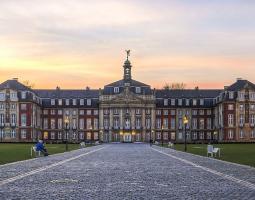
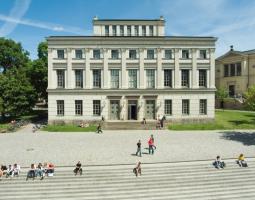
Martin Luther University Halle-Wittenberg (MLU) offers higher education in Germany. It is a public university in the small city of Halle. Its history reaches back to the late Middle Ages, with academic activity beginning in 1502.
Martin Luther University Halle-Wittenberg describes itself as the largest university in the state of Saxony-Anhalt.
German national rankings place Martin Luther University Halle-Wittenberg among the country's top 40 institutions. In global education rankings, it is among the top 5% of universities worldwide.
MLU offers a classical education shaped by its long history. The university took its present form in 1817, when the universities in Halle and Wittenberg merged.
Educational process
InGrA supports doctoral candidates by improving conditions for doctoral training, advancing professional development and transferable skills, offering interdisciplinary qualification and career workshops, and providing guidance. At the start of thesis work, the university recommends that candidates and supervisors put the nature of supervision and their mutual expectations in writing.
The International Office oversees student and faculty mobility, academic and research ties abroad, services for visiting students and scholars, and intercultural training. It also advises on funding, support, and language courses.
Startup teams receive help with project management, business model development, and securing funding. Staff help them assess ideas, learn innovation methods, address legal protection issues, and find partners.
Faculties and colleges
MLU's academic structure includes faculties, central institutions, research centers, affiliated institutes, and the International Graduate Academy (InGrA).
- the Faculty of Theology awards the Dr. theol. degree,
- the Faculty of Law, Economics and Business awards the Dr. iur. and Dr. rer. pol. degrees,
- the Faculty of Medicine awards the doctor medicinae, doctor medicinae dentariae, and doctor rerum medicarum degrees,
- the Faculties of Philosophy I, II, and III award the Dr. phil. degree,
- the Faculties of Natural Sciences I, II, and III award the Dr. rer. nat., Dr. paed., Dr.-Ing, Dr. agr., and Dr. troph. degrees.
Scientific achievements
- MLU researchers analyzed the climate strategies of 25 major European cities and found that green spaces and urban open spaces appeared in only 11.6% of approximately 2,500 measures,
- using computer simulations, university physicists found a lossless way to create and control carbon nanorings for quantum-state manipulation,
- an international team led by MLU analyzed more than 57,000 time series on plant biodiversity in European ecosystems,
- university researchers directly observed for the first time, at the level of individual water molecules, how proteins lose their hydration shells as acidity rises.
Things to know about
- the university maintains an alumni network, while its alumni office connects former students with the faculties,
- MLU has had a unit dedicated to discrimination prevention since 2018, and in 2021 it became the permanent Antidiscrimination Prevention and Counseling Office,
- MLU's association of friends and sponsors was revived in 1990 to support the university.
Accommodation, meals, prices
Five student cafeterias operate across MLU's sites: Burse zur Tulpe, Harzmensa, Weinbergmensa, Heidemensa, and Franckesche Stiftung.
Activities University of Halle-Wittenberg (MLU)
- the visitor service offers guided tours, events, information sessions, and introductory courses about the university and the city,
- the university choir holds regular rehearsals, rehearsal weekends, and concerts,
- since the 2020/21 winter semester, MLU has held the Diversity@University series with guest experts discussing discrimination and solidarity-based action.
Advantages
- MLU is the oldest university in Saxony-Anhalt,
- MLU belongs to the German University Association of Advanced Graduate Training,
- the European Commission awarded MLU the Erasmus Charter for Higher Education for 2021–2027,
- Landesstudienkolleg Sachsen-Anhalt describes itself as Germany's first preparatory college,
- Landesstudienkolleg is licensed as a TestDaF examination center.
Facilities and equipment at University of Halle-Wittenberg (MLU)
MLU is a mid-sized university with about 19,000 students, around 8% of them international, and 2,900 full-time teaching staff. Students participate in international exchange programs and can complete part of their studies abroad.
For study and research, students can use scholarly materials from the modern Universitäts- und Landesbibliothek, which manages information and media resources for MLU and the state of Saxony-Anhalt. Student residences are also available on university grounds.
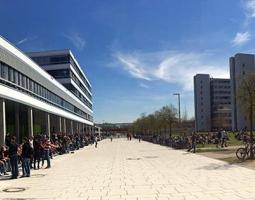
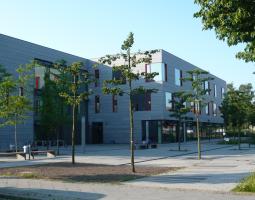
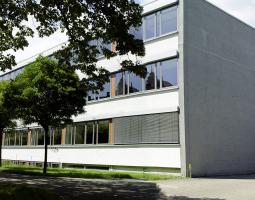
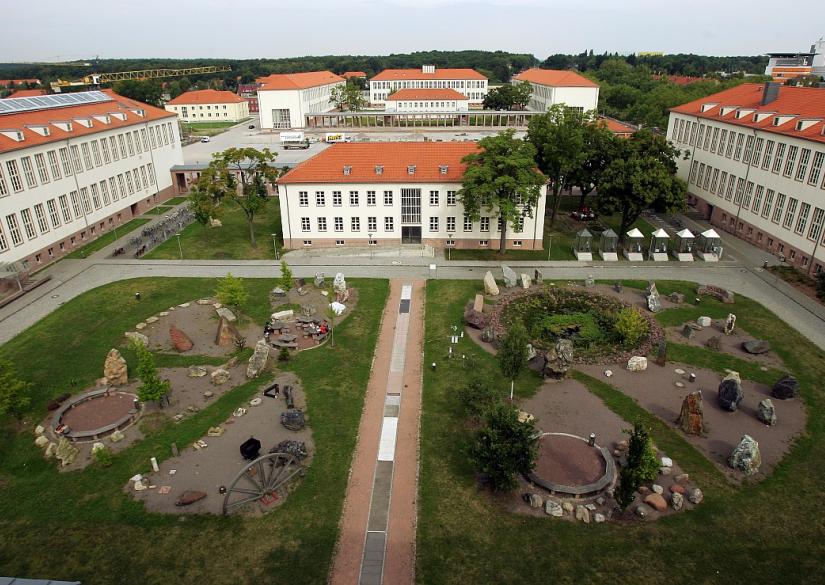
Facilities are spread across several sites:
- many humanities and social science institutes are based on Steintor Campus,
- educational sciences and theology are based in the Francke Foundations complex,
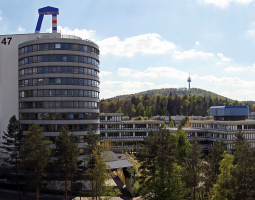
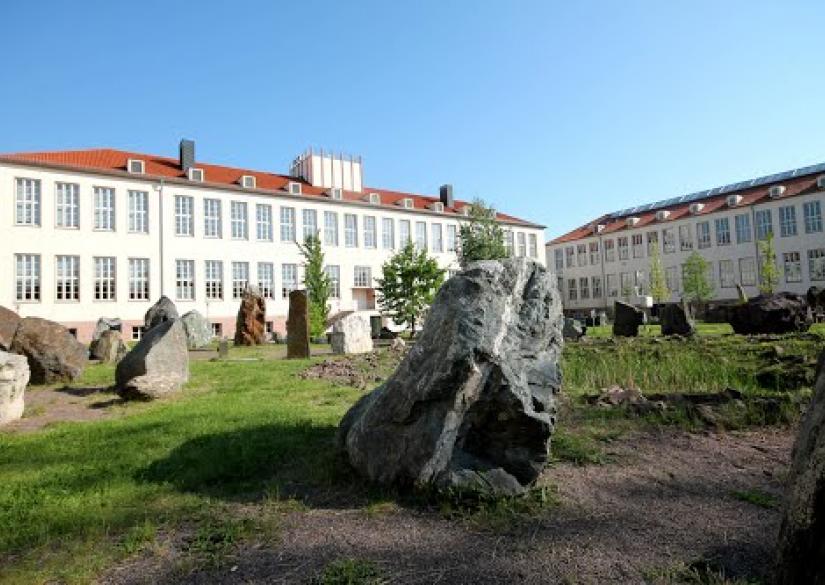
- the Weinberg/Heide Campus houses the natural sciences and sits near five non-university research institutes and the Weinberg-Campus Technology Park,
- MLU includes Universitätsklinikum Halle,
- the university holds more than 40 academic collections and museums.
Enrolment process
Individual doctorates at MLU do not have a single centralized application procedure, and relevant positions are advertised year-round. Smapse specialists will guide you through every stage of enrollment.
Enrolment statistics
Universitätsmedizin Halle reported an intake of 276 trainees and 118 graduates.
Entry requirements, how to apply, what is required to enrol
Admission committee, selecting students for education, first of all follows the results of studying at the previous place of education. The higher the academic performance of the entrant, the more likely that he will become a real student at the University of Halle-Wittenberg. It is worth noting that approximately 60% of all applicants become full-time MLU students.
The learning process in the university consists of two semesters, which constitute one academic year. As for the cost, according to the European criteria it is rather low. A bachelor's degree applicant must pay 1,000 cu. for the year of study. For masters, the cost of acquiring knowledge is about the same.
Even with such a low payment, it is possible to receive a scholarship. All the nuances concerning the cost of educational services or income can be found on the official website of the educational institution.
Scholarships University of Halle-Wittenberg (MLU)
- Martin Luther University Halle-Wittenberg provides annual support for doctoral scholarships under the German Graduate Funding Act, with the availability and amount determined by the State Parliament of Saxony-Anhalt,
- the university's Graduate Funding Committee awards scholarships to doctoral candidates,
- Studienstiftung offers doctoral candidates financial support and additional funds for research and travel abroad,
- doctoral study is funded mainly through employment in project positions or scholarships,
- HAuS assists international MLU students facing financial hardship and, after reviewing their circumstances, may temporarily cover rent, health insurance, or living expenses before examinations.
Institution on the map
Residence permits, citizenship and other services
- Guardianship services during the studies
- Student supervision
Review about University of Halle-Wittenberg (MLU)
Recommendations on when to apply
| Language courses, schools and children's language camps | Primary and secondary education - private schools | Preparation programmes for entering universities - higher education | Higher education (after completing accredited programs A-level, IB, High School) - Bachelor, Master, MBA |
| - we recommend to apply 6-9 months before the start of the course (some camps and schools offer discounts for early booking or for lengthy study programs) - there are some very popular and high demand children's camps, where the applications need to be submitted 1 year in advance (in particular Switzerland , Great Britain , USA , Canada , Austria) | - we recommend to apply one year before the start of the training program, - some schools have a specific time frame (September-November - please specify an individual school) - some schools require tests in several stages (UKISET, internal tests of the school: English, mathematics, logics, subjects, interview, some require a personal visit) | - we recommend to apply one year before the start of the program, - for Foundation and Pathway programs, IELTS and TOEFL certificates are usually required, respectively | - recommended submission one year before the start of the program, - the deadline normally closes in January, for TOP HEIs and, as a rule, in March in other universities - for a bachelor, a Foundation or Pathway preparatory program a completed A-level, IB, High School + IELTS / TOEFL are required - for Masters you need a graduated higher education, in some cases you need a pre-Masters program - MBA requires completed higher education, work experience preferably at least 2-3 years, etc. |