Royal College of Art





Programs and prices, tuition fees in Royal College of Art


Graduate Diploma Program
- Age – from 21 years old,
- The duration of education is 30 weeks.
The diploma program is focused on education students who have a bachelor's degree in other scientific fields. For 30 weeks, students will attend specialized classes in the chosen direction:
- Communication,
- Design,
- Fashion and textiles,
- Fine Arts,
- Investigations.
In the process of studying, international students will develop their professional portfolio, acquire skills important for the field of activity. The entire teaching staff are practicing artists and designers, experienced teachers, they will focus on developing mastery in methods of self-study of art and design, while introducing students to the role and impact of art and design in the modern world.
Obtaining a Graduate Diploma guarantees students admission to graduate programs. Although the numbers vary from year to year, about 60% of students enrolled in the Graduate Diploma program in the 2023-2024 academic year were successfully accepted for further study at RCA.
Master’s Programs
- Age – from 21 years old,
- The duration of educational process is one to two years.
To obtain a Master of Science degree, foreign students will have to master the chosen specialization in 1-2 academic years. RCA offers a variety of arts programs in a variety of areas:
- Architecture,
- Animation,
- Urban design,
- Ceramics, glass,
- Communication,
- Creative education,
- Contemporary Art Curatorate,
- Design Products,
- Ecological architecture,
- Intelligent mobility,
- Interior design,
- Jewelry, metal products,
- Photography,
- Seal,
- Sculpture.
The curricula of the programs are full of lectures with college teachers and invited specialists, many hours of practice in specialized studios and workshops. Upon completion of their studies, each student will have an excellent professional portfolio and skills that will provide them with ample opportunities to realize their potential in their career.
Postgraduate Programs
- Age – from 23 years old,
- The duration of the educational course is three to four years.
PhD programs provide students with the opportunity to gain deeper knowledge and professional skills of the highest quality over a period of 3-4 academic years. Under the guidance of experienced educators and specialists in various fields of art, they will work on individual and group projects, learning both theory and methods of practice in their chosen specialization.
Available doctoral programs at RCA:
- Architecture,
- Arts, Humanities,
- Informatics,
- Communication,
- Design,
- Robotics,
- Intelligent mobility,
- Materials Science.
At the end of the program, students will become qualified specialists in the studied field, will be able to take a high position in a national, international company or realize their talent in any independent work.
Pre-Sessional English Course
- Age – from 20 years old,
- The duration of the course is four or eight weeks.
The online Pre-Sessional English Language Course will prepare international students to study in an English-taught higher education program at RCA. The online course offers the opportunity to work in a small group (12-14 students) with an experienced teacher who will guide students in the process of developing their academic skills. During online classes, students will respond to the material they read and listened to, plan and develop parts of the writing and practice their skills of critical analysis, reflective thinking. The EAP teacher tests skills and provides personal feedback on a regular basis to help each student identify learning needs and appropriate methods for development.
Usually, the course will be available on the following dates (it is better to check the specific dates with your manager personally):
- Spring eight-week course: April-June,
- Summer eight-week course: June-August,
- Summer four-week course: August.
All students study via Zoom from Monday to Friday, from 9:00 to 12:00. The course includes self-paced learning activities that support learning within the course.
Description of Royal College of Art
- Location: London, England,
- Founded in: 1837,
- Number of students: about 2980,
- Language of instruction: English,
- Type of education: mixed.
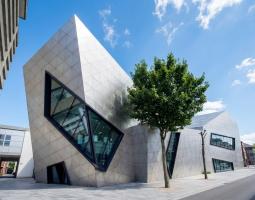
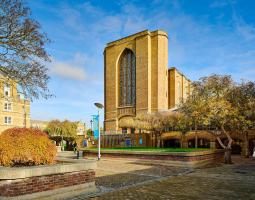
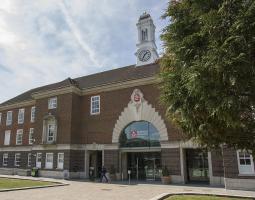
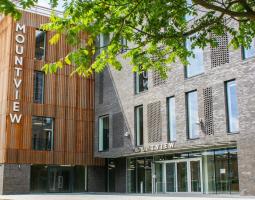
The Royal College of Art (RCA) is the only public art university in the UK offering educational programs at the master's and doctoral levels. The institutional infrastructure consists of three educational campuses in the capital of England.
The history of RCA began in 1837 with the founding of the Government School of Design at Somerset House. Almost 60 years later, in 1896, the educational institution received a well-known name and since then has been keeping a strict focus on practice in the field of arts. Today, The Royal College of Art is considered one of the most sought-after institutions in this academic field. About 2980 students from more than 60 countries join educational programs annually.
The Royal College of Art has earned international recognition, the trust of thousands of foreign and local students, and high ratings from professional agencies. Preserving historical traditions, RCA takes modern innovations in the field of education seriously, providing the best conditions for obtaining theoretical knowledge and practical skills in specialized studios, workshops, laboratories.
Under the guidance of qualified faculty, most of whom have advanced scientific degrees, students not only move towards a degree, but also gain extensive career opportunities in the future. The most important aspect in every academic program is practice – many hours of on-campus and off-campus classes will give students a complete understanding of the field being studied. Thanks to partnerships with local and foreign companies, educational institutions and organizations, the college provides its students with internships, additional opportunities for obtaining applied skills when participating in exhibitions and cultural events.
Educational process
- The unique AcrossRCA block offered within the Master's programs gives staff and students the chance to work together in a series of interdisciplinary projects that explore new ideas, approaches, and skills,
- Students develop confidence in solving global problems through experiential learning in practice. Many dedicated campus spaces, such as the Terra Carta Design Lab or the Grand Challenge, give students the opportunity to apply knowledge to real-life problems, from environmental sustainability and plastic pollution to marine habitat loss and new ocean-related economies,
- A professional support team offers career counselling during and after your studies. Each student is assigned a personal consultant who conducts individual sessions both online and in person,
- The InnovationRCA Center for Entrepreneurship helps students transform their exciting ideas into successful businesses by providing platforms for project implementation, legal control over intellectual property, and commercialization support. Established in 2004, InnovationRCA has already supported 120 graduates in launching 84 start-ups, providing them with investment,
- Students have access to individual academic guidance,
- To make education in London more affordable, RCA introduced an intensive MA format with a duration of 45 weeks,
- Students on RCA's MRes programs undertake experimental research projects across disciplines,
- Each program has elected student reps who communicate their group's views and concerns,
- The Students' Union helps with appeals and complaints and directs students to appropriate support services,
- Preparation for life after college provides exposure to industry, sector-specific and research skills development, and networking opportunities.
Faculties and colleges
The Royal College of Art has three specialized schools, representing the following areas:
- Architecture,
- Arts, Humanities,
- Communication & Design.
Scientific achievements
Under the management of the Royal College of Art, there are several research centers, whose employees annually work on projects in such areas as:
- Design,
- Intelligent mobility design,
- Materials Science,
- Computer Research,
- Robotics.
The Helen Hamlyn Centre for Design became a research center in 1999 and focuses on improving people's lives through design. The HELIX Centre for Design in Healthcare, established in 2013, brought RCA's design methods into St Mary’s Hospital London. The Intelligent Mobility Design Centre, Materials Science Research Centre and Robotics Lab were established in 2017. The Computer Science Research Centre and Design Age Institute followed in 2020.
The Terra Carta Design Lab was launched in 2021 with the Sustainable Markets Initiative, with the involvement of King Charles III and RCA Chancellor Sir Jony Ive.
- Early Vehicle Design graduates helped develop the Audi Quattro, Aston Martin DB7 and Porsche 911,
- RCA alumni designed the Ford Ka, Jaguar XK8, the PS furniture range for Ikea, the Concrete Canvas shelter and the Eglu chicken coop,
- Communication graduates designed the poster for the 1971 film A Clockwork Orange and the Rolling Stones lips logo,
- The college's alumni include Turner Prize, Oscar and BAFTA winners. An RCA graduate won the Turner Prize in 2024,
- In 2025, it was announced that an RCA graduate and Honorary Doctor would represent the UK at the 61st Venice Biennale,
- One graduate became the first Service Designer at the United Nations Development Programme (UNDP), starting with an internship while studying at RCA.
Things to know about
- Following the Great Exhibition of 1851, the school expanded its teaching to encompass art in addition to design and became the National Art Training School,
- RCA was the birthplace of The New Sculpture movement in Britain,
- In the 1930s and 1940s, the college strengthened professional education in product design and introduced Graphic Design, Industrial Design and Fashion courses. In the 1950s and 1960s, it was at the heart of the development of Pop Art,
- Vehicle Design was introduced in 1967, History of Design in 1982, and Conservation, run with the Victoria and Albert Museum, in 1987,
- Visual Arts Administration was introduced in 1992 and was later renamed Curating Contemporary Art,
- The college introduced master's programs in Writing in 2010, Information Experience Design in 2012 and Service Design in 2013,
- Contemporary Art Practice was introduced in 2016, followed by Digital Direction, City Design and Environmental Architecture in 2017,
- The Darwin Building is named after postwar Rector Robin Darwin, the grandson of Charles Darwin,
- The Rausing Building for Innovation is named after Dr Sigrid Rausing’s grandfather, who developed the Tetrapak packaging design,
- In 1999, the BBC released a six-part documentary about the college, watched by more than two million people,
- The GenerationRCA campaign began in 2018 to raise funds for the new campus, scholarships and research,
- In 2023, the college launched MFA, MDes, MArch and MEd qualifications,
- In April 2024, Professor Christoph Lindner succeeded Dr Paul Thompson as RCA's President and Vice-Chancellor,
- RCA BLK began as a grassroots organization in 2020 and became part of the college in 2022,
- The college was the first art and design university to adopt a STEAM academic approach, bringing together science, technology, engineering, art and mathematics.
University destinations
Employers of RCA graduates include:
- Adidas,
- Apple Inc.,
- Burberry,
- David Chipperfield Architects,
- Ford Motor Company,
- Google,
- Hawkins Brown,
- Logitech,
- National Trust,
- Rolls-Royce,
- Sky,
- Versace.
Accommodation, meals, prices
RCA does not have its own student accommodation.
The Student Support Team can help you find accommodation in or around London and provide answers to general questions about private accommodation. RCA cooperates with the University of London Housing Service (UoLHS), thanks to which foreign students receive contracts for living in comfortable residences, townhouses, apartments. The Student Success team helps with initial tenancy questions and can refer students to the University of London Housing Service when needed. Events to support accommodation searches and tenancy arrangements usually take place from May to August.
Despite the college's compact size, its three campuses have several cafeterias and dining rooms where staff and students can grab a bite to eat, have a full lunch, and relax between classes. The establishments regularly change the menu, which includes a variety of options: from sandwiches, salads and hot drinks to hearty business lunches with soups and hot dishes, cocktails, pizza.
Students can use the Students' Union online noticeboard and a Facebook group to find accommodation and roommates.
Activities Royal College of Art
The main community that represents the views of all students, runs themed clubs, and organizes many campus events is the Student Union. It annually includes students of various specialties and of different ages, which allows us to cover the interests of all pupils. Under the leadership of the Students' Union there are societies that reflect a variety of hobbies, interests and goals of students:
- Dancing,
- Artificial intelligence,
- Experimental animation,
- Cinema,
- Drawing from nature,
- Globetrotting,
- Meditation,
- Photography,
- Horticulture.
Among the communities there are additional circles of interests aimed at supporting an active lifestyle and offering regular training, participation in sports competitions, and entertainment activities:
- Tennis,
- Running,
- Soccer,
- Hiking,
- Rock climbing.
Every year, the Student Union holds a series of exhibitions, curated by the students themselves. Exhibitions are not part of any academic program, but they do help students gain hands-on experience curating and presenting their work, meeting and working with art experts.
The Students' Union has two elected sabbatical officers and seven members of staff. Students can establish a society around a shared interest. Funding is available to support each society.
The Students' Union's year-round program offers festive balls, Christmas and Easter celebrations, Diwali and Lunar New Year. ArtBar hosts discos, quizzes and parties.
Students from the School of Communication & Design have a tradition of exhibiting at the London Design Festival, while those from the School of Arts & Humanities regularly participate in New Contemporaries, an annual touring exhibition. RCA offers free events, exhibitions and talks that are open to everyone.
The college develops projects with local communities, local authorities and community organizations. Students can take part in local volunteering projects.
RCA BLK brings together Black students, alumni and friends of the college. Its initiatives include the RCA BLK x Yinka Shonibare Residency and the BLACK STAR Time Capsule project.
Advantages
- No2 in the world of art for ten years in a row in the QS World University Rankings,
- 80% of graduates will continue to work in their specialty (according to the RICS report for 2024),
- Extensive network of cooperation with international and national organizations based on knowledge sharing, internships, research,
- Qualified educational staff, represented by leading specialists in the fields of art, conducts active research activities. 100% of teachers are included in the UK Research Excellence Framework (REF) application,
- A multinational student community with representatives from more than 60 countries,
- Three academic campuses in London offering state-of-the-art facilities and technology to gain practical skills.
Facilities and equipment at Royal College of Art
The campuses of the Royal College of Art are located in three boroughs of London: White City, Kensington and Battersea. RCA plans to concentrate its teaching in Kensington and Battersea and relocate its White City programs to those campuses.
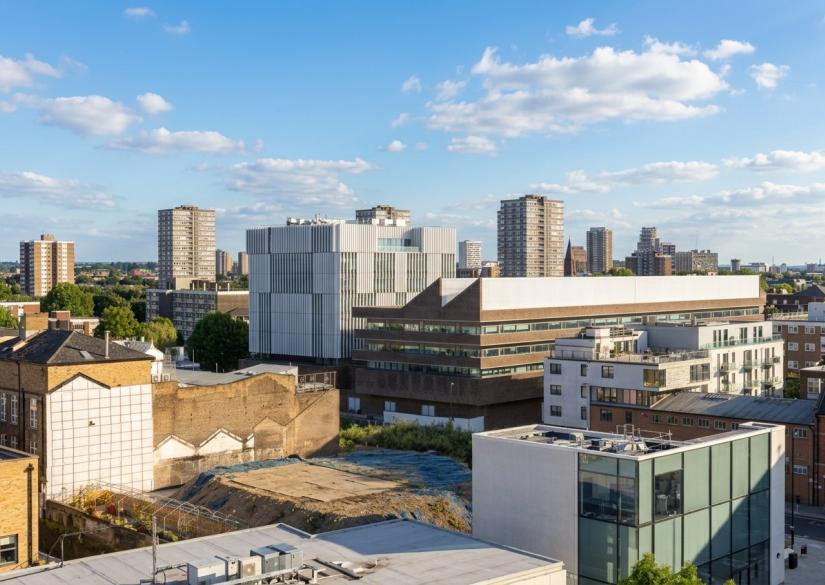
RCA has had a learning area in Battersea for over 25 years, making a significant contribution to the development of this cultural quarter. In addition to the world-leading facilities and technical support that underpin academic learning, the campus boasts a rich schedule of lectures by leading artists, curators, writers, and critics, including the School of Arts and Humanities Studies' lecture series, exhibitions, and events. A new building designed by Herzog & de Meuron opened in 2022, adding approximately 15,500 square meters of teaching and research space. In 2016, RCA received funding from the UK government to build a new building and R&D centres at Battersea: the new building is STEAM-focused, offering laboratories and specialised spaces for science, technology, engineering, arts and mathematics:
- Four floors of studios and workshops equipped for sculpture classes and the practice of contemporary art, animation,
- Hangar is a multifunctional space with an area of 350 sq. m in the heart of the campus,
- Robotics Hangar - A small hangar and gallery that houses research, testing, and assembly areas for design, sculpture, and robotics, including air and water testing zones,
- Rausing Research and Innovation Building – eight floors of research space for areas such as materials science, soft robotics, advanced manufacturing, smart mobility, virtual reality visualization (housed in the Snap Visualization Lab),
- The Helen Hamlyn Design Center – international students are engaged in research and projects in the field of design in collaboration with industry,
- InnovationRCA, located in the Clore Innovation Centre, is a hub for supporting entrepreneurship, start-ups and businesses,
- The seminar and conference room is the top floor of the Rausing Research & Innovation building, which houses the seminar and conference room.
The Battersea complex comprises the Dyson, Woo and Painting Buildings. The Dyson Building opened in 2012 with support from the Dyson Family Foundation and is named after an RCA graduate. It provides studios and workshops for painting, printmaking and photography. The Woo Building opened in 2015, providing specialist workshops and studios for ceramics, glass, jewelry and metalwork.
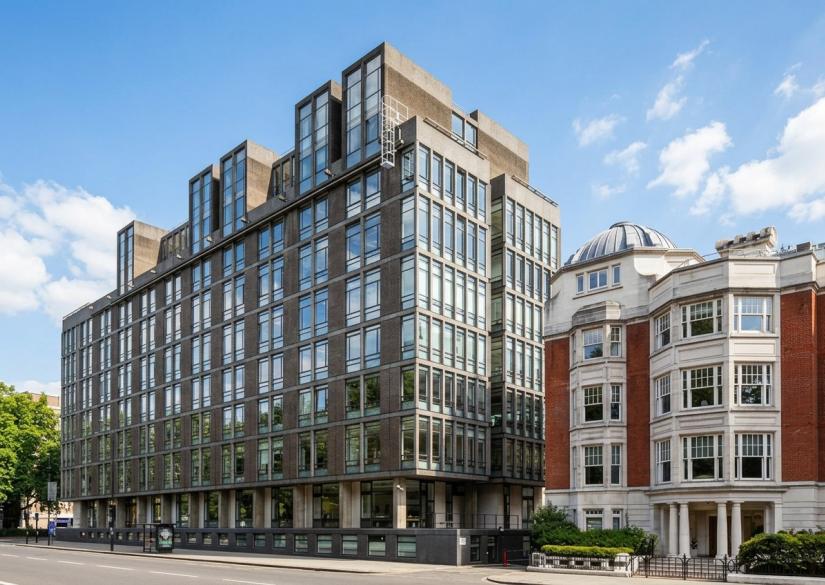
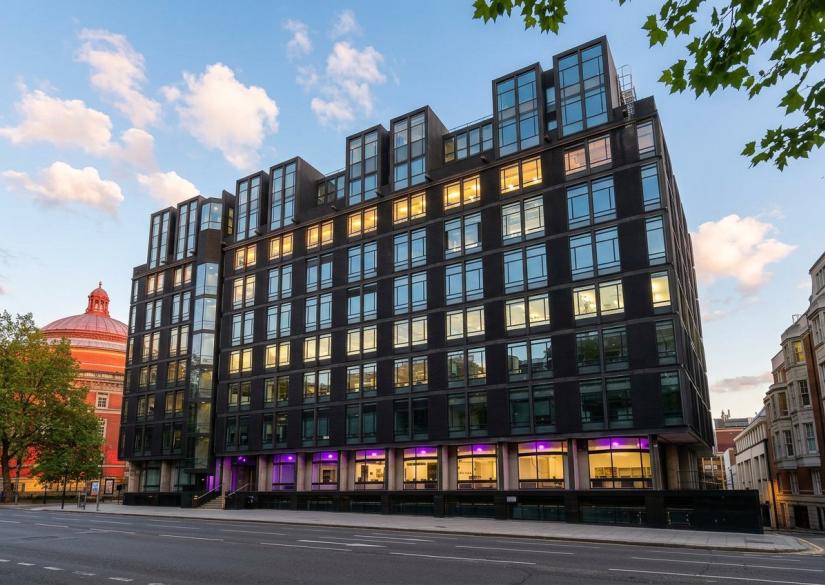
The historic Royal College of Art campus in Kensington is located next to the Victoria and Albert Museum and Imperial College, surrounded by Kensington Gardens and Hyde Park, the largest green space in London. At the heart of the learning grounds is the Darwin Building, which includes an extensive library with special collections, technical resources, student support and the Student Union. The Modernist Darwin Building opened in 1962. The library provides the Colour Reference Library, a collection devoted to color. The Royal Albert Hall is also next to the campus.
Located in the BBC Media Village, the White City campus is the newest addition to RCA's academic venues, it is equipped with state-of-the-art studios, workshops and technical facilities that have been designed to provide applied professional skills.
In all educational areas of the Royal College of Art, the following has been prepared:
- Carpentry, metalworking, plastics and production facilities, paint spraying workshops, Future workshops for mold making and injection molding. The workshops have laser cutting, CNC processing and fiber laser cutting equipment,
- Classes for hot and cold glass production, kiln forming, plaster and clay model making,
- College shops selling a variety of graphic and art supplies, fabrics and haberdashery, wood and acrylic products, stationery and paper, as well as free tool rentals,
- Fabric warehouse, specialized software, a wide range of sewing equipment for the manufacture of clothes and shoes,
- A variety of lenses for analog and digital photography, animation and filming, as well as special studios providing facilities for filming, lighting, sound recording and post-processing,
- A large workshop equipped with a variety of technologies of silk-screen printing, letterpress printing, etching, lithography, monochrome printing,
- Multiple CAT zones, which include open access areas for both Mac and PC, dedicated software training rooms.
AccessAble surveyors checked accessibility information in person across the three campuses, assessing spaces and routes, parking, assistive listening systems, walking distances and accessible toilets. RCA buildings are open to visitors only during exhibitions, events and open days.
All three sites provide bicycle parking, and the campuses are served by bus routes. Battersea Park is close to the college's sites. Free shuttles run between campuses.
Admission dates and extra charges
RCA accepts new students twice a year, so study dates may vary. Basically, the curriculum provides for study in semesters, which include session weeks, days for rest in honor of holidays, weekends, seasonal holidays. Classes are held on weekdays.
List of additional costs consists of:
- Registration fee, deposit,
- Accommodation, meals,
- Educational materials, equipment for specialized training (such as books, paints, textiles, wood, metal and plastic),
- Student Club Fees, including sports societies,
- Additional academic opportunities not included in the curriculum,
- Compulsory life insurance,
- Personal expenses.
Separate costs may apply to printing, photocopying, laser cutting, 3D printing and CNC machining, compulsory field trips and the graduation ceremony.
Enrolment process
The admissions committee recommends applying as early as possible, even if the student has not yet completed their final year of undergraduate studies. Applicants will go through several entrance stages:
- Filling out the registration form, providing the required documents,
- Payment of the registration fee,
- Passing a possible interview (personal or online) or audition,
- Receiving an official invitation to enroll,
- Arrive on campus to begin your studies.
Perspectives
RCA's alumni network is made up of more than 25,000 professionals who have built careers around the world and formed a unique international network of artists, designers, creators and innovators. According to the statistics of recent years:
- At least 4 out of 5 working RCA graduates do work they love. 80% – at least 4 out of 5 RCA alumni who are currently working in their specialty (RCA Alumni Career Report 2024),
- 90% – 9 out of 10 working graduates apply the skills and knowledge they learned in college to their work (RCA Graduate Careers Report 2024).
The 2024 report on graduate careers was based on a survey of 1,797 people conducted in November and December 2023. Respondents represented different disciplines and generations, from those who graduated before 1980 to the class of 2023.
Further graduate career outcomes:
- Within 12 months of graduation, two in three graduates were earning income from work related to their education,
- More than 70% felt that education at RCA had played a key role in bringing them to their subsequent position, and 74% said it had helped them pursue their career ambitions,
- For 60%, education at RCA opened up access to employers or jobs that would otherwise have been out of reach. Two in five were able to change careers,
- Up to two in three working graduates felt that their jobs allowed them to use their capabilities to the fullest,
- At least four in five working graduates gave positive responses on each of three measures: job fulfillment, passion for their work and opportunities to grow,
- Among self-employed graduates, 90% were doing work they loved, 91% found it fulfilling and 94% were passionate about it. Among freelancers, 92% reported being passionate about their work,
- One-third of self-employed graduates had gone on to employ others,
- More than 60% had built a valuable professional network during their time at RCA,
- Two-thirds rated RCA's academic quality and facilities as good or excellent. 83% gave that rating to at least one aspect of preparation for life after university,
- More than two-thirds of working graduates felt that their work had a positive social impact.
Most graduates who continued their education did so in the arts. Nine in ten pursuing further education were passionate about their discipline. Two-thirds felt that RCA had encouraged them to continue their education. Three-quarters of those pursuing further education in the arts felt that the college had prepared them well for it.
In 2020, RCA graduate Douglas Stuart received the Booker Prize, in 2023 Bianca Saunders received the New Establishment Menswear Designer Award at The British Fashion Awards. In 2023, the work of college students became the visual backdrop for an impressive performance at Windsor Castle to celebrate the coronation of King Charles III.
Entry requirements, how to apply, what is required to enrol
International applicants wishing to pursue a master's or doctoral degree at RCA must provide:
- Personal data: valid passport, health insurance, student visa or residence permit,
- IELTS language test results. Depending on the chosen program, the required level of English proficiency will vary, but the minimum required will be B2,
- Academic certificates from the previous place of study: bachelor's degree, report cards,
- Experience in the relevant field.
Also, all candidates must have a portfolio that includes:
- A 300-word written personal statement of motivation to study under the program,
- A short video of up to two minutes, in which the applicant talks about his personal creative path,
- From three to five files with works,
- Detailed information about work experience,
- Contact details of one or more referees.
Scholarships Royal College of Art
The college has a financial aid fund that provides support to enrolled students with financial difficulties: unforeseen circumstances, low income. In addition, in collaboration with the Students' Union, RCA has launched a Living Costs Fund in response to the rising cost of living in the UK by providing vouchers for supermarket purchases. The Students' Union also supports students through essentials hubs.
More than 300 scholarships are awarded annually on the basis of academic merit, active research activities, extracurricular achievements.
The Materials Fund helps students in financial need with the cost of materials. RCA scholarships support students facing financial difficulties and those from underrepresented groups, including students with disabilities, refugees, asylum seekers and those with limited leave to remain. Scholarships are limited and highly competitive. Meeting the eligibility criteria does not guarantee support.
Each year, the college offers several research studentships for MPhil and PhD candidates working on predefined projects or topics. These are usually funded by research councils or consortia.
The Sir Frank Bowling Scholarship provides annual support for students from Black British, African and African diaspora backgrounds. RCA BLK initiated the program. The college set a target of allocating 8% of its total expenditure to financial support. By 2024, it had reached 7%.
Institution on the map
Residence permits, citizenship and other services
- Guardianship services during the studies
- Student supervision
Review about Royal College of Art
Recommendations on when to apply
| Language courses, schools and children's language camps | Primary and secondary education - private schools | Preparation programmes for entering universities - higher education | Higher education (after completing accredited programs A-level, IB, High School) - Bachelor, Master, MBA |
| - we recommend to apply 6-9 months before the start of the course (some camps and schools offer discounts for early booking or for lengthy study programs) - there are some very popular and high demand children's camps, where the applications need to be submitted 1 year in advance (in particular Switzerland , Great Britain , USA , Canada , Austria) | - we recommend to apply one year before the start of the training program, - some schools have a specific time frame (September-November - please specify an individual school) - some schools require tests in several stages (UKISET, internal tests of the school: English, mathematics, logics, subjects, interview, some require a personal visit) | - we recommend to apply one year before the start of the program, - for Foundation and Pathway programs, IELTS and TOEFL certificates are usually required, respectively | - recommended submission one year before the start of the program, - the deadline normally closes in January, for TOP HEIs and, as a rule, in March in other universities - for a bachelor, a Foundation or Pathway preparatory program a completed A-level, IB, High School + IELTS / TOEFL are required - for Masters you need a graduated higher education, in some cases you need a pre-Masters program - MBA requires completed higher education, work experience preferably at least 2-3 years, etc. |