Oxford Summer School


Programs and prices, tuition fees in Oxford Summer School


Summer Program in Medicine
- Students age: 13-15 and 16-18 years old,
- Duration: 2 weeks,
- There are up to 15 people in a class.
The summer course in medicine is divided into two sections according to the age of the students - Explore Medicine (13-15 years old) and Curing the Future: Medicine & Disease (16-18 years old).
Explore Medicine
The program will help you learn more not only about the human body and mind, but also about the peculiarities of the medical profession, how to become a physician in the modern world: a surgeon, nurse, general practitioner or a related specialist. The course examines:
- Biology
- Physiology
- Anatomy
- Practical medical operations: catheter placement, bleeding control, medical examination and initial diagnosis, bandages and splints,
- Deontology
- Biomedical research.
Students will go to meetings with well-known doctors, speakers, researchers, visit specialized laboratories and medical centers.
Curing the Future: Medicine & Disease
The program is called "Curing the Future" for a reason: it opens up the world of medicine and health care for high school students, inspiring them to become sought-after and qualified doctors and researchers. Students will consider how medicine works in the XXI century:
- Biology
- Genetics
- Neurology
- Genomic Sciences,
- Emergency medicine,
- Anatomy
- Biomedical research,
- Practical manipulations.
Visits to specialized centers, research laboratories, simulation centers are mandatory.
The program will help you build your own academic and career path to become a physician: surgeon, nurse, general practitioner, infectinist, researcher, etc.
Each course already includes:
- Accommodation and meals (University of Oxford residences),
- Training course (20+ lessons per week),
- Any help from teachers and experts,
- Cultural extracurricular program, excursions,
- Graduation party, certificate of completion and full report card.
Summer Course in Politics, Political Science and Law
- Students age: 16-18 and 19+ years,
- Duration: 2 weeks,
- There are up to 15 people in a class.
The program is divided into two sections - for teenagers 16-18 years old (Law & Politics) and for students 19+ years old (International Law and Politics in the 21st Century).
Law & Politics
The course provides full immersion in the world of jurisprudence and law:
- Criminal
- Civil
- Commercial
- Contractual
- + Ethics and Human Rights.
Students will consider how the branch of law interacts with different political structures and characteristics of different countries, what role governmental and non-governmental organizations, state bodies, etc. play in this.
The issues to be addressed can be very different: human rights and women's rights, the problem of international terrorism, the allocation of resources, world trade, globalization, protectionism, etc.
All theoretical knowledge will be regularly honed in practice, mainly during demonstration court sessions and social research. This will help students develop critical and analytical thinking skills, the ability to speak in public, analyze data (arguments, testimony), the ability to cooperate with representatives of different cultures, peoples and views. Eloquence, the skill of debate and argumentation, discussion, defense of one's point of view are actively developing. Students will be able to try themselves in the role of effective and environmentally friendly leaders, develop leadership skills.
International Law and Politics in the 21st Century
The program will help adult students (who may already be taking their first career steps) to immerse themselves in the world of international law, global governance. In the classroom, students consider how international politics affects individual states and national associations, how armed conflicts arise, how ecology and environmental protection are becoming an increasingly important political issue, what is the modern geopolitical structure.
International law and policy are considered in a historical context, that is, students will be able to observe how the global system of governance has evolved from the 1940s to the present day. Various theories that have become the foundations of international law, historical logic and precedents will be considered. In the classroom, students will be able to discuss how international politics is influenced by large organizations: for example, the World Bank, the UN or the International Criminal Court.
Not only teachers will help - the course includes meetings with diplomats, leaders of non-governmental organizations, and media representatives.
An important final of the course is the Debate on International Law, where everyone will be able to present a personal object of research, argue their point of view, and participate in large-scale debates. This is a great opportunity to expand your capabilities in discussions, public speaking, presentations and research, develop empathy, communication, and critical thinking skills.
This is an ideal program for those who want to make a career in the fields of:
- Rights
- Diplomacy
- International Relations,
- International law, including humanitarian and environmental law,
- Protection of human rights,
- Economic relations (of different scales).
Each course already includes:
- Accommodation and meals (University of Oxford residences),
- Training course (20+ lessons per week),
- Any help from teachers and experts,
- Cultural extracurricular program, excursions,
- Graduation party, certificate of completion and full report card.
Summer Course in Psychology
- Students age: 16-18 and 19+ years,
- Duration: 2 weeks,
- There are up to 15 people in a class.
Experimental Psychology (16-18 years old)
The course will help to study the work of the human brain and intellect literally from the inside - but not surgically, but research. What do shift participants study? For example:
- Psychological disorders,
- The influence of childhood (impressions, traumas, attachments) on adulthood and behavior,
- Ethics in the field of psychology,
- Features of personality formation,
- Criteria of good and evil of modern man,
- Fundamental psychological concepts,
- Works of well-known psychologists and researchers,
- Social Work,
- Controversial issues of experimental research (for example, the Milgram experiment),
- Psychology and Media,
- Original research articles on specialized topics.
Students will have the opportunity to conduct their own research under the supervision of a specialized expert: this is an excellent development of critical and analytical thinking, the assimilation of useful research methods.
Psychological & Behavioural Science (19+ years)
The psychology course for adult students (19+) years old is devoted to behavioral sciences (behavioral studies). This is not so much an introductory as a well-directed career path that will suit determined students who want to connect their careers with the psychological sciences.
Students will conduct original research under the guidance of experienced faculty and renowned industry professionals, working primarily in the field of social psychology. The program includes two modules - "Module of Cognition" and "Module of Psychological Research". This is a great opportunity to come to clinical counseling in the future, develop communication skills, critical thinking. Much attention is devoted to ethical issues, the role of intelligence in the development and prosperity of mankind. A popular field of research among students is cognitive psychology, including developmental, social, and non-normative psychology.
The course already includes:
- Accommodation and meals (University of Oxford residences),
- Training course (20+ lessons per week),
- Any help from teachers and experts,
- Cultural extracurricular program, excursions,
- Graduation party, certificate of completion and full report card.
Entrepreneurship, Business and Innovation Summer Course
- Students age: 13-15, 16-18 and 19+ years old,
- Duration: 2 weeks,
- There are up to 15 people in a class.
The program is presented in three versions: for students 13-15 years old, 16-18 years old and 19+ years old.
Explore Business, Innovation & Entrepreneurship (13-15 years old)
A starter business course for teens immerses students in the world of business, marketing, innovation, finance, and startup. This is an opportunity to develop an entrepreneurial mindset that will help you launch successful businesses in the future or become a highly sought-after specialist/consultant/coach.
In the classroom, students will explore large corporations (for example, Tesla or TikTok), analyze the cases of successful innovators (Elon Musk, Steve Jobs). The theoretical skills gained will be applied in practice: the center of the course is the Explore Business Shark Tank Challenge, where groups will present their business idea to each other, defend it and argue its value and benefit to society. This is the simultaneous development of both creativity and critical + analytical thinking.
Inventing the Future: Business, Innovation & Entrepreneurship (16-18 years old)
Pitch your business idea and start your own career as an innovator! This program will provide students with useful skills, theoretical knowledge, tools and, most importantly, a special type of thinking that will help them achieve success and literally change the future.
What is covered in the course?
- Business principles,
- Innovative methods of building a business,
- Development of your business: from idea to financing and implementation,
- Innovations: how to apply them,
- Creating universal/unique value,
- Business communication, business ethics,
- Accounting
- Finance
- Marketing
- Creative, analytical, critical thinking,
- Collaboration: teamwork, leadership, communication skills,
- Business Modeling,
- Skill in creating presentations,
- Market assessment, identification of problems and their solution,
- Development of your own concept.
Meetings with well-known businessmen and inventors who come with reports and lectures, successful leaders, visits to major London business incubators and accelerators (Seedcamp, RocketSpace) will help not only to take valuable first-hand information, but also to learn to think globally, set high goals for yourself.
Global Business, Management and Finance (19+ years)
The most complex and comprehensive business program is designed for adult learners 19+ years old. This is the education of a new generation of skilled, knowledge-hungry business leaders who are able to generate and implement innovations even in today's unstable world.
What will help create a sustainable global business in the world of the XXI century? Deep knowledge of finance, business operations, marketing, business futurism, venture trading. The classes will discuss how to promote innovation and business at the national and global level, what consequences modern entrepreneurship can have, how to enter developing/developed and competitive markets, why sustainable development is valuable and why it is important to have global social responsibility. Students will develop leadership and management skills, learn how to launch startups, study organizational leadership, analyze modern business strategies, study how global corporations are influenced by culture and even climate, conduct segmentation and market research (this is necessary to create a truly valuable proposition), explore Agile, Scrum and Six Sigma management models, and much more.
Students will meet with real leaders of the modern business world, industry experts, practitioners, successful leaders - this will help them become thoughtful, environmentally friendly, flexible and effective leaders in the future. Analysis of cases of successful companies - Tesla, Airbus, Amazon and others - will help to evaluate their business principles and operating models, draw valuable ideas for your business, which will not only be economically successful, but will also be able to make the world of the future better.
Each course already includes:
- Accommodation and meals (University of Oxford residences),
- Training course (20+ lessons per week),
- Any help from teachers and experts,
- Cultural extracurricular program, excursions,
- Graduation party, certificate of completion and full report card.
Engineering & Technology Summer Course
- Students age: 13-15, 16-18 and 19+ years old,
- Duration: 2 weeks,
- There are up to 15 people in a class.
The program in Engineering and Modern Technology divides students into three groups according to age: Designing Tomorrow: Engineering & Technology (16-18 years old), Explore Engineering and Technology in Oxford (13-15 years old) and Global Engineering (19+ years old).
Explore Engineering and Technology in Oxford
This is a complete, all-encompassing introduction to the world of engineering and technology: civil, biomedical, aerospace, mechanical. Up to drones and spacecraft for tourism - it will be interesting for everyone! Students especially appreciate design simulations, on which they can fully apply their theoretical knowledge of physics, mathematics and other exact sciences, critical and analytical thinking. It will be possible to develop the skill of teamwork and cooperation, a creative streak in the process of preparing the Mission to Mars Design Challenge: who knows, maybe it is you and your group who will come up with a technical innovation that will be useful in the construction of the first Martian colony?
Designing Tomorrow: Engineering & Technology
The program introduces high school students to the latest advances in science and technology that will (or are already having) a huge impact on our future. This will serve as an inspiration for a new generation of engineers: students will consider a variety of aspects, from robotics, spacecraft to alternative energy.
Extracurricular activities also help in studying: visits to large technology companies, laboratories, lectures and meetings with famous inventors and futurists. The hearts of the course are the Capstone group project, which stimulates the development of critical thinking, effective problem solving, research and project management skills. Students also work with LEGO Mindstorms profile sets, practicing robotics.
This course will help you create a personal academic and career path: students will understand what subjects they should make the main ones in their curriculum, how the institute / faculty should choose, how to strengthen their application for admission, what should be emphasized in training.
Global Engineering (19+ years)
The program is clearly focused on practice: students will constantly work in a team, exchange experiences, practice creative methods and innovations to create new engineering solutions of the XXI century, implement them at the global level of the future.
The course program includes mechanical, electrical, chemical, civil and structural engineering. A comprehensive study and comparison of different branches of science will help not only to deepen and expand knowledge - they will make it possible to more clearly determine the specialty for future studies, to work out a coherent academic and career plan. The methodology of design thinking will help to improve creative qualities.
Studying with leading industry experts, joint projects and research, presentations and a unique Capstone Project Accelerator course will all help to significantly strengthen your admission application to the university you like, for an internship or an apprenticeship program. The course will help students who choose a variety of industries - not only "directly" engineering, but also mechanical engineering, urban planning, electrical engineering, chemistry, etc.
Each course already includes:
- Accommodation and meals (University of Oxford residences),
- Training course (20+ lessons per week),
- Any help from teachers and experts,
- Cultural extracurricular program, excursions,
- Graduation party, certificate of completion and full report card.
Summer Course in Architecture
- Students age: 16-18 and 19+ years,
- Duration: 2 weeks,
- There are up to 15 people in a class.
Architecture & Design (16-18 years old)
High school students will be able to embody the most daring and innovative design ideas, every day being inspired by old Oxford, and on weekends by London. What is included in the course program?
- Planning
- Design
- Spatial cartography,
- Spatial design,
- Engineering and construction concepts,
- Analysis of important architectural, cultural, historical monuments, sources, works of art,
- Visits to museums,
- A balanced combination of aesthetics and functionality in architecture,
- Architectural drawings,
- Modeling in "paper" and digital format,
- Technical drawing.
The key point of the course is the City of the Future competition project, where students, in collaboration with industry professionals, will be able to find new architectural solutions for the modern city of 2050.
This program will perfectly prepare high school students for admission to specialized faculties and specialties: art, architecture, urban planning, urbanism, etc.
Stately Homes and Country Gardens (19+ years)
An ideal program for students 19+ years old who are in love with British design, style and architecture!
Students will be able to practically travel back in time, considering the traditions, appearance and way of life of British country houses. The time span is almost 500 years: in this historical, social, political, economic context, the changes that British houses and estates have undergone will be considered. They will become, in fact, your classroom!
The Ashmolean Museum, country houses of the XVII century in Sion (Zion House), Blenheim Palace (Marlborough family estate), Broughton Castle, Stowe Landscape Gardens are planned to be visited. These historical monuments will help to personally trace how culture, life, history and architecture constantly intersected, what problems faced the housing of the past - and whether they remained in the present, track the development of class society and gentrification on the example of a separate estate. Much attention will be paid to the traditional English garden, without which a real estate is unthinkable: students will be able to identify the main traditions, innovations of the past, interpret and recognize its main elements.
The program will be an excellent preparation for those who plan to obtain a degree in history, art, civil engineering, architecture, and the humanities.
The course already includes:
- Accommodation and meals (University of Oxford residences),
- Training course (20+ lessons per week),
- Any help from teachers and experts,
- Cultural extracurricular program, excursions,
- Graduation party, certificate of completion and full report card.
Film Academy
- Students age: 13-15 and 16-18 years old,
- Duration: 2 weeks,
- There are up to 15 people in a class.
The Film Academy: Oxford Through The Lens program will allow enthusiastic students to make their own short film on the campus of Oxford University, which served as the backdrop to a dozen famous films. "James Bond", "Harry Potter" - join these famous heroes!
Students of the course will be provided with first-class equipment: HD cameras, light and sound instruments, a complete set of software for post-production (Final Cut Pro) and digital editing. Classes with invited industry experts turn out to be very useful: experienced screenwriters, directors, and set workers come to the students. They will tell you hundreds of different subtleties: how to find the right place for location shooting, how to make a storyboard, how to quickly and efficiently conduct digital editing, how to write a successful script, how to find your own visual language, etc.
This course will be ideal for students who want to pursue a career in cinematography in the future: to become a director, producer, screenwriter or other filmmaking professional.
Each course already includes:
- Accommodation and meals (University of Oxford residences),
- Training course (20+ lessons per week),
- Any help from teachers and experts,
- Cultural extracurricular program, excursions,
- Graduation party, certificate of completion and full report card.
Summer Law Program
- Age — 12-15, 16-18 years,
- Dates — July-August,
- Program duration — two weeks.
The summer school offers a program adapted for two age groups: 12-15 and 16-18 years.
The curriculum for the younger students includes eight modules studied over two weeks:
- Introduction to Law: the role of law in society, the consequences of lawlessness, and the legislative process in the UK,
- Public Law: the relationship between the state and citizens at the legislative level,
- Human Rights: institutions protecting human rights and the historical development of the concept of rights,
- Legal Skills: participating in seminars with practicing lawyers, improving public speaking skills, studying court procedures and methods for a lawyer's successful work,
- Criminal Law: the definition, prosecution, and defense of crimes under criminal law,
- Civil Law: contract and tort law, forms of agreements,
- Mock Trial: participating in an interactive session with a simulated court case,
- The Future in Law: potential career and academic opportunities in jurisprudence.
Older students study law in greater depth, attending classes in the following areas:
- Legal Systems and Methods: the difference between legal norms and moral or social customs, as well as the fundamentals of common and civil law, an examination of constitutions and various sources of law,
- Public Law,
- Criminal Law,
- Civil Law,
- Commercial and Corporate Law: directors' duties, corporate governance, analysis of corporate liability based on real-world examples,
- Dispute Resolution: forms of dispute settlement,
- Law and Technology in Jurisprudence: the regulation of artificial intelligence and its use in court proceedings,
- Advocacy and Trial Process: interactive practice in a mock court, exploring the roles of judge, lawyer, witnesses, and jury.
Each course includes dozens of hours of practice: working on projects in groups and independently, discussions, and analysis of real legal cases.
Summer Program in Artificial Intelligence
- Age — 12-15, 16-18 years,
- Dates — July-August,
- Program duration — two weeks.
The school offers two curricula for different age groups: the Artificial Intelligence course is aimed at students aged 12-15, while the Cyber Security and Artificial Intelligence program is aimed at senior students aged 16-18.
The programs cover the history of the creation of artificial intelligence, explain its varieties and methods of working with it, and teach ethical use of AI and its effective implementation in professional activities. The academic modules studied over the two weeks include:
- AI fundamentals: what it is, how it differs from traditional programming, and why it has become so important so quickly,
- Machine learning, data: studying the artificial intelligence that allows computers to find patterns in data for self-learning,
- Natural language processing (NLP): studying the combination of computational linguistics, machine learning, and statistical models to understand and generate human language,
- Computer «vision»: how computers interpret visual information from images and video, recognizing objects and patterns using real-world examples, including facial recognition technologies, social media filters, and self-driving cars,
- AI in robotics: how artificial intelligence allows robots to make decisions and interact with their environment, using examples from manufacturing, exploration, and service industries,
- AI in the real world: the use of AI in healthcare, finance, transportation, and the entertainment industry,
- Emerging AI technologies: future developments in artificial intelligence, analyzing the opportunities and risks that the ongoing development of AI poses for society and technology,
- Ethics, responsible use of AI: discussions on the ethical aspects of using AI, privacy concerns, algorithmic bias, and the impact of AI on employment and the environment.
Students study AI both in theory and in practice, using various types and models of content generation. By the end of the program, they will have created group and individual projects using AI, conducted research, and gained practical skills in effectively implementing new technologies into any kind of work.
Summer Program with MIT: Artificial Intelligence, Innovation, Entrepreneurship
- Age — 16-18 years,
- Dates — July-August,
- Course duration — two weeks.
This course was created in partnership with MIT and is aimed at high school students passionate about artificial intelligence and technological innovation in entrepreneurship. Over two weeks, students study specialized modules, work on group and individual projects, and take part in seminars with guest speakers, including MIT faculty.
Summer program in economics and finance
- Age — 16-18 years,
- Dates — July-August,
- Program length — two weeks.
The summer course specializing in economics and finance provides in-depth knowledge in these and related fields. Over two weeks, students study eight modules:
- Key concepts: scarcity, incentives, supply and demand, inflation, venture capital, IPOs and stocks,
- Understanding the global economy: the impact of international trade on the world market, methods for identifying trends in the global market,
- Financial strategies and risk management: financial management methods, including cash flow models and ways to raise funds for startups,
- Modern economic challenges: the emergence of economic crises at the national and international level, their impact on people's lives, and the methods national and international governments and institutions use to manage them,
- Business and corporate finance: the fundamentals of corporate finance, capital investment, and investment decisions,
- Investments: the differences between high-risk and low-risk investments, analyzing the feasibility of investments,
- Business and financial risks: studying various financial institutions, including banks and insurance companies, in international and national markets,
- International trade and economic policy: comparing and contrasting competing theories of international trade, studying how the World Trade Organization regulates global trade.
In addition to lectures and seminars with guest specialists, students spend time on practical work: analyzing real-life cases, discussions and debates, and individual projects addressing economic problems that exist in reality.
New Perspectives Summer Program
- Age — 12-15 years,
- Dates — July-August,
- Duration — two weeks.
The interdisciplinary course offers students a choice of two tracks from a wide range of specializations — the curriculum includes lectures and practical classes in the chosen areas, which alternate every day. This way, students will study two areas that interest them within two weeks.
First group of tracks:
- Astronomy, space science,
- Marketing: from ideas to viral campaigns,
- Journalism, digital media,
- History, civilizations,
- Politics, international relations.
The chosen specialization can be combined with one of the following:
- Economics,
- Architecture,
- Climate, sustainable development and our future,
- Experimental psychology,
- Creative writing.
In addition to classes in their chosen tracks, students choose seminars from one of the mini-courses designed to develop skills important for academic and career success:
- Public speaking and debate,
- Building a business case,
- Photography, visual storytelling,
- Academic writing and argumentation.
An individual curriculum, built around the student's interests, will help them prepare for an in-depth study of related disciplines at school and for future admission to a specialized college or university.
Summer Program Broadening Horizons
- Age — 16-18 years old,
- Dates — July-August,
- Duration — two weeks.
This program is aimed at students aged 16-18 who are interested in studying several areas at once. The curriculum is put together individually and includes two disciplines and one of the seminars of choice. Academic time is divided equally between each academic area, so that students gain quality knowledge and practical experience, get to know representatives of the chosen fields, and take part in project work.
The first choice is represented by the following disciplines:
- Journalism and media,
- History: empires, revolutions, modern power,
- Creative writing, storytelling, publishing,
- Physics: from the quantum world to space,
- Neuroscience,
- Wildlife conservation, biodiversity,
- Sports science and performance, sports business.
Students combine their first chosen discipline with one of the following:
- Climatology, sustainable development,
- Criminology and forensic science,
- Biotechnology,
- Philosophy, politics,
- Modern marketing, advertising and brand strategy,
- English literature, critical thinking,
- Archaeology, anthropology.
In addition to the academic subjects, students choose one area of important skill-building that will be useful in their academic and career future — among them:
- Academic writing, argumentation,
- Debate, public speaking,
- Business case,
- Leadership, teamwork,
- Art, architecture.
Over the course of two weeks, students follow individual curricula, gaining quality knowledge and practical skills under the guidance of University of Oxford instructors and invited subject-matter specialists.
Description of Oxford Summer School
- Location: Oxford, UK
- Year of foundation: more than 20 years ago
- Language of instruction: English
- Number of students on campuses: more than 25,000
- Type of eduaction: mixed.
Oxford Summer School provides many programs in various fields for students aged 13 to 18 years. The Summer School is located on several campuses of colleges with world history.
Students can study engineering, medicine, design or film – Oxford Summer School has a program for every preference. In addition to an effective approach to learning, the school helps students develop language and social skills, explore the culture of the UK and gain an advantage in admission to higher education institutions. The teaching staff includes an exceptional variety of talents in neuroscience, medicine, film industry, architecture and other specialties.
Graduates of the school enter the best institutions of the country and the world: Oxford and Cambridge universities, Imperial College London and others.
Accommodation, meals, prices
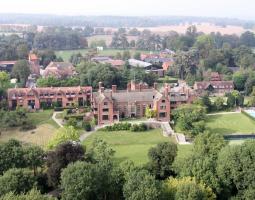
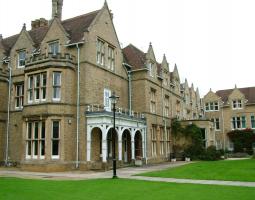
During their studies, students are accommodated in the residences of Balliol College, St Peter’s College, and St Catherine’s College: separate single and twin rooms are prepared for boys and girls, fully furnished, with access to shared bathrooms, lounge areas, and other amenities of the residential building; for an additional fee, students can be accommodated in a bedroom with a private bathroom. Summer school staff live in the residences alongside the students, providing round-the-clock support.
Every day, students visit the university’s dining halls, where they are offered balanced meals: students aged 12-15 receive breakfast, lunch, and dinner, while students aged 16-18 receive breakfast and dinner. If necessary, an alternative menu is provided to students to accommodate their dietary needs.
Activities Oxford Summer School
Students will be able to visit many cultural attractions of the city: the Sheldonian Theater, the Bodleian Library, the Ashmolean Museum - the oldest in England, as well as the Christ Church dining room, equipped in the style of the famous story of Harry Potter.
On each of the territories there are thematic parties, festivals, creative and sports competitions. Students can take part in charity events, competitions in running or team sports, attend artistic plein airs in nature.
Advantages
- #1 of UK International Schools
- Three Royal Entrepreneurship Awards
- Five-time winner of the BETA Award for Best Educational Product
- More than 30 academic courses of different directions
- Living and studying in the historic buildings of traditional universities in the UK
- Small classes of up to 15 people, some groups are educated 1:1 or 2:1 with a teacher.
Facilities and equipment at Oxford Summer School
The city is widely known as one of the best universities in the world. Oxford University was built in 1096, an hour's drive from London. Among its graduates there are many famous personalities: Bill Clinton, Boris Johnson, J.R.R. Tolkien and others.
The city itself offers students a combination of centuries of history, rich culture and a variety of active leisure activities.
Education takes place in well-equipped classrooms, laboratories, computer centers. Outside of school hours, students can use the library and its reading rooms, recreation areas, sports grounds, as well as visit cafes and restaurants.
From the academic buildings to the airports can be reached by public transport, taxi or transfers. The road will take:
- to Heathrow – 1.5 hours
- to Gatwick – 2,5 hours
- to Stansted – about 3.5 hours
- 2 hours to Luton
- Birmingham is about 1 hour away.
Admission dates and extra charges
Preparation programs for the IELTS exam, a language course can last from two to six weeks.
The price of the program includes:
- 15 to 20 hours of lessons per week
- Educational files, materials
- Scientific, recreational activities, excursions
- Accommodation, three meals a day for children from 13 to 15 years old, breakfasts and dinners – for students from 16 years old
- Oxford's corporate uniform
- Certificate of completion of eduaction.
In addition, you will have to pay:
- Transport
- Activities not included in the programme
- Flights
- Visa documents, foreign passport.
Enrolment process
Applicants fill out the registration form, provide the required documents, and receive a complete information package with further instructions on obtaining a visa and arriving in the country and city.
Perspectives
Upon completion of their studies, students receive a graduation diploma, which will be an excellent addition to their portfolio and confirmation of excellent academic preparation.
Entry requirements, how to apply, what is required to enrol
To study in the United Kingdom, international students need a passport, a visa or residence permit, and health insurance. To comfortably study on a summer course at the University of Oxford, they will also need:
- Age matching the course: some programs are aimed at students aged 12-15, others at 16-18,
- English language proficiency level — C1.
Scholarships Oxford Summer School
The summer school offers a payment installment program and provides discounts for early booking.
Institution on the map
Residence permits, citizenship and other services
- Guardianship services during the studies
- Student supervision
Review about Oxford Summer School
Recommendations on when to apply
| Language courses, schools and children's language camps | Primary and secondary education - private schools | Preparation programmes for entering universities - higher education | Higher education (after completing accredited programs A-level, IB, High School) - Bachelor, Master, MBA |
| - we recommend to apply 6-9 months before the start of the course (some camps and schools offer discounts for early booking or for lengthy study programs) - there are some very popular and high demand children's camps, where the applications need to be submitted 1 year in advance (in particular Switzerland , Great Britain , USA , Canada , Austria) | - we recommend to apply one year before the start of the training program, - some schools have a specific time frame (September-November - please specify an individual school) - some schools require tests in several stages (UKISET, internal tests of the school: English, mathematics, logics, subjects, interview, some require a personal visit) | - we recommend to apply one year before the start of the program, - for Foundation and Pathway programs, IELTS and TOEFL certificates are usually required, respectively | - recommended submission one year before the start of the program, - the deadline normally closes in January, for TOP HEIs and, as a rule, in March in other universities - for a bachelor, a Foundation or Pathway preparatory program a completed A-level, IB, High School + IELTS / TOEFL are required - for Masters you need a graduated higher education, in some cases you need a pre-Masters program - MBA requires completed higher education, work experience preferably at least 2-3 years, etc. |