For partners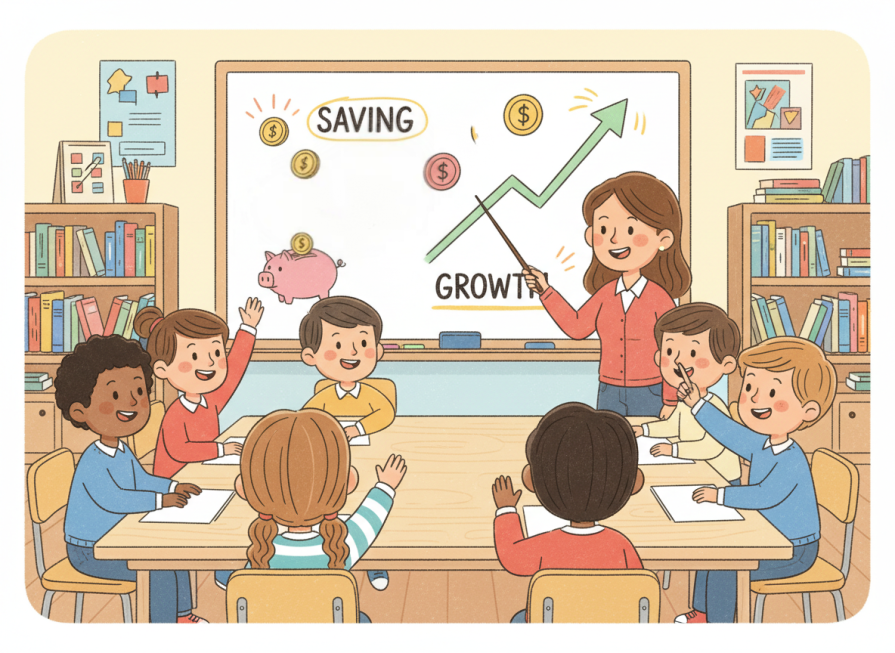
It is a modern-day situation where the youth are exposed to digital payments, online shopping, credit cards, and social media advertisements so constantly that financial literacy would not be an optional skill anymore rather it is going to be a mandatory one. Knowing the whole process of money flow, along with saving, investing, and making responsible financial decisions, is the only way one can build a strong and independent future. Despite this, the majority of students completed their education learning how to manipulate math variables but they did not acquire the skill of budget management. The introduction of financial literacy in schools would be one of the ways to equip the students with such life skills and not only that but also to reduce the gap between them and the rest of the society that already has those skills.


What Is Financial Literacy?
Financial literacy is the ability to comprehend and effectively use financial skills like budgeting, saving, investing, and managing debt. It also involves having a good understanding of banking, taxes, loans, and credit. In a nutshell, it is all about making well-informed choices when it comes to money.
A person who is financially literate will be able to recognize the difference between needs and wants, will have an understanding of how money works and will be able to set up a plan for both short-term — like buying a computer — and long-term goals like paying for college or saving for retirement.
Why Schools Should Teach It?
The role of schools in instilling habits and values that will last a lifetime is crucial. Not only do students get to use the financial literacy concepts during their school days but also they get to use them in their entire life as practical tools.
-
Budgeting and saving: Students get to learn how to avoid impulse buying, manage their pocket money, and even plan for their future expenses.
-
Understanding credit and debt: They learn how loans and interest work, consequently, they will be in a position to avoid financial traps such as credit cards with high-interest rates.
-
Entrepreneurial thinking: Learning about the flow of money in business and the economy is a way of increasing the students' creativity, freedom, and innovativeness.
In addition, the exposure of the money problem through financial education leads to a decrease in students' anxiety over it. With these skills, students are empowered to take control over the financial issues, thus, they can turn that into good decisions in later stages of life.
A 2023 OECD report reveals that financial education in schools is a key factor that correlates with higher national savings rates and lower household debt in the case of those countries including it in their school curriculum.
Financial Literacy in Practice
A number of countries have already attained the financial enlightenment high school requirement. In the U.S. for example, some states enforce the rule that every high school student must take either a personal finance or economics course before graduation. In the U.K., financial literacy forms part of the citizenship and maths curricula, with Canada and Australia focusing on budgeting, taxation, and responsible borrowing through separate lessons.

Moreover, apart from the conventional teaching methods in class, a great number of schools have come up with workshops, simulations, and “financial games,” such as stock market simulations or budgeting competitions that help students learn about money in both an interactive and practical way.
How It Helps Students Beyond School?
Financial literacy has an impact that is way beyond the school walls. Students who understand finance are more ready to face and handle adult obligations like taking student loans, renting an apartment, or saving for major life events. Additionally, they are usually the ones who make better career and investment decisions.
In addition, financial literacy is a tool for social justice and blessing. It envisions all people as economic rulers, thus, it uproots poverty and dependency societies.
Financial knowledge is now seen by the employer as something that is crucial for overall decision-making and problem-solving skills. In the financial literacy era, personal plus professional security is guaranteed.
Challenges and What Schools Can Do
Even though it is so crucial, financial education is not yet widely available in some schools. Teachers might not feel equipped to teach and there would be limited resources or time within the existing subjects.
-
The first thing schools can do is to form partnerships with banks or education providers who give free teaching materials.
-
Next, they can give a little bit of time in the existing math or social studies classes for practical learning.
-
Also, they can invite guest speakers who are entrepreneurs, talk about their businesses, economists and financial advisors, and have the students interact with them to learn firsthand.
Small habits like asking students to prepare a simple monthly budget or keep track of their spending can help in developing a lifelong good habit.
Conclusion
Financial literacy is not just about managing money — it’s about managing life. In a world where financial decisions are increasingly complex, schools have a responsibility to prepare students for the realities of adulthood. Teaching financial literacy early empowers young people to make smart, confident choices, avoid debt, and build a secure future.
By integrating financial education into the curriculum, schools can give students one of the most important lessons they will ever learn — how to make money work for them, not against them.