Michigan Technological University (MTU)





Programs and prices, tuition fees in Michigan Technological University (MTU)


Specify information on the program on the official site of an educational institution.
Specify information on the program on the official site of an educational institution.
Description of Michigan Technological University (MTU)
Michigan Technological University (MTU) - a public non-profit institution of higher education (Houghton, Michigan, USA). Michigan Technological University began its history as the Michigan Mining School in Houghton in 1885, founded by the state of Michigan to edengineers for demolition engineers to work in local copper mines. Initially, the school had a team of four teachers, who educated 23 students.
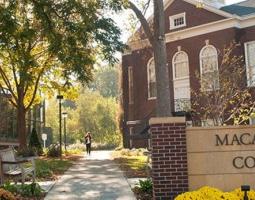
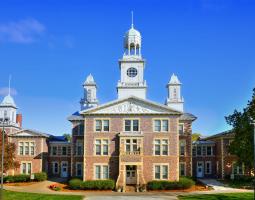
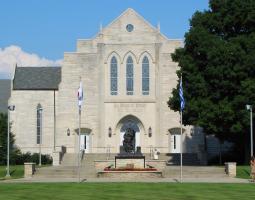
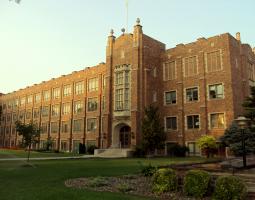
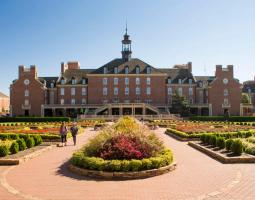
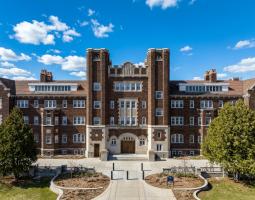
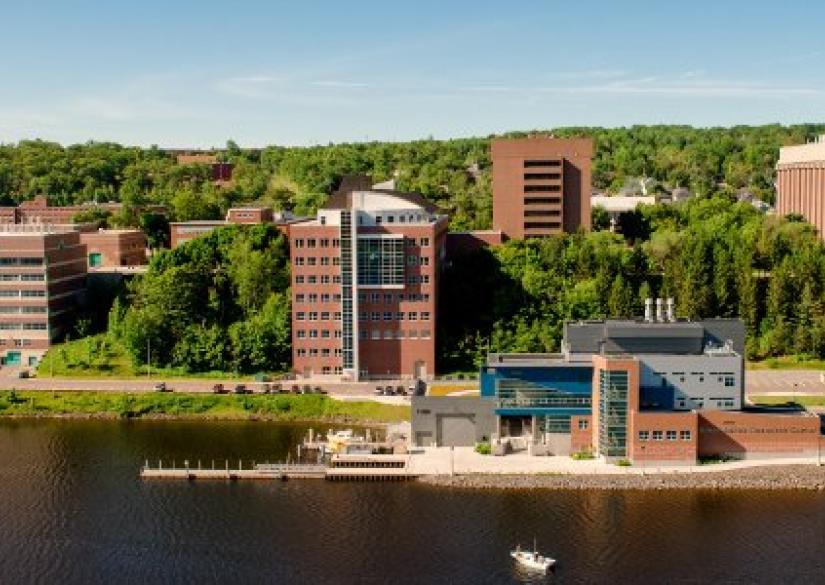
The campus is located on the Upper Peninsula overlooking the Kevino waterway and is just a few miles from Lake Superior.
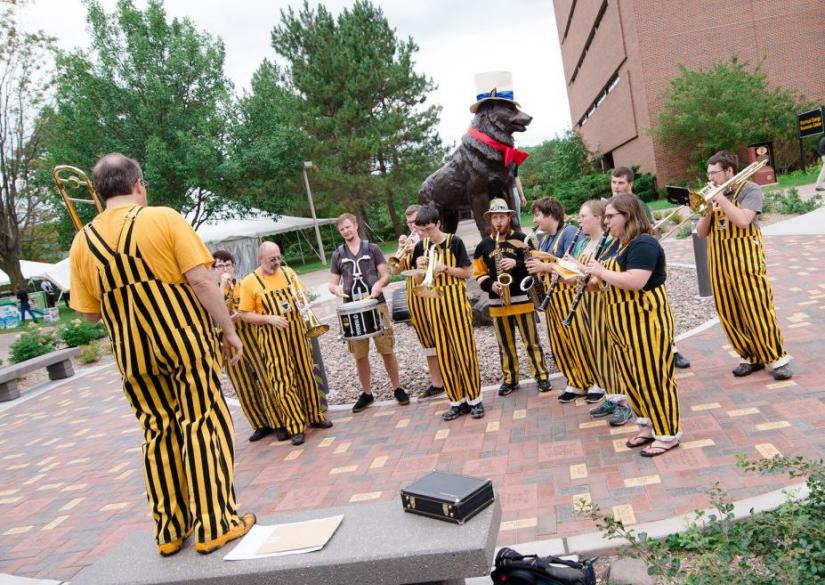
Historic Highway 41 runs around the southern edge of the campus, separating hostels and recreation areas from academic facilities. The campus is decorated with the symbol of the university - a three-meter Husky statue, which stands on a 19-ton boulder about 1.8 billion years old.
The campus contains all the necessary infrastructure elements for successful study, recreation and development of students, among them a performing arts center, which includes:
- The exhibition, which presents exhibits and installations of fine art;
- Presentation room;
- Modern language laboratory;
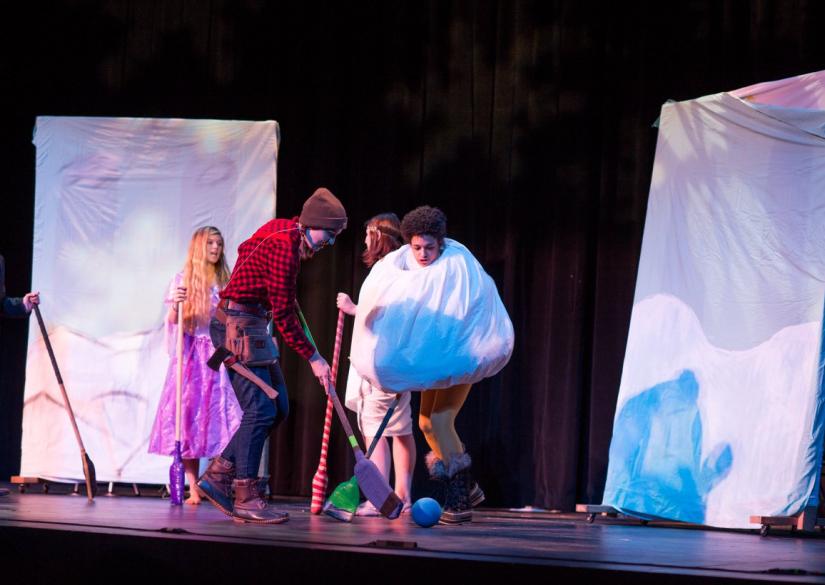
- The theater, which hosts performances of the university troupe, concerts of jazz groups, symphony orchestras, choirs, as well as exhibitions and installations of fine art.
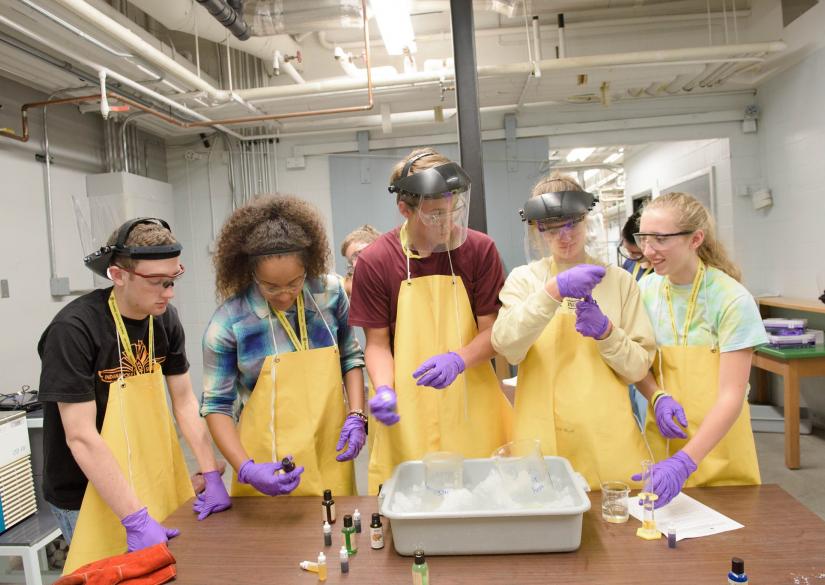
In the western part of the campus are located laboratories for research in the field of engineering and natural sciences, as well as three advanced biomedical, engineering and research laboratories.
The campus has its own cinema, food court with a wide variety of menus from different countries, offices of student organizations, a bookstore, conference rooms, the Cosmos ballroom, as well as John Edgar McAllister center. The recently renovated university library contains 250 jobs equipped with computers, new scanners and printers (including a 3-D printer). Also in the new library complex there is wireless access to the Internet.
The university also provides a wide range of everything necessary for recreation and fitness for students, teachers, employees: a fitness center, swimming pool, climbing wall, squash courts, a multifunctional hall and a studio for dancing, yoga, aerobics and martial arts.
The University Ice Arena is a education and sports venue for the hockey team of Michigan Tech. In addition to student hockey, the arena is used for kinesiology and integrative physiology, recreational figure skating and sports skating. The Museum of Minerals on campus presents the largest collection of minerals from the Great Lakes region. Golf and skiing are popular sports at the university. The golf course is considered one of the best 18-hole courses on the Upper Peninsula. Nearby, one mile from the campus, is Mont Ripley, the oldest ski resort in the state.
Michigan Tech Research
The University Research Institute is located in Ann Arbor, Michigan. He is a recognized leader in the research, development and practical application of sensors and information technology to solve critical problems in the field of national security, to protect and evaluate critical infrastructure, to study bioinformatics, and to study the earth sciences and ecological processes.
The GLRC Science Center provides modern laboratories where teachers from different departments collaborate in the field of interdisciplinary research. Together with researchers, teachers and industrial partners, university students presented project development:
- Print 3-D prosthetic arm from recycled plastic for children in Nicaragua.
- Use Bluetooth pedals for an improved mountain bike model.
- The technology of destruction of enemy unmanned aerial vehicles with the help of drones catchers.
- The development of environmentally friendly snowmobiles with a silent engine.
- Testing and launching a nanosatellite in low earth orbit.
Educational process
The average class size is 25 students (28 in the first year). The compact campus fosters close relationships with faculty members who know students by name and understand their goals.
From the first semester, students build skills through practice-oriented courses, undergraduate research, and project-based learning — for example, Enterprise teams or the Senior Design course. Additional opportunities include co-op programs, internships, study abroad, and participation in Pavlis Honors College.
Many programs offer an Accelerated Master's — an accelerated graduate program that allows students to earn a master's degree in one additional year. This option is available in artificial intelligence, sport and fitness management, ecology and wildlife, applied ecology and environmental sciences, geophysics, applied physics, biochemistry and molecular biology, biological sciences, biomedical engineering, Business (general track and business analytics), chemical engineering, chemistry, civil engineering, accounting, and aerospace engineering.
Michigan Tech pays students for 101,000 hours of research work annually through several structured programs:
- Undergraduate Research Internship Program (URIP) – a paid internship during the academic year (up to $2,340, with hourly compensation) for a research or scientific project under faculty supervision,
- Summer Undergraduate Research Fellowship (SURF) – an annual fellowship of up to $4,000 for a summer research project under faculty supervision,
- Research Experience for Undergraduates (REU) – funding and faculty mentorship primarily in STEM fields,
- Earn and Learn Assistantship – an assistantship award of $1,100 for first-year and transfer students in the College of Forest Resources and Environmental Science (CFRES) for research work under faculty supervision during the first year.
Additional paid, volunteer, and for-credit research opportunities are available across all departments and programs. Students present their research findings at the annual Undergraduate Research and Scholarship Symposium at Michigan Tech, at national conferences, and in peer-reviewed academic journals — even before graduation.
Faculties and colleges
Bachelor's degree programs and their key specializations:
- artificial intelligence – specializations in theory, software development, data centers, cybersecurity, business, or human-computer interaction,
- sport and fitness management – combines the business of sport and fitness with the science of human movement. Students may earn a personal trainer certification from the American College of Sports Medicine or the National Strength and Conditioning Association, and a coaching certification,
- ecology and wildlife conservation – the study of animal populations in the context of land management decisions. Students in the College of Forest Resources and Environmental Science (CFRES) participate in the FERM program for training conservation specialists,
- applied ecology and environmental sciences – specializations in biotechnology, natural resource communication, or wetland ecology,
- geophysics – specializations include volcanology, oceanography, natural hazard mitigation, remote sensing, GIS mapping, natural resources (ecology and forestry), oil and gas exploration and production, or seismology,
- applied physics – specializations in biophysics, alternative energy, or entrepreneurship,
- audio production and technology – design and installation of sound systems and the technical aspects of sound, including the physics of sound production, fundamentals of computer networks and programming, and electrical engineering,
- biochemistry and molecular biology – offered with a focus in biology or in chemistry,
- biological sciences,
- biomedical engineering – specializations include mechanical engineering, electrical engineering, materials science and engineering, or biotechnology; pre-medical preparation for admission to medical school is also available,
- general business – an option without a defined specialization, allowing up to three semesters to choose from among nine tracks in the College of Business: accounting, business analytics, construction management, economics, engineering management, finance, management, management information systems, and marketing. Each student is assigned a personal academic advisor,
- business analytics – an interdisciplinary program between the Department of Mathematical Sciences and the College of Business, with a flexible curriculum and electives in business and mathematics,
- chemical technology,
- chemistry – offered as a Bachelor of Arts (with a pre-pharmacy track) or a Bachelor of Science (with tracks in environmental chemistry, biochemistry, polymer chemistry, or chemical physics),
- civil engineering – tracks include general civil engineering, transportation, infrastructure, or water resources; additional programs are available in construction management, environmental engineering, humanitarian engineering, municipal engineering, railway transportation, surveying, or water resource recovery technologies,
- accounting – the program holds STEM designation, which is important for international students when extending their visa; a data analytics course can be added,
- aerospace engineering – covers the aeronautical and astronautical aspects of aerospace engineering, including space systems and spacecraft design,
- anthropology – includes archaeology, cultural anthropology, physical anthropology, and linguistics as departmental specializations.
Scientific achievements
Michigan Tech – an R1 research university and Michigan's flagship technology institution for student research.
The university is home to the world's longest-running predator–prey study: the investigation of wolves and moose on Isle Royale in Lake Superior has been ongoing for several decades.
Aerospace Enterprise teams design, assemble, and launch nanosatellites on SpaceX missions launching from Cape Canaveral. These same teams have developed lunar rovers and power management systems for NASA – projects that have won national competitions.
Biomedical engineering students participating in the Innovative Global Solutions Enterprise developed a neonatal incubator for use in developing countries. One alumnus became the author of a scientific publication, having developed a high-sensitivity sensor array for detecting various pathogens.
Accommodation, meals, prices
More than a third of undergraduate students live on campus, including all first-year students. Housing options include traditional residence halls and apartment-style complexes:
- Douglass Houghton Hall, McNair Hall, and Wadsworth Hall – traditional residence halls divided into separate «houses» to foster community,
- East Hall – semi-private rooms with single and double occupancy for transfer students and students in their second year and above,
- Hillside Place – apartments for transfer students, students in their second year and above, students aged 21 and older, and international students.
On-campus dining is available at dining halls, coffee shops, and retail dining locations. Students choose an unlimited or limited meal plan or pay for each meal individually.
First-year students living on campus choose either an unlimited plan or a 19-meals-per-week plan at the dining halls. In the event of a conflict with classes, lab work, or illness, arrangements can be made to receive food to go. Every plan includes Dining Dollars, which are valid for the duration of the semester and accepted at retail dining locations.
The three campus dining halls offer an extensive menu, including vegetarian, vegan, gluten-free, and healthy eating options. The dining team identifies options for students with allergies and other dietary needs.
Dining Dollars are linked to the student ID card, accepted at retail dining locations on campus and at select vending machines, and the balance can be topped up at any time.
Activities Michigan Technological University (MTU)
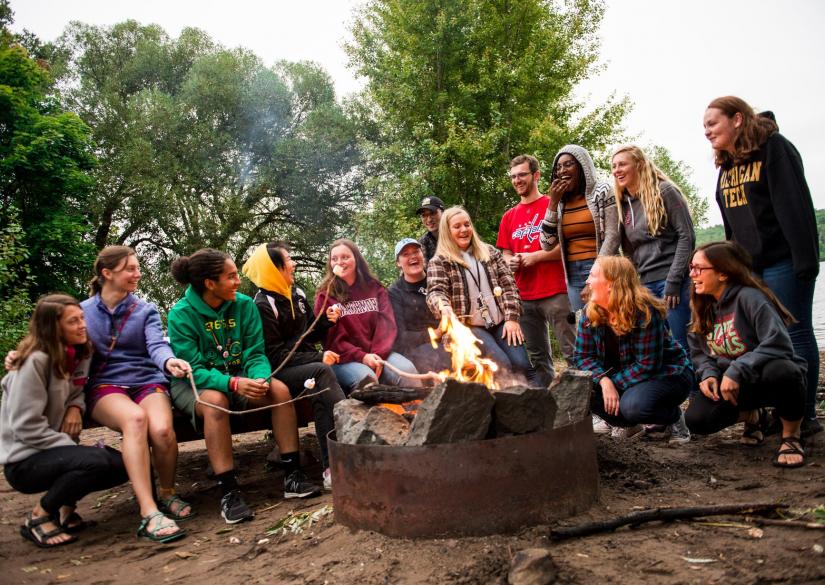
- Students can choose from more than 260 organizations available through the university portal Involvement Link, supported by the Student Leadership and Involvement office. A new organization can be created with 10 founding members, an advisor, and a constitution, with access to university funding.
- Broomball – Michigan Tech's signature pastime: three rinks, more than 200 teams, and, according to the university, 404,235 linear feet of tape used by teams.
- More than 600 students participate in musical and creative programs on campus.
- Student life includes fraternities and sororities: seven women's and 11 men's organizations with approximately 11 percent of students as members. Their members have volunteered more than 12,000 hours of service and raised more than $33,900 for local and national charitable organizations.
- Men's varsity teams include basketball, cross country, soccer, hockey (Division I), cross-country skiing, tennis, and track and field.
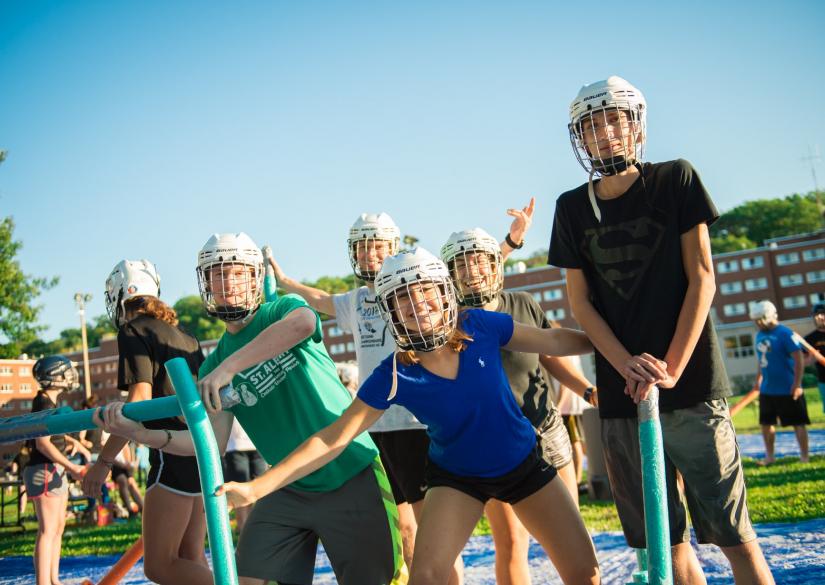
- Intramural sports include basketball, water polo, softball, pickleball, ultimate frisbee, disc golf, volleyball, floorball, dodgeball, soccer, table tennis, a billiards tournament, and swim competitions, among others.
- The Experience Tech program gives students unlimited access to the Mont Ripley ski slope, the Portage Lake Golf Course, the Gates Tennis Center, Visual and Performing Arts department events, hockey games, a snowshoeing day through the Outdoor Adventure Program (outdoor recreation), and intramural sports.
- Among students' favorite activities are broomball and ice bowling, performing in the Huskies Pep Band, building, taping, and racing cardboard boats, creating full-size snow sculptures during Winter Carnival (an event covered by The Weather Channel), and watching the northern lights.
- Campus tours are offered twice on weekdays when classes are in session, including during the summer. Each semester features Husky Days – days with events and presentations. The Open House program introduces prospective students to the university and the Upper Peninsula. Preview Day is an information program for admitted students and their families.
Advantages
- The accounting program is accredited by AACSB – the international association of business schools.
Facilities and equipment at Michigan Technological University (MTU)
Currently, Michigan Technological University is a medium-sized institution of higher education and ranks 121 in the country and 575 in the world rankings. The university has more than six thousand students who can choose undergraduate and graduate programs in the following departments:
College of Engineering includes the following curricula:
- biomedical engineering;
- chemical technology;
- civil and environmental engineering;
- electrical engineering and computing;
- fundamentals of engineering;
- geological and mining engineering and science;
- materials science and technology;
- mechanical engineering and engineering mechanics.
College of Science and Arts:
- biological science;
- chemistry;
- cognitive and educational sciences;
- computer science;
- kinesiology and integrative physiology;
- humanitarian sciences;
- mathematical science;
- physics;
- Social sciencies;
- visual and performing arts.
The university also includes: a school of technology, a school of business and economics, a school of forest resources and environmental sciences.
The teaching staff is represented by 563 teachers. In the university there are exchange programs and distance learning. The school year is divided here into semesters.
Perspectives
The «Biological Sciences» program prepares students oriented toward medical careers: the rate of Michigan Tech graduates admitted to medical schools is 70 percent – significantly above the national average.
Aerospace engineering graduates are recognized for some of the best early-career outcomes and starting salaries in the country.
Accounting graduates work at Deloitte, Ernst & Young, and on the management teams of Fortune 500 companies.
Graduates of the «Audio Production and Technology» program complete summer internships and hold positions in the industry worldwide – at companies such as Disney, Marvel, and Cirque du Soleil.
Biomedical engineering students are hired by medical technology industry leaders – Kimberly-Clark, Stryker, Medtronic, Boston Scientific, and Abbott Laboratories – which also sponsor research.
Entry requirements, how to apply, what is required to enrol
Apply to the University of Michigan Technology for free online. For most specialties there is no need for letters of recommendation or essay.
Obligatory for admission is a document on obtaining a twelve-year education. For immigrants from the CIS, you must provide a certificate of secondary education and a document confirming the completion of at least one course of a domestic or foreign university with a list of academic achievements. Also required is information about taking an English proficiency test (TOEFL or IELTS certificate).
For applicants applying for admission to the specialty "Visual and Performing Art" must submit additional materials, including essays, and in some specialties - examples of creativity. Additional materials are required if you are applying for admission to the following stages of the program: audio production and technology, sound design, theater and electronic media, performance and theatrical and entertainment equipment.
The tuition fee for undergraduate and graduate programs for foreign students will be 13,000 USD / year.
Scholarships Michigan Technological University (MTU)
To assess merit-based scholarships and need-based financial aid, the Net-Price Calculator (estimated cost of attendance calculator) is available.
A scholarship list has been published that allows students to check which support programs they may be eligible for.
The Visual and Performing Arts Talent Award is available to students who plan to participate actively in the creative life of the campus.
In addition to scholarships, students may take advantage of part-time on-campus employment to cover a portion of their tuition and other expenses.
Institution on the map
Residence permits, citizenship and other services
- Guardianship services during the studies
- Student supervision
Review about Michigan Technological University (MTU)
Recommendations on when to apply
| Language courses, schools and children's language camps | Primary and secondary education - private schools | Preparation programmes for entering universities - higher education | Higher education (after completing accredited programs A-level, IB, High School) - Bachelor, Master, MBA |
| - we recommend to apply 6-9 months before the start of the course (some camps and schools offer discounts for early booking or for lengthy study programs) - there are some very popular and high demand children's camps, where the applications need to be submitted 1 year in advance (in particular Switzerland , Great Britain , USA , Canada , Austria) | - we recommend to apply one year before the start of the training program, - some schools have a specific time frame (September-November - please specify an individual school) - some schools require tests in several stages (UKISET, internal tests of the school: English, mathematics, logics, subjects, interview, some require a personal visit) | - we recommend to apply one year before the start of the program, - for Foundation and Pathway programs, IELTS and TOEFL certificates are usually required, respectively | - recommended submission one year before the start of the program, - the deadline normally closes in January, for TOP HEIs and, as a rule, in March in other universities - for a bachelor, a Foundation or Pathway preparatory program a completed A-level, IB, High School + IELTS / TOEFL are required - for Masters you need a graduated higher education, in some cases you need a pre-Masters program - MBA requires completed higher education, work experience preferably at least 2-3 years, etc. |