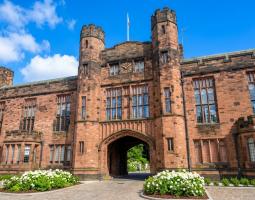
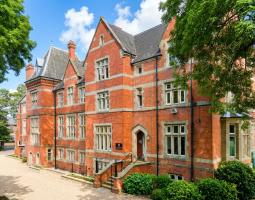
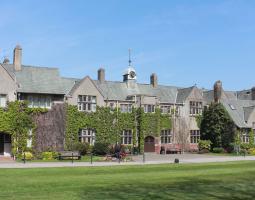
Manchester Grammar Private School


Programs and prices, tuition fees in Manchester Grammar Private School


- Age — from 7 years old.
- The duration of training varies.
MGS's selectivity provides an approach to learning that both challenges students and promotes freedom of choice from a wide range of curriculum subjects. The principles of educators in shaping any course are to ensure that it provides a level of difficulty that will encourage boys to prepare well and learn at a higher level. All pupils are prepared for GCSE and IGCSE qualifications.
In the Sixth Form, students are prepared for A-level, international A and Pre-U qualifications. Pre-U is a rigorous alternative to A-levels and is highly regarded by universities.
Description of Manchester Grammar Private School
- Location: Greater Manchester, United Kingdom,
- Founded in: 1515,
- Language of instruction: English,
- Type: boys only.
Manchester Grammar School is the largest private day school for boys in the United Kingdom. It has been accepting students since the age of 7 and was one of the first in the UK to adopt the GCSE International Mathematics Exam. In 2009, the GCSE was replaced by the IGCSE in most subjects, in parallel with this process, the school began offering additional final exams in Electronics, Chinese Mandarin and Economics at A-Levels.
MGS often collaborates with neighborhood girls' schools on music and theater events.
In 2013, MGS established a primary school in partnership with Manchester City Council and Urban Splash, New Islington's free school. MGS is sister to the school in Uganda and has been affiliated with Busoga College Mwiri since 1990 through their support of the Busoga Trust.
The school is led by Dr Martin Boulton. Pupils travel from across the North West of England, including Preston, Sheffield, Buxton and Stoke-on-Trent.
Educational process
MGS prides itself on offering a rich and creative curriculum that goes far beyond the National Curriculum of England. Even though the school's education is academically rigorous and challenging, it is at the same time broad and flexible. In addition to teaching the core curriculum in the lower grades, MGS has developed a schedule that includes classes ranging from robotics to entrepreneurship.
The school makes full use of the common facilities and specialist teachers in the classroom already in the lower grades. As pupils move on to Upper School, they move on to a wide range of subjects taught by subject specialists, with choice flexibility to allow boys to follow their interests when choosing GCSE (secondary school leaving exams) and A-Level (upper secondary school leaving exams) options. For example, for GCSE and IGCSE (the international version of GCSE), you can freely study up to four languages.
During the entire education, the boys are assisted by a personal tutor.
The Friends Scheme helps new pupils connect with an older student who can accompany them on their journeys to school during the first few days of the school year. Pupils can renew and reserve books through the library catalog on their Microsoft Surface computers. Online resources and e-books are available through Accessit, including outside the school day. The medical center is staffed by two full-time nurses who are also trained counselors. Specialist nursing support is provided for Saturday sports fixtures.
Faculties and colleges
Subjects studied by students at MGS:
- art and design,
- biology
- chemistry
- Computer Engineering,
- drama
- economics
- English
- electronics
- EPQ (a qualification based on an independent project),
- general scientific disciplines,
- geography
- history
- mathematics
- modern languages,
- music
- Physical education and games,
- physics
- politics
- PSHE (personal, social and health education),
- Religion and Philosophy.
The school has the following divisions:
- Junior School: Years 3, 4, 5 and 6, with entry at ages 7, 8, 9 or 10,
- Senior School: normal entry at age 11 in Year 7,
- Sixth Form, the upper secondary years: entry at age 16+ in Year 12.
Scientific achievements
In 2026, the share of A-Level grades at A*–B in the upper secondary school leaving exams was:
- Computer Science — 100%,
- English Literature — 100%,
- Mathematics (Further) — 98%,
- Mathematics — 89.3%,
- Physics — 90.2%.
In the 2026 GCSE exams, taken at the end of secondary school, the share of grades at 9–6 was:
- Mathematics — 98%,
- Chemistry — 94.8%,
- Physics — 95.3%.
A Year 9 pupil was selected for the British Gymnastics 2025 Men's Artistic Development Programme. Another pupil performed Mahler’s Resurrection Symphony at the Royal Albert Hall as a member of the Hallé Youth Choir.
Things to know about
- The school is considered one of the oldest in England,
- Famous people such as former England cricket captain Mike Atherton, former Lancashire captain Mark Chilton and former player John Crowley, several famous writers have studied at MGS: Thomas de Quincey, playwright Robert Bolt, writer Alan Garner, after whom the library for elementary school students is named, journalist and TV presenter Martin Sixsmith,
- Among other things, the children of King George V and Winston Churchill studied at MGS,
- The school was founded by Hugh Oldham, Bishop of Exeter,
- Its original purpose was to educate the poor boys of Manchester,
- The school's motto is Sapere Aude, meaning “Dare to know”.
Accommodation, meals, prices
MGS is a day school only, so there are no boarding and residences in it.
The school wholly operates MGS Catering, which serves more than 1,500 school meals every day across two units on campus. Lunch is compulsory only for Years 3 and 4, where it is provided at no additional charge.
All meals are cooked from scratch, including sauces and spice mixes. Meat, fish, vegetables, fruit, dairy and bakery products come from local suppliers and producers that are inspected regularly. The menu changes regularly and includes international cuisine and vegetarian choices, along with theme days.
Catering staff are trained in food preparation, food safety, safety at work and allergy awareness. A Catering School Council collects feedback on school meals.
Activities Manchester Grammar Private School
Extracurricular activities at MGS include:
- Workouts in the gym,
- Charity,
- Chess,
- Theater Club,
- Art & Painting,
- Musical bands,
- Young Engineers Club,
- Young Entrepreneurs Club,
- CCF (Combined Cadet Force), consisting of Army and Air Force sections.
As a volunteer program, students undergo community service, help the disabled and the elderly.
The school organizes more than 300 trips per year and an annual exchange with Augsburg. Many societies are run by pupils themselves, who can also propose new activities.
School teams compete in the following sports:
- Badminton,
- Football,
- Hockey,
- Cross Country,
- Rugby Union.
Advantages
- Individual approach to each student,
- Development of leadership and teamwork skills,
- Opportunity to intern at leading companies and universities,
- An extended program of study with a focus on admission to prestigious universities,
- Following its January 2024 inspection by ISI (the Independent Schools Inspectorate), the school was found fully compliant with all regulatory standards. Inspectors identified support for pupils with special educational needs and disabilities as a significant strength of the school,
- Tutor groups have no more than 12 pupils.
Facilities and equipment at Manchester Grammar Private School
In MGS, which is open to students, there are:
- state-of-the-art classrooms and laboratories for the study of various subjects,
- gyms and sports grounds,
- music studios and theater spaces for the development of creativity,
- Computer labs and libraries for independent work and research,
- canteens and cafés,
- medical offices,
- Rest rooms.
The school has two large libraries staffed by three specialist librarians. The Garner Library serves Years 7 and 8, while the Paton Library serves Years 9–13. The Junior School has its own library provision. The collections include fiction and nonfiction covering academic disciplines, magazines, periodicals and DVDs.
The Hibbitt Centre, a new Sixth Form (upper secondary school) center with a sports pavilion, opened in February 2026. It has study and recreational areas for pupils, teaching space and offices. The project included a new refectory on the school's existing site.
Admission dates and extra charges
Trimester dates vary: most commonly, MGS has fall (September to December), winter (January to March), and spring-summer (April to June) trimesters. Holidays usually take place in autumn, winter and spring.
Tuition includes a Microsoft Surface computer, textbooks, equipment, school supplies (notebooks, pens, pencils, etc.) and other teaching materials, except for a small number of items on the equipment list. Examination charges for Year 11 and Year 13 pupils are included.
Additional costs:
- School uniforms and sportswear,
- Medical services and insurance,
- Accommodation and meals,
- Payment for exams other than the included charges for Year 11 and Year 13,
- Private music lessons,
- Some trips during the school's activities week in the summer term and other voluntary school trips.
In the Junior School, tuition includes care before and after lessons from 8:00 to 18:00. School libraries are open on schooldays from 8 am until 6 pm.
Enrolment process
The main stages of admission to MGS:
- Filling out an online application with all the necessary data, paying for the chosen course,
- Provision of a certificate confirming the level of English language proficiency (IELTS, TOEFL),
- Passing the school's internal tests and interviews,
- Obtaining a visa and health insurance,
- Enrollment in the school.
Successful Sixth Form (upper secondary school) applicants receive conditional offers.
Perspectives
MGS is committed to ensuring that all apprentices are aware of the career opportunities that are available to them during and after their studies. The Head of Careers oversees the implementation of the vocational education programme: it includes meetings, tutorials, career-related events and exhibitions, one-on-one meetings, ensuring that apprentices receive unbiased career guidance and are well informed about their career options.
Students have access to career growth and university support through the Unifrog platform, which provides an opportunity to undergo career guidance and negotiate the employment of graduates. For Grade 12 students, the internship usually takes place for a week in June.
Entry requirements, how to apply, what is required to enrol
MGS admission requirements may vary depending on the year of study and program, however, there are general requirements to consider when admission:
- It is necessary to pass the international IELTS or TOEFL exam, confirm knowledge of the English language,
- You need to have good grades in the certificate or report card,
- Write a motivation letter about your goals, interests and plans for the future,
- Collect letters of recommendation from teachers and mentors,
- Pass an interview with school representatives.
In addition, for admission, you must pass the 11 Plus exam: written tasks in grammar, punctuation, vocabulary, comprehension and data processing. In addition, questions on logic and mathematical problems can be asked.
There is no formal exam for Junior School entry. The Assessment Day looks at how a child responds to the style and pace of teaching characteristic of MGS. Candidates are assessed on their ability to work with numbers and texts, think creatively, solve puzzles and interact in a group.
Selection for Sixth Form (upper secondary school) takes account of the subjects a candidate wants to study. The process includes a Sixth Form Experience Day and an Assessment Afternoon.
The school views scores of 50% and over on entrance tasks as a sign that a candidate is approaching its entry requirements, but this is not a guaranteed passing score.
Additional Senior School entry is available at ages 12, 13 and 14: late entry to Year 7 and entry to Year 8, 9 and 10.
Scholarships Manchester Grammar Private School
Scholarship places are available for boys entering sixth and seventh grades, with most funding offered for seventh grade entry. Scholarships are only offered to families who are domiciled in the UK and the North West of England at the time of application.
A school's ability to offer scholarships depends on the level of funding available. The amount of assistance depends on the total gross income of the family in which the student lives and is determined on a sliding scale. The family's income is reviewed annually and the amount of the scholarship is adjusted accordingly.
If you want to apply for financial aid, you must do so immediately when you apply for admission.
Institution on the map
Residence permits, citizenship and other services
- Guardianship services during the studies
- Student supervision
Review about Manchester Grammar Private School
Recommendations on when to apply
| Language courses, schools and children's language camps | Primary and secondary education - private schools | Preparation programmes for entering universities - higher education | Higher education (after completing accredited programs A-level, IB, High School) - Bachelor, Master, MBA |
| - we recommend to apply 6-9 months before the start of the course (some camps and schools offer discounts for early booking or for lengthy study programs) - there are some very popular and high demand children's camps, where the applications need to be submitted 1 year in advance (in particular Switzerland , Great Britain , USA , Canada , Austria) | - we recommend to apply one year before the start of the training program, - some schools have a specific time frame (September-November - please specify an individual school) - some schools require tests in several stages (UKISET, internal tests of the school: English, mathematics, logics, subjects, interview, some require a personal visit) | - we recommend to apply one year before the start of the program, - for Foundation and Pathway programs, IELTS and TOEFL certificates are usually required, respectively | - recommended submission one year before the start of the program, - the deadline normally closes in January, for TOP HEIs and, as a rule, in March in other universities - for a bachelor, a Foundation or Pathway preparatory program a completed A-level, IB, High School + IELTS / TOEFL are required - for Masters you need a graduated higher education, in some cases you need a pre-Masters program - MBA requires completed higher education, work experience preferably at least 2-3 years, etc. |