
Lomonosov Moscow State University



Programs and prices, tuition fees in Lomonosov Moscow State University

Information on the program can be found on the official website of the school.
Information on the program can be found on the official website of the school.
Description of Lomonosov Moscow State University
In 1755, the oldest Russian university, Lomonosov Moscow State University, was founded. Moscow State University. MV Lomonosov Moscow State University is a major scientific center of the Russian Federation, which includes 15 research institutes.
At the moment, the university is conducting scientific research in 300 directions at once. Over the years of its work, university scientists have made many significant research works.
- Scientists of Moscow State University made 12% of all discoveries registered in the USSR.
- It was the specialists of Lomonosov Moscow State University who developed a method for determining climate change in the foliage of plants.
- University scientists worked on studying the relationship between short- and long-term mutations of the influenza virus.
- Employees of Moscow State University have developed a special satellite called "Lomonosov", which allows you to study extreme phenomena in the universe.
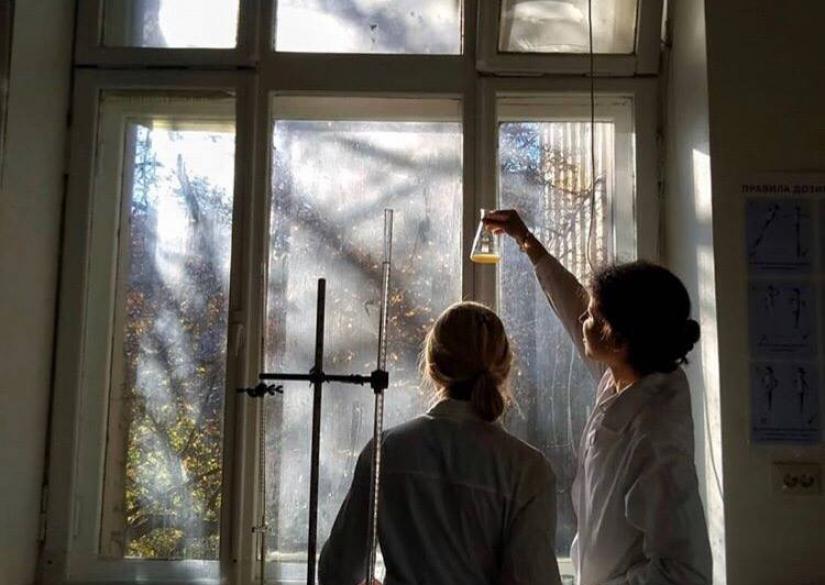
- Chemists of this university have developed a new innovative method for the synthesis of peptides, which suppress the reproduction of cancer cells.
- In 2014, a new method of surgical intervention was developed (non-invasively, using focused ultrasound).
Faculties and colleges
Lomonosov Moscow State University has 40 faculties. Its educational programs cover the full spectrum of scientific and professional fields.
Natural Science and Technical Programs:
- mechanics and mathematics;
- computational mathematics and cybernetics (VMK);
- physics;
- chemistry;
- biology;
- biotechnology;
- bioengineering and bioinformatics;
- soil science;
- geology;
- geography;
- materials science;
- fundamental medicine;
- fundamental physical and chemical engineering;
- artificial intelligence;
- space research.
Humanities and Social Programs:
- history;
- philology;
- philosophy;
- law;
- journalism;
- psychology;
- sociology;
- foreign languages and regional studies;
- pedagogical education;
- Institute of Asian and African Studies (ISAA).
Management and Economics Programs:
- economics;
- public administration;
- global processes;
- world politics;
- political science;
- Moscow School of Economics;
- Higher School of Business;
- Higher School of Public Administration;
- Higher School of State Audit;
- Higher School of Management and Innovation;
- Higher School of Innovative Business.
Creative and Cultural Programs:
- faculty of arts;
- Higher School of Television;
- Higher School of Translation;
- Higher School of Cultural Policy and Management in the Humanities;
- Higher School of Contemporary Social Sciences.
Lomonosov Moscow State University hosts 15 research institutes, as well as around 750 departments, divisions, and laboratories.
The university structure includes:
- Specialized Educational and Scientific Center named after Academician A. N. Kolmogorov (SUNC MSU) — a boarding school for gifted students,
- University Gymnasium.
Scientific achievements
MSU ranks first among Russian universities in all leading international rankings.
Among the university's key achievements:
- 11 Nobel laureates — graduates or professors of MSU (out of 18 Russian laureates),
- 6 Fields Medal laureates in mathematics,
- the «Lomonosov», «Vernov», «Nuklon», «Yutsat» satellites and the «Universitetsky-Tatyana» series, created by MSU specialists,
- a supercomputer complex with a peak performance of over 4 500 000 gigaflops — the most powerful in Russia and the CIS.
MSU maintains long-term scientific and technical cooperation with leading global companies: Intel, Google, Procter & Gamble, Schlumberger, LG Chem, HP, Samsung, Elsevier.
Since 2016, the university has been granted the right to independently award the academic degrees of Candidate of Sciences and Doctor of Sciences.
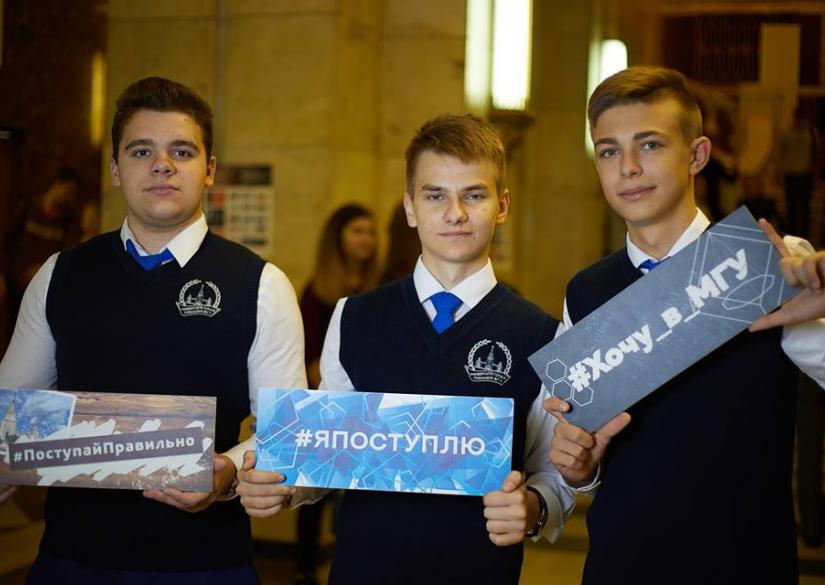
Every year, MSU's olympiad movement reaches more than 700 000 schoolchildren across the country.
Things to know about
- MSU was founded on January 25, 1755 — on the feast day of Saint Tatiana according to the Orthodox calendar, which became the traditional holiday of Russian students.
- Initially, the university had three faculties: philosophy, law, and medicine. Unlike Western European universities, a theology faculty was absent.
- Mikhail Gorbachev graduated from the law faculty of MSU in 1955.
- The facade of the Main Building features the world's largest thermometer and barometer — each measuring 9 meters in diameter.
- The Scientific Library of MSU is one of the oldest and largest public libraries in Russia, with a collection of approximately 10 million items.
- The annual scientific conference «Lomonosov Readings» is held in honor of the university's founding date.
- MSU includes its own Botanical Garden, Russia's oldest herbarium, and a Zoological Museum.
- Over 20 years, 21 new faculties were established at the university, bringing the current total to 40.
Accommodation, meals, prices
MSU has an extensive student housing system: comfortable accommodation is provided by seven independent student campuses — for undergraduate students, postgraduate students, and faculty.
The system includes:
- Student House in the Main Building (DS),
- Student House Branch (FDS),
- Student House on Lomonosovsky Prospekt (DSL),
- Student House on Vernadsky Prospekt (DSV),
- Student House on Kravchenko (DSK),
- Postgraduate and Trainee House (DAS),
- Student House in Yasenevo (DSYa).
The infrastructure of each campus includes:
- video surveillance systems and automatic fire alarms,
- kitchens,
- laundry, drying, and ironing rooms,
- luggage storage,
- gyms with exercise equipment,
- internet access.
Out-of-town students enrolled in full-time state-funded programs who have permanent registration outside Zone 5 of the Moscow Railway are guaranteed a place in the student campus.
Students enrolled under tuition contracts are allocated housing subject to availability.
Activities Lomonosov Moscow State University
Student life at MSU is not limited to academic activities.
The MSU Student Council — a student self-governance body — promotes scientific initiatives, organizes cultural, sports, and leisure events, and participates in scholarship allocation and education quality control.
MSU organizes leading all-Russian olympiads for schoolchildren, including:
- «Lomonosov»;
- «Conquer the Sparrow Hills!»;
- «Tournament named after M. V. Lomonosov»;
- Moscow Schoolchildren's Olympiad;
- All-Russian Young Physicists' Tournament;
- Open Programming Olympiad;
- other competitions.
Each year, more than 700,000 schoolchildren from across the country participate in the olympiad movement.
MSU students have repeatedly become winners of Russian and international olympiads in various disciplines.
As part of academic mobility, approximately 500 MSU students are sent annually for exchange studies at partner universities abroad, and a similar number of international students come to MSU.
The university's international cooperation spans 130 countries.
Advantages
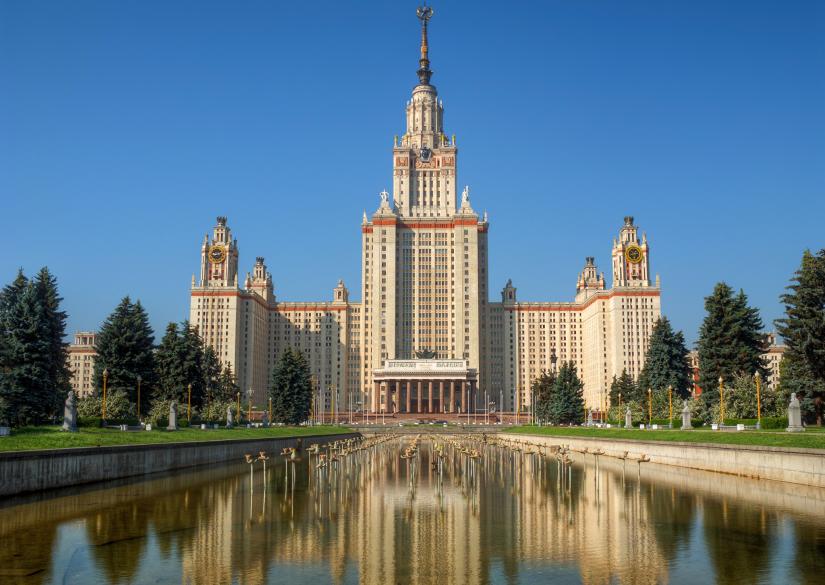
The main 36-storey building of Lomonosov Moscow State University is located on the Vorobyovy Gory, from which a panoramic view of the capital opens. On the territory of the University there is the Botanical Garden, also in Moscow State University there is the oldest herbarium of the Russian Federation and the unique Zoological Museum. Also, the university has its own yacht club.
Faculties of Moscow State University are located in the central districts of Moscow. The educational center has more than 600 buildings. The library of this university is the oldest public and large Russian library, which has about 10 million copies.
Interesting Facts
- MSU has issued 11 Nobel Prize winners, as well as six winners of the Fields Prize.
- Mikhail Gorbachev graduated from this university in 1955. He studied at the Faculty of Law.
- The biggest building in the world is located at the main building of the educational institution: a thermometer and a barometer with a diameter of 9 meters.
Facilities and equipment at Lomonosov Moscow State University
The main building of MSU is a 36-story building on Sparrow Hills, offering a panoramic view of Moscow.
The MSU campus is among the largest university campuses in the world. Over the past 10 years, the campus territory has doubled: approximately 1 million sq. m of academic and research facilities have been built.
The campus includes:
- Intellectual Center — Fundamental Library,
- Medical Research and Education Center,
- Shuvalov and Lomonosov buildings,
- Botanical Garden,
- 5 museums, including the Zoological Museum,
- Science Park,
- yacht club.
The university has more than 600 buildings.
On the campus territory, the «Vorobyovy Gory» science and technology valley is being developed — an innovation cluster that will bring together research buildings, platforms for technology projects, as well as cultural, educational and sports facilities.
MSU faculties are located both on Sparrow Hills and in the central districts of Moscow.
The university's branches operate in Sevastopol, Tashkent, Astana, Baku, Dushanbe and Yerevan.
International campuses and international educational centers are also in operation.
Perspectives
The diploma of Lomonosov Moscow State University (MGU) is recognized by employers throughout Russia and abroad as a mark of high-quality education. The university's graduates are in demand in the modern labor market: MGU trains specialists across the widest range of fields — from mathematicians and physicists to lawyers, economists, journalists, and artificial intelligence specialists. The international partnership network spans leading universities in 130 countries, opening opportunities for academic mobility, internships, and joint research projects. MGU actively develops cooperation with major technology and corporate partners, creating joint laboratories and educational programs. Thanks to the right to issue its own-format diplomas and independently set educational standards, MGU ensures a level of training that exceeds general federal requirements.
Entry requirements, how to apply, what is required to enrol
Admission to MGU for Russian citizens is carried out through the Central Admissions Committee (CAC MGU). A separate admissions procedure is provided for foreign nationals: it requires confirmation of recognition of foreign education, signing a contract, and preparation of the relevant set of documents. Certain categories of foreign nationals have the right to apply on equal terms with citizens of the Russian Federation.
For those wishing to prepare for admission, the University-Wide Preparatory Courses at MGU are available, as well as Russian language and culture courses at the Institute of Russian Language and Culture at MGU for foreign applicants. Smapse specialists will guide you through all stages of admission to MGU.
Scholarships Lomonosov Moscow State University
MSU has an extensive scholarship support system. Students and postgraduate students have access to scholarships from the President of the Russian Federation, scholarships from the Government of the Russian Federation, as well as named scholarships from Moscow University itself — for those most successful in academic, scientific, social, sports, and cultural-creative activities.
Additionally, competitions are held for state support of scientific research by young scientists — candidates and doctors of science. Students enrolled under a contract are provided with the opportunity to transfer to a state-funded place in the manner established by the university.
Institution on the map
Residence permits, citizenship and other services
- Guardianship services during the studies
- Student supervision
Review about Lomonosov Moscow State University
Recommendations on when to apply
| Language courses, schools and children's language camps | Primary and secondary education - private schools | Preparation programmes for entering universities - higher education | Higher education (after completing accredited programs A-level, IB, High School) - Bachelor, Master, MBA |
| - we recommend to apply 6-9 months before the start of the course (some camps and schools offer discounts for early booking or for lengthy study programs) - there are some very popular and high demand children's camps, where the applications need to be submitted 1 year in advance (in particular Switzerland , Great Britain , USA , Canada , Austria) | - we recommend to apply one year before the start of the training program, - some schools have a specific time frame (September-November - please specify an individual school) - some schools require tests in several stages (UKISET, internal tests of the school: English, mathematics, logics, subjects, interview, some require a personal visit) | - we recommend to apply one year before the start of the program, - for Foundation and Pathway programs, IELTS and TOEFL certificates are usually required, respectively | - recommended submission one year before the start of the program, - the deadline normally closes in January, for TOP HEIs and, as a rule, in March in other universities - for a bachelor, a Foundation or Pathway preparatory program a completed A-level, IB, High School + IELTS / TOEFL are required - for Masters you need a graduated higher education, in some cases you need a pre-Masters program - MBA requires completed higher education, work experience preferably at least 2-3 years, etc. |