Hannover Medical School (MHH)




Programs and prices, tuition fees in Hannover Medical School (MHH)


Specify information on the program on the official site of an educational institution.
Specify information on the program on the official site of an educational institution.
Description of Hannover Medical School (MHH)
- Location: Hannover, Germany (urban campus),
- First student intake: 1964,
- Number of students: 4,000,
- Education: modern university-level medical education in Germany,
- Ownership: public,
- Status: a clinical institution and university,
- Name: Hannover Medical School (MHH),
- Programs: ATA, MFA, ZFA, BWL, Early Career Mentoring, ALLEGRO, AVIATOR.
- Location: Hannover, Germany,
- Institution type: clinical institution and university.
In this case, MHH is now the forty-fourth stage of the national rating of the most prestigious institutions of higher education in Germany. On the high indicators of the quality of teaching and the success of graduates, an excellent reputation of the university among employers is created. It allows young professionals to successfully find employment.
Hannover Medical School ranks among the world's top 5% of educational institutions.
Its main research areas are infection and immunity, transplantation and regeneration, biomedical engineering, and implants. MHH is one of Germany's five strongest medical universities in research and attracts external research funding each year. Its research profile includes the RESIST and Hearing4All clusters of excellence. RESIST focuses on infections, while Hearing4All develops models, technologies, and solutions for diagnosing, restoring, and supporting hearing.
Educational process
ALLEGRO participants establish their own research groups. Preparation follows an individual plan that combines scientific and clinical work, and each participant is supported by a personally selected mentoring team.
AVIATOR participants conduct independent translational research projects with clinical and public relevance. The program provides mentoring, teaching, science communication, patient and public involvement, and open science practices. An individual development plan prepares each participant for the R3 career stage in translational medicine.
AVIATOR participants have access to MHH research infrastructure, guidance on research data management and digital medicine, specialized workshops, and support in building international professional networks. AVIATOR helps external participants relocate and settle into MHH.
Early Career Mentoring participants work with an individual mentor and an interdisciplinary group and attend practical workshops on career planning, scientific writing, and communication.
Faculties and colleges
- The three-year ATA anesthesiology assistant program combines theory at the OTA & ATA school with practical training at MHH. The MFA medical assistant program also lasts three years, with classes conducted two days a week during the first year and one day a week from the second year onward,
- The three-year dual ZFA dental assistant program takes place at a vocational school and in the departments of the MHH Center for Dentistry and Maxillofacial Medicine. Speech therapy training lasts three years, with supervised therapy sessions and three practical placements,
- The three-year dietetic assistant program combines classroom instruction with practical experience in the MHH main kitchen, pastry kitchen, and hospitals. Programs for MTL medical technologists in laboratory analytics and laboratory animal care specialists also last three years,
- Technical programs include automation, warehouse logistics, and industrial mechanics. Training for electronics technicians and industrial mechanics lasts three and a half years. The Fachlagerist program takes two years, while Fachkraft für Lagerlogistik takes three years,
- Administrative programs include library and information services, office management, commercial work in health care, and event management. Most programs last three years, although the office management and health care business programs can be shortened,
- The three-year dual BWL program focuses on health care management and offers an opportunity to gain experience abroad,
- The general nursing program lasts three years,
- Early Career Mentoring is a twelve-month program conducted in English. Knowledge of German is not required,
- ALLEGRO is available to researchers in medicine, dentistry, natural sciences, engineering, and communication sciences,
- AVIATOR offers Advanced Clinician Scientist positions,
- Bundesfreiwilligendienst and Freiwilliges Soziales Jahr offer placements in administration, outpatient departments, nursing, laboratories, information technology, and child care. Freiwilliges Jahr in der Wissenschaft allows participants to work on medical, natural science, and engineering projects before entering university.
Things to know about
- Professor Ellen Schmidt joined MHH in 1965, completed her habilitation in 1967, and served as the institution's first and, to date, only female rector from 1977 to 1979,
- Since 2021, Early Career Mentoring has supported 36 early-career female researchers and physicians at MHH.
Activities Hannover Medical School (MHH)
MHH students can play sports, take part in university governance and student initiatives, and sing in the choir.
Facilities and equipment at Hannover Medical School (MHH)
This is a small educational institution. Educational services here are 4,000 students in all faculties. Documents from foreign nationals are actively submitted to the admissions office. Teaching in the university employs 419 specialists who provide the necessary level of knowledge in MHH. Some of them were invited from abroad. The university provides the opportunity for students to participate in an international exchange program. All additional information related to learning can be found on university social media pages.
The institution’s own academic library is filled with the necessary literature and periodicals. All comers are provided with a comfortable hostel.
MHH is also a long-term member of the prestigious academic network of the European University Association.
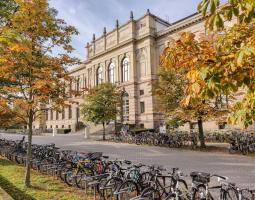
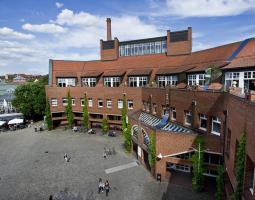
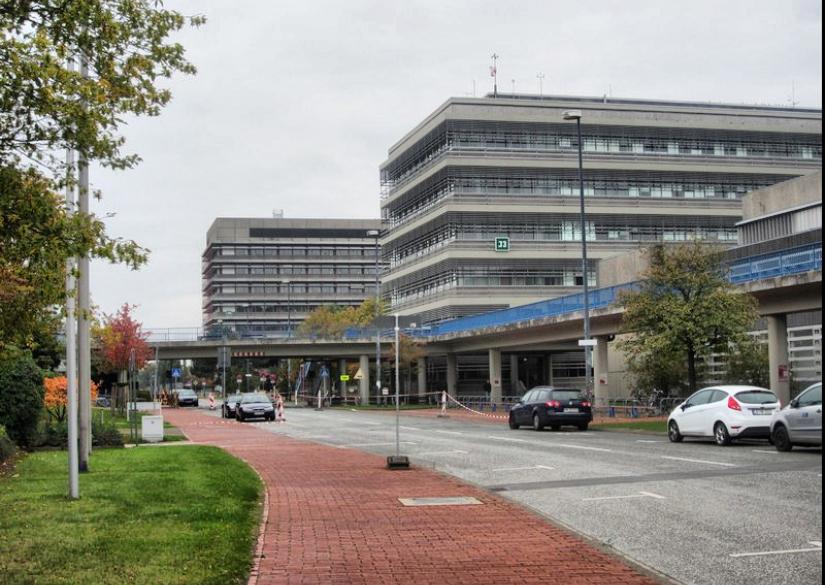
The campus is located in eastern Hannover and is connected to the city center by the Eilenriede City Forest. The first phase of the new clinical complex is scheduled to open in 2032. The first building has received funding, including a risk reserve. It will have a gross floor area of approximately 98,000 m² and a usable area of approximately 47,000 m².
The new building will house the Central Emergency Room, emergency and trauma units, cardiology and pulmonology units, and a significant portion of the Head and Nervous System Center. Plans include 562 beds, with 120 for intensive care, and 24 operating rooms. The central plaza will be pedestrian-friendly and car-free. Outpatient clinics and offices will be separated from emergency, intensive care, and operating areas but connected through a shared logistics level. The project is expected to use recycled aluminum, reused bricks, and hybrid timber construction on the upper floors.
Admission dates and extra charges
- Training for the MFA medical assistant program begins in August each year,
- Speech therapy classes begin in October,
- Training for dietetic assistants, medical technologists in laboratory analytics, and medical technologists in radiology begins each October,
- The Early Career Mentoring participation charge covers meals at events throughout the year,
- The initial ALLEGRO term is five years, with an interim evaluation after three years,
- AVIATOR provides 50% protected research time for up to six years under a 3+3-year arrangement following a positive interim evaluation.
Enrolment process
Applications for Early Career Mentoring are reviewed by the equality committee. AVIATOR uses a two-stage selection process that considers each candidate's scientific and clinical achievements in relation to the chosen profile.
Entry requirements, how to apply, what is required to enrol
Applicant, applying for admission, first of all provides the results of their performance in school or college. After that, he is allowed to take exams at the chosen faculty. Positive evaluation of both criteria guarantees enrollment. An academic year is formed from two semesters.
The cost of education is rather low (both for Germany in particular and for Europe in general). An undergraduate degree student pays annually. Postgraduate education requires the master to also pay annually. The administration of the university contributes to obtaining financial assistance to a certain part of students in the form of scholarship payments.
- Early Career Mentoring: applications are open to female physicians working at MHH from the second year of specialist training and to female doctoral candidates in any discipline. Applicants need a motivation letter, a short biography, and a completed application form,
- ALLEGRO: applicants must have completed a doctorate with above-average results, present a compelling CV and a project for the cluster initiative, and demonstrate a strong interest in translational research. They also need international or interdisciplinary professional connections, along with engagement and experience in teaching, science communication, or communication with patients,
- AVIATOR: physicians and dentistry specialists may apply if they hold a doctorate and have completed their specialization. Applicants need R2-level research experience, clinical work, a clear scientific vision, and a willingness to establish an independent research profile and assume leadership responsibilities in the future. The application includes a form describing the applicant's scientific vision and personal goals, as well as a tabular CV covering research achievements, clinical experience, and career milestones. Applicants do not need to hold a position at MHH when they apply,
- General nursing, medical technology in laboratory analytics (MTL), and electronics technician programs require a Realschulabschluss. Industrial mechanics requires a good Realschulabschluss. Library and information services requires a Realschulabschluss with good grades in German and English,
- Laboratory animal care requires a good Hauptschulabschluss. The Fachlagerist and Fachkraft für Lagerlogistik programs require a very good Hauptschulabschluss,
- Office management and health care business programs require a Realschulabschluss, Fachhochschulreife, or Abitur,
- Event management requires Fachhochschulreife or Abitur. Practical experience before entering the program is recommended.
Scholarships Hannover Medical School (MHH)
- In the 2025/26 academic year, MHH awarded 28 Deutschlandstipendium scholarships: 19 were funded by individual sponsors and 9 by the MHH plus foundation,
- MHH allocates funding each year to the Ellen-Schmidt program for women completing their habilitation. Selected participants are fully or partially released from other duties while conducting research,
- ALLEGRO provides funding to establish an independent research group,
- AVIATOR support covers personnel, materials, travel, and publication expenses. Applicants with a foreign medical license may receive help with professional recognition and reimbursement for a trip to meet clinic directors and prospective partners.
Institution on the map
Residence permits, citizenship and other services
- Guardianship services during the studies
- Student supervision
Review about Hannover Medical School (MHH)
Recommendations on when to apply
| Language courses, schools and children's language camps | Primary and secondary education - private schools | Preparation programmes for entering universities - higher education | Higher education (after completing accredited programs A-level, IB, High School) - Bachelor, Master, MBA |
| - we recommend to apply 6-9 months before the start of the course (some camps and schools offer discounts for early booking or for lengthy study programs) - there are some very popular and high demand children's camps, where the applications need to be submitted 1 year in advance (in particular Switzerland , Great Britain , USA , Canada , Austria) | - we recommend to apply one year before the start of the training program, - some schools have a specific time frame (September-November - please specify an individual school) - some schools require tests in several stages (UKISET, internal tests of the school: English, mathematics, logics, subjects, interview, some require a personal visit) | - we recommend to apply one year before the start of the program, - for Foundation and Pathway programs, IELTS and TOEFL certificates are usually required, respectively | - recommended submission one year before the start of the program, - the deadline normally closes in January, for TOP HEIs and, as a rule, in March in other universities - for a bachelor, a Foundation or Pathway preparatory program a completed A-level, IB, High School + IELTS / TOEFL are required - for Masters you need a graduated higher education, in some cases you need a pre-Masters program - MBA requires completed higher education, work experience preferably at least 2-3 years, etc. |