Fryeburg Academy Private School











In the process of preparing the material, we referenced the following sources: Wikipedia, Central Maine, Portland Press Herald, Boarding School Review
Programs and prices, tuition fees in Fryeburg Academy Private School


High school
The high school program helps students not only to receive a prestigious educational certificate and complete the secondary education program, but also to enter the best universities in the world. Students are assisted by teachers and career advisors: they give advice on choosing a university and specialty, help to clarify the introductory requirements and the date of filing applications, to collect and send a package of documents.
The curriculum of this educational stage is very wide - it is made up of a variety of subjects covering virtually all areas of knowledge:
- English
- Geography
- Theatrical art
- Economy
- Chemistry
- Sculpture and 3D
- French
- Finance
- Sociology
- The photo
- Physical culture and health
- Informatics and technology
- Algebra
- Physics
- Latin
- Foundations of art
- Psychology
- Geometry
- History
- Chinese (Mandarin)
- Digital film production
- Art
- Mathematics
- Ethics
- Spanish
- Alternative techniques in art
- Sport management
- Bookkeeping
- Introduction to law
- Preparation of portfolio
- Statistics
- Biology.
Additional classes are also provided in the so-called "May Trimester": during 3 weeks, students can deepen their knowledge of selected disciplines and study topics that are not included in the general, standard program.
Description of Fryeburg Academy Private School
- Location of the Fryeburg Academy: Fryeburg, Maine, USA,
- Established: in 1792,
- Grades: 9–12,
- Total number of students of Fryeburg Academy: 704 students (29% foreign students),
- Language of instruction: English,
- Type of study: mixed,
- Type of accommodation: residence (boarding house),
- Programs: college preparation, Honors, Advanced Placement, college-level courses.
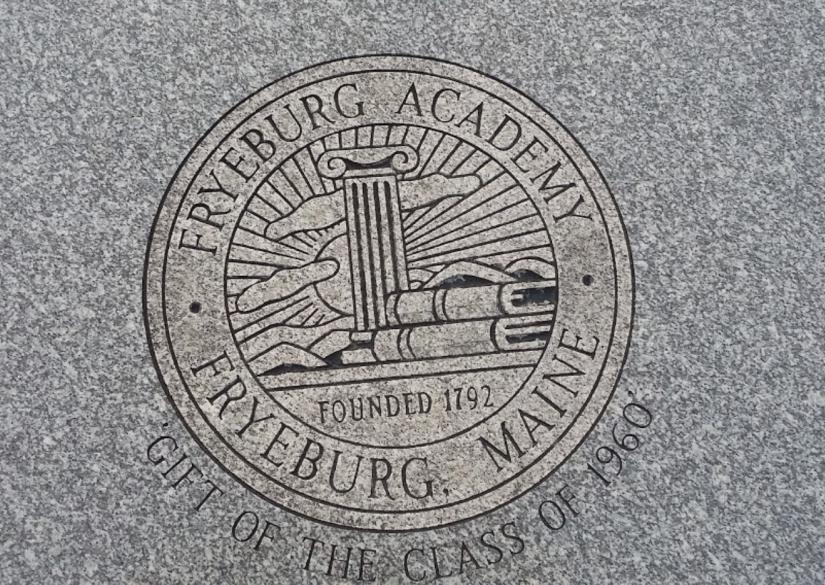
Founded in 1792, Fryeburg Academy is one of the oldest boarding schools in Maine. In addition, this is the first private school in US, as well as the first American school, which opened admission to the main educational courses for girls! Today it is an independent mixed secondary school offering courses for grades 9–12.
The independent school also accepts day students. The curriculum offers 150 courses, including 18 Advanced Placement (AP) courses, 25 advanced Honors courses, and College Level Dual-Enrollment courses. Level 1 provides college preparation, while Level 2 provides general education. Advanced coursework spans English, mathematics, science, social studies, performing arts, and world languages.
The school has 63 experienced teachers (all of them are native speakers, accredited to work with foreign students). Teachers are ready to work with students during extra-curricular time, to assign additional classes to once again explain a difficult topic or academic aspect. Teachers not only invest in the students basic, fundamental knowledge of key subjects, but also try to cultivate in them leadership qualities, critical and analytical thinking, to develop communication skills, responsibility.
The studying of students does not end in the classroom - it continues far beyond the academic building. The Outdoor Learning and Research Center (OLRC) regularly organizes a variety of outdoor activities: interesting workshops and experiments on biology, chemistry, digital media and environmental protection.
Its experiential programs include adventure activities, scientific research, and land stewardship.
Special curators and career advisors help graduates to determine the choice of a priority university, to fill out questionnaires, to clarify the introductory requirements and properly submit documents. Often the school is visited by representatives of various colleges, universities and higher schools: they meet with alumni, talk about their educational institution, its features, requirements and procedures. Counselors also help students explore career options. Among graduates the most popular educational institutions are the following American universities:
- Harvard University,
- School of the Art Institute of Chicago,
- Rensselaer Polytechnic,
- Princeton University,
- New Hampshire,
- New York School of Interior Design,
- University of California,
- The Bates,
- The Massachusetts Institute of Technology,
- Carnegie Mellon,
- The Pratt Institute,
- The Merrimack,
- Fordham,
- Boston University,
- Tampa,
- Rutgers University,
- Bowdoin,
- Cornell University,
- Johnson & Wales,
- Pace University,
- Colorado,
- New York University,
- Bentley,
- Dartmouth College,
- Colby,
- Pennsylvania State University,
- The Maine Maritime Academy,
- Clark,
- Maryland Institute College of Art,
- Maine,
- Columbia University,
- Bucknell,
- The George Washington University.
The average class size is 16: this allows the teachers to give each student due personal attention, to practice an individual approach. 704 students attend the school, including 220 boarders and 205 foreign students (29% of the student community). Students come from 23 countries, including:
- Korea,
- Ukraine,
- Brazil,
- Japan,
- Saudi Arabia,
- Germany.
The school year is divided into 2 semesters, between which there are vacations. Every 6 weeks the pupil's parents receive a full report from the school administration: it shows the student's successes and achievements in the academic, creative and sports fields, recommendations for his further study and development.

What advice do you have for applicants to American schools and why?
Take the time to study schools: seek information yourself and trust your educational agents, their experience and knowledge. Focus on those schools that fit your specific goals.Ask questions! Attend job interviews, school trips, connect with staff and admissions.
Prepare well for exams - SSAT, ISEE or TOEFL - learn the rules for writing essays.
And, of course, discuss with your family the financial possibilities, the conditions of each school.
Go for it!
Educational process
Every student is assigned a school counselor in their first year who continues to support them through graduation. The counseling team offers standardized test preparation and workshops on college and career planning. The Tutorial Support + Residential Life Support Program assists students with diverse needs, whether or not those needs are documented.
English for Speakers of Other Languages (ESOL) classes integrate reading, writing, speaking, listening, and grammar. ESOL I and ESOL Foundations in Science / Social Studies classes are limited to six students. Placement in ESOL II and III depends on communicative ability and skill level. ESOL I students also take science and social studies courses with language support. English I L2 content is adapted to individual students' abilities and needs.
The school offers more than 80 experiential education options. Juniors and seniors can participate in Work-Based Learning and internship programs in careers that interest them. May Term offers more than 80 course options, many of them practical or interdisciplinary.
Examples of classroom work:
- In AP Drawing, students submit portfolios to College Board artists for review. Art Portfolio focuses on preparing work for further arts education and professional practice,
- Arts classes and musical ensembles are led by teachers who are also professional artists and musicians. Students can earn Honors credit by completing a full semester in an extracurricular ensemble such as Vocal Jazz or Big Band,
- CL Digital PhotoShop is a dual-enrollment course offered through CMCC. Students who earn a grade of at least 70 receive three college credits,
- Film Workshop I involves storyboarding, filming, lighting, sound, and editing in Adobe Premiere,
- Intro Rock Band requires no musical experience, and instruments are provided,
- In Yearbook Publication, students choose the yearbook theme, design the cover and pages, collect photographs and information, and help with sales,
- Intermediate Aviation prepares students for the private pilot written exam. Advanced Aviation combines ground preparation with work on flight simulators,
- Intro to Electricity uses laboratory work and collaborative projects. Applied Electrical Technology addresses the installation, maintenance, and troubleshooting of electrical systems,
- AP Computer Science A focuses on Java and object-oriented design. Game design students work with Roblox Studio, Unreal Engine, and Unity,
- In Tech Fusion, students complete individual and collaborative projects in pixel animation, vector design, photography, and introductory 3D prototyping,
- Woodworking options include furniture construction, canoe and boatbuilding, clockmaking, and fiberglass work. Metalworking involves precision measurement, welding, machining, and reading working drawings,
- Biology combines lectures, individual and group assignments, experiments, projects, and outdoor activities. Environmental courses offer field activities and laboratory work,
- In AP Physics C, students develop much of the experimental procedure themselves and compile a portfolio of laboratory reports,
- Students in Honors science courses are expected to conduct independent research outside class and participate in the annual school science and engineering fair,
- Horticulture explores plant propagation, landscape design, bonsai, and sustainable agriculture. Students may also explore foraging, aquaculture, and hydroponics.
The usual minimum course load is six classes per semester, or five for seniors. A grade of 60 is passing. Grades are recorded on transcripts after each semester and May Term. May Term results count toward GPA. Students taking AP courses must take the AP exams in May.
Level I and Level II courses receive no additional GPA weight. Honors courses receive an extra 0.5 points, while Advanced Placement and College Level Dual-Enrollment courses each receive an extra 1.0 points. Beginning with the Class of 2025, academic honors replaced decile rankings:
- Summa Cum Laude — GPA of 4.0 or above,
- Magna Cum Laude — GPA of 3.8–4.0,
- Cum Laude — GPA of 3.67–3.8.
Students completing four years at the Academy need 21 credits to earn a diploma. Each semester course earns 0.5 credit, and a May Term course earns 0.25 credit for each class block it occupies. Requirements by discipline:
- English — 4 credits,
- Mathematics — 3 credits, with 4 recommended,
- Science — 3 credits, with 4 recommended,
- Social Studies — 3 credits, including 1 in US History or American Studies,
- Arts — 1 credit,
- Wellness — 2 credits, including a health course,
- Electives — 5 credits.
Students attending for three years need at least 14 credits: 3 each in English, mathematics, and science, 1 each in US History and Social Studies, and 3 in electives. Students attending for two years need at least 10 credits: 2 each in English, mathematics, and science, 1 in US History, and 3 in electives. Students attending for one year need at least 5 credits: 1 each in English, mathematics, science, US History, and an elective.
Faculties and colleges
The Academy offers academic, creative, and career and technical programs:
- Arts: AP Drawing for grades 11–12 and the yearlong AP Music Theory course. Drawing requires Art I with a grade of at least B+ and an instructor recommendation. Music theory requires instructor permission and relevant prior musical preparation,
- Aviation: a three-year sequence beginning with Aviation I, open to students from grade 10 with no previous flight experience or aviation knowledge. Intermediate Aviation lasts one academic year. The yearlong Advanced Aviation course is for grades 11–12 after Intermediate Aviation and requires an instructor recommendation,
- Electrical technology: the semester-long Intro to Electricity and yearlong Applied Electrical Technology courses. The latter requires a semester of introductory electricity or another electrical theory course,
- Computer technology: yearlong AP Computer Science A for grades 11–12, plus semester-long courses in Honors Game Design & Technology, Intro to CAD, and Python programming. The introductory design course requires no previous computer or design experience,
- English for speakers of other languages: yearlong ESOL I, ESOL II & III, and ESOL IV courses. The program progresses from beginner-level English to near-fluent speech and developed writing skills,
- History, social sciences, and economics: AP Business & Personal Finance, AP European History, AP Macroeconomics, AP Microeconomics, AP Psychology, and AP US History. Macroeconomics and microeconomics are offered in alternating years,
- Mathematics: yearlong AP Calculus AB, AP Calculus BC, and AP Statistics courses. Placement depends on previous mathematics preparation and, for some courses, instructor permission,
- Science: yearlong Anatomy & Physiology for grades 11–12, AP Biology, AP Chemistry, AP Environmental Science, and AP Physics C: Mechanics. Advanced courses have discipline-specific prerequisites. Taking Pre-Calculus Honors concurrently with AP Chemistry is recommended,
- World languages: French and Spanish sequences, including advanced Honors courses. Latin II and Latin III & IV Honors are also available. AP French can replace the second year of French IV/V Honors,
- Certificate of Arts: an additional certificate accompanying the Academy diploma for a combination of arts coursework and extracurricular activities,
- Career and technical education in partnership with Lake Region Vocational Center, with a duration of one or two years. Options include Advanced Technologies, Automotive Technology, Construction Technology, Culinary Arts, Early Childhood Education, Health Occupations (CNA), and Law Enforcement.
Scientific achievements
In May 2026, 126 Academy students took AP exams, completing 283 exams in total. The following distinctions were awarded:
- AP Scholar with Distinction — 13 students,
- AP Scholar with Honor — 10 students,
- AP Scholar — 22 students.
Academic honors figures for the 2026/27 academic year:
- Summa Cum Laude — 36,
- Magna Cum Laude — 20,
- Cum Laude — 10.
University destinations
Academy graduates have continued their education at:
- BRANDEIS UNIVERSITY,
- NORTHEASTERN UNIVERSITY,
- GEORGIA INSTITUTE OF TECHNOLOGY,
- UNIVERSITY OF CALIFORNIA, LOS ANGELES,
- UPENN UNIVERSITY,
- University of California, Berkeley.
The Class of 2026 list of college acceptances and planned matriculations also included:
- United States: Rice University, Drexel University, Amherst College, Babson College, Grinnell College,
- Canada: McGill University, McMaster University, University of Guelph, University of Ottawa,
- United Kingdom: University of Exeter, University of Sussex,
- Italy: Bocconi University,
- Spain: IE University.
Accommodation, meals, prices
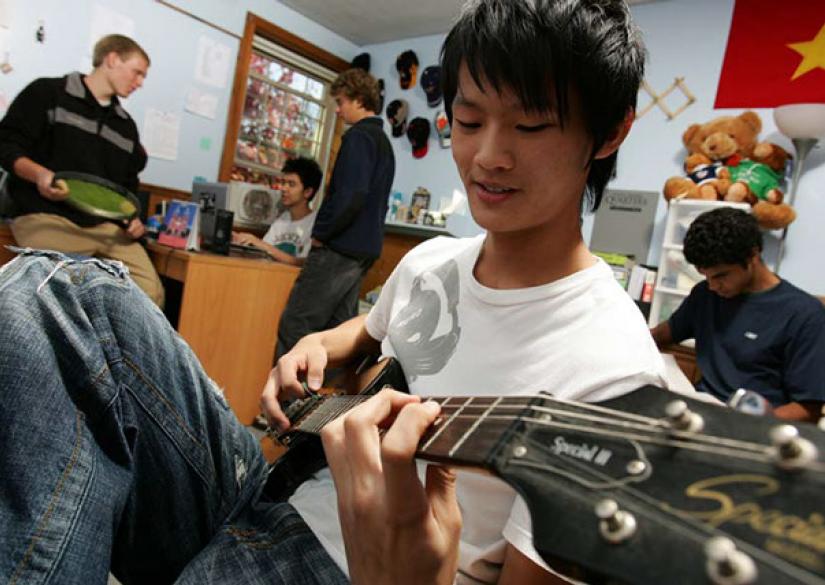
For boarding students (mostly foreign students), cozy rooms are offered in a comfortable common residence on the campus. The rooms are mostly double rooms, but the pupils of senior, final grades can apply for private bedrooms. Triple rooms are also available. The rooms are beautifully furnished and equipped with the necessary equipment, students can decorate them according to their taste. Each room has a single bed or bunk bed, a desk, a dresser, and a closet for hanging clothes.
There are 5 residences on campus, each accommodating up to 30 people, and 3 houses with resident dorm parents, as well as apartments for educators, tutors and teachers.
Dorm parents and student dorm leaders organize weekly meetings in the dorm commons room to discuss community living, challenges, and activities.
Boarding includes breakfast, lunch, and dinner in the LaCasce Dining Room.
Subjects, specialties
Activities Fryeburg Academy Private School
There are a lot of clubs and sections of interest for students in extra-curricular hours:
- Drama studio,
- Student newspaper,
- School choir,
- Foreign languages,
- Photography,
- Music etc.
The school has more than 35 academic, artistic, athletic, and service-focused clubs. Additional options include robotics, debate, and Environmental Club.
The scope and opportunities for sports - the physical development of schoolchildren is an important priority of the school administration:
- Skiing,
- Golf,
- Snowboarding,
- Baseball,
- Tennis,
- Basketball,
- Volleyball,
- Football,
- Hockey,
- Wrestling,
- Orienteering,
- Softball.
Often, school teams take part in regional and national competitions, taking prizes. Trips to ski resorts offer opportunities to learn skiing or snowboarding, go sledding, or skate.
Hiking in the mountains with an overnight stay in tents is often organized in spring and summer. During the weekend, interesting cognitive trips to Boston, Portland, Massachusetts and other American cities are arranged all year round. On the campus, too, fun and leisure activities are regularly held - carnivals, discos and celebrations, parties, joint screenings, sports days and intellectual quizzes.
Additional recreation options for boarding students include biking, rock climbing, and shopping trips to North Conway. Weekly activities reflect student interests, with examples including paddling on the Saco River and cooking lessons.
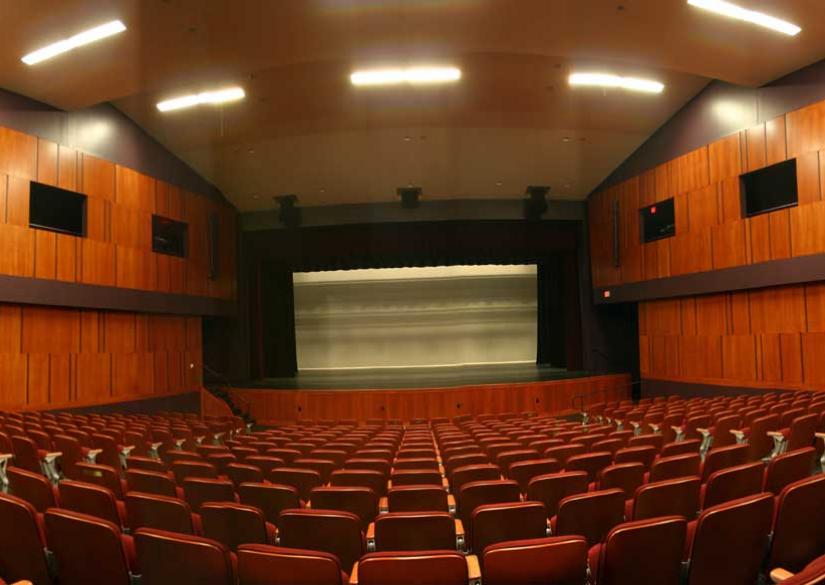
Band members perform at the school's Performing Arts Center, the Fryeburg Fair, selected home football games, and school events. Chorus members perform at the arts center and the fair. Instrumentalists and vocalists can audition for the school's jazz ensembles. Film Workshop II students are encouraged to submit completed films for the Fine Arts Festival at the Leura Hill Eastman Performing Arts Center.
All boarding students participate in afternoon activities Monday through Thursday from 3:15 pm to 5:00 pm. The extracurricular Enrichment Program usually meets Mondays and Tuesdays from 3:00–5:00 p.m. Some activities involve additional meetings, extended workshops, or off-campus trips.
Enrichment Program offerings change each year in response to student interests and demand. Past examples include dance, music, weight training, cooking, snow sports, and research activities.
Advantages
- Accreditation by the New England Association of Schools and Colleges (NEASC),
- Approval by the Maine Department of Education,
- SEVIS certification,
- Membership in ISEEN, NACAC, NEACAC, and the College Board,
- Advanced degrees held by 71% of faculty,
- Student/faculty ratio — 11:1.
Facilities and equipment at Fryeburg Academy Private School
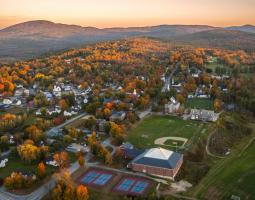
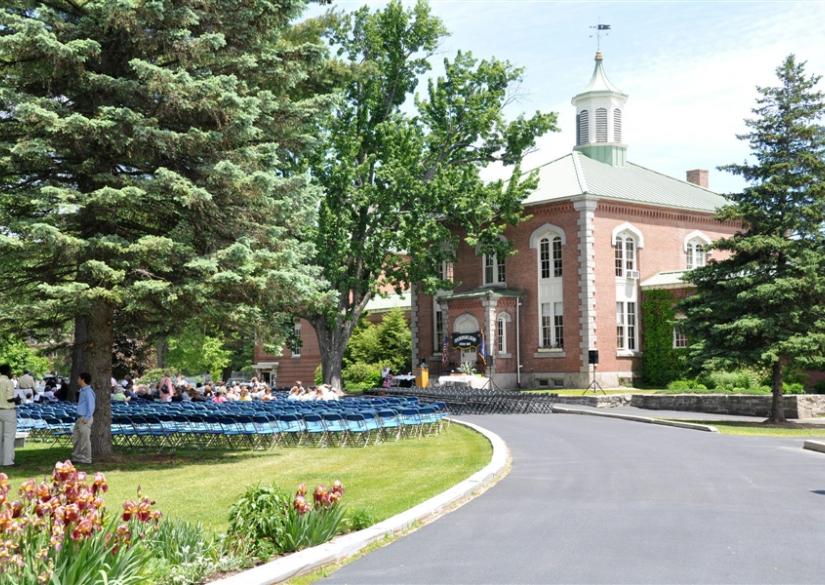
The school campus is located in Fryeburg, Maine: Portland can be reached in just an hour, and to lively Boston in 3 hours. The institution is located near the huge national park White Mountain National Forest: this opens up to the students a wide range of opportunities for excursions, walks, hikes and outdoor activities. The 105-acre campus is located in the Western Maine foothills of the White Mountains.
The campus has everything that students need for studying, active and quiet recreation, sports and creative development:
- Football fields,
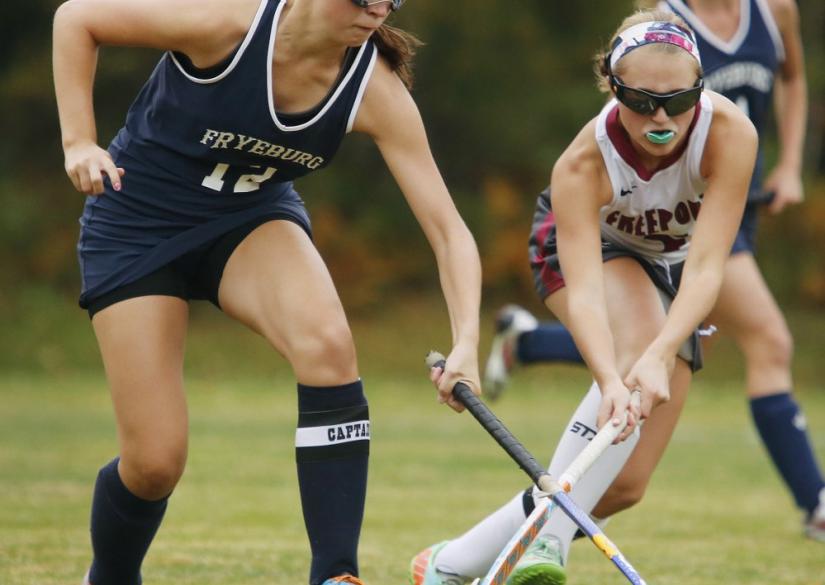
- Fields for hockey on grass,
- Field for baseball,
- Tennis Courts,
- Treadmills and track and field athletics tracks (total area about 34 acres),
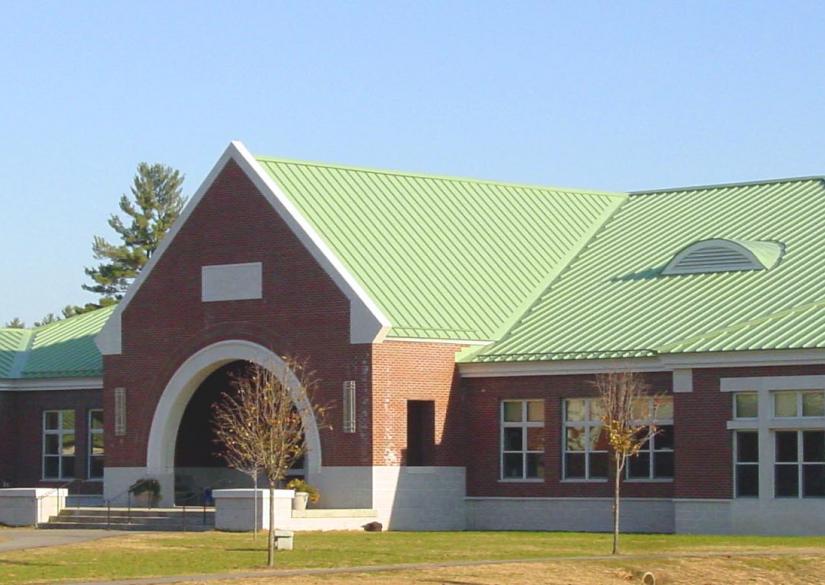
- 2 educational buildings with spacious, bright, well-equipped auditoriums,
- Center Foreign Languages,
- Computer Laboratory,
- Library,
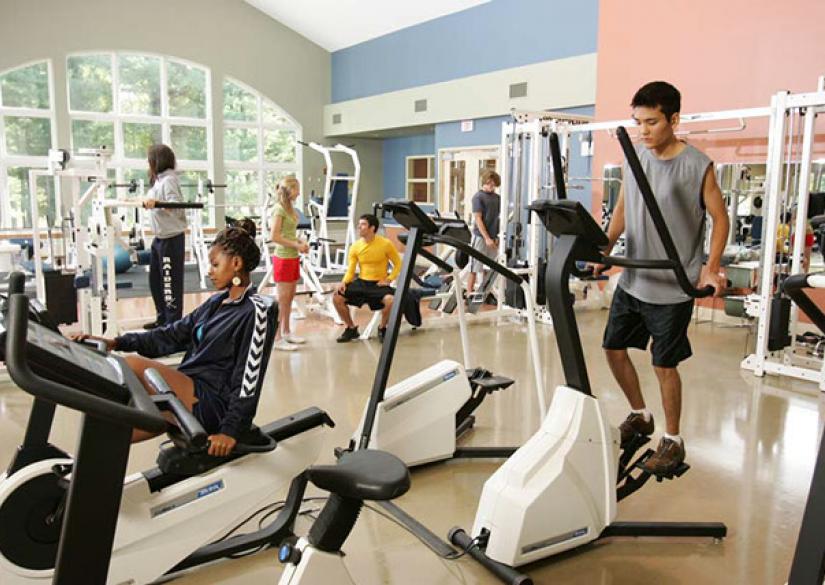
- Sports grounds, fitness halls and training halls,
- Music studio,
- Student's Club,
- Observatory,
- Photo Studio,
- Lecture halls,
- Modern scientific and technical laboratories,
- Medical office,
- Gift shop,
- Walking trails,
- Outdoor climbing wall,
- Low ropes course,
- Touchscreen computers with styluses for digital drawing,
- Ten 3D printers for student projects.
Students who want to learn skiing or snowboarding can rent equipment at nearby centers: Wildcat, Attitash, Cranmore and Black Mountain.
Admission dates and extra charges
May Term is a three-week academic term at the end of the school year.
Enrichment Program sessions run by season: the fall session lasts from the Monday after Labor Day to the week before Thanksgiving, the winter/spring session from the Monday after the second semester begins to the second week of March, and the spring session from the third week of March to the second week of May, with approximately 16 sessions through the end of the academic year.
Boarding tuition includes:
- A full schedule of classes,
- Dormitory accommodations,
- Access to all offered clubs and sports teams, including athletic uniforms,
- Textbooks and other class materials,
- Transportation to and from Portland and Boston on all official travel days,
- Student support and health services,
- A tuition refund plan for documented medical circumstances.
Additional charges apply to transportation outside approved travel dates associated with school breaks, travel related to homestays, and school-sponsored vacation trips. Transportation charges for scheduled appointments vary.
Separate charges apply to standardized tests, including TOEFL and SAT. Laboratory charges apply to Advanced Woodworking, Furniture Construction, Machining & Fabrication, and Metal Design.
Other charges and paid services:
- Application charge,
- Refundable Security Deposit,
- Refundable Expense Account,
- Student Life Fee,
- Preseason Athletic Fee,
- Graduation cap and gown,
- Convalidation Fee,
- Optional Recreational Ski Program,
- Tutorial Support + Residential Life Support Program,
- Health and Accident Insurance, mandatory for foreign boarding students,
- Incoming wire transfer charge,
- Campus accommodation during Thanksgiving and February breaks.
Extras:
- Registration fee (for a programme/course) 100 USD
- Deposit for a course/programme 3500 USD
- Application Fee 1775 USD
- Medical insurance 1880 USD
- Transfer (one way) 195 USD
Enrolment process
Admission involves an interview, either in person or by video.
Perspectives
Post-secondary outcomes for the Class of 2026:
- Four-year colleges — 71%,
- Two-year colleges — 11%,
- Employment — 15%,
- Gap year — 1%,
- Military service — 1%,
- Post-graduate year of high school — 1%.
In March 2026, 80 students took the SAT. The mean total score was 1061: 541 in reading and writing and 520 in mathematics.
The GPA range for the top 10% of students is 4.24–4.61.
Scholarships Fryeburg Academy Private School
Financial aid supports 35% of Academy students. The school offers merit scholarships to students from around the world.
Literature and references

Institution on the map
Residence permits, citizenship and other services
- Guardianship services during the studies
- Student supervision
Review about Fryeburg Academy Private School
Recommendations on when to apply
| Language courses, schools and children's language camps | Primary and secondary education - private schools | Preparation programmes for entering universities - higher education | Higher education (after completing accredited programs A-level, IB, High School) - Bachelor, Master, MBA |
| - we recommend to apply 6-9 months before the start of the course (some camps and schools offer discounts for early booking or for lengthy study programs) - there are some very popular and high demand children's camps, where the applications need to be submitted 1 year in advance (in particular Switzerland , Great Britain , USA , Canada , Austria) | - we recommend to apply one year before the start of the training program, - some schools have a specific time frame (September-November - please specify an individual school) - some schools require tests in several stages (UKISET, internal tests of the school: English, mathematics, logics, subjects, interview, some require a personal visit) | - we recommend to apply one year before the start of the program, - for Foundation and Pathway programs, IELTS and TOEFL certificates are usually required, respectively | - recommended submission one year before the start of the program, - the deadline normally closes in January, for TOP HEIs and, as a rule, in March in other universities - for a bachelor, a Foundation or Pathway preparatory program a completed A-level, IB, High School + IELTS / TOEFL are required - for Masters you need a graduated higher education, in some cases you need a pre-Masters program - MBA requires completed higher education, work experience preferably at least 2-3 years, etc. |