
Study physics in Switzerland - 22 institutions
-
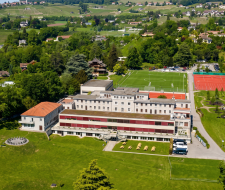 In 2023: 37 IB average, 43 highest point, 100% pass rate
SwitzerlandMontreuxCurrently watching: 6from 31900.00 CHF / year
In 2023: 37 IB average, 43 highest point, 100% pass rate
SwitzerlandMontreuxCurrently watching: 6from 31900.00 CHF / year -
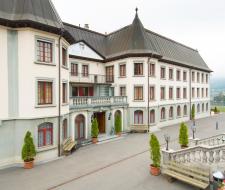 In 2023 a quarter of the IB students gained 34 points or higher
SwitzerlandMontreuxCurrently watching: 7from 66195 CHF / semester
In 2023 a quarter of the IB students gained 34 points or higher
SwitzerlandMontreuxCurrently watching: 7from 66195 CHF / semester -
 One of the best only-girl school in Europe
SwitzerlandMontreuxCurrently watching: 8from 56000 CHF / semester
One of the best only-girl school in Europe
SwitzerlandMontreuxCurrently watching: 8from 56000 CHF / semester -
 School is in top 3 best bilingual boarding schools in French speaking part of Switzerland
SwitzerlandLausanneCurrently watching: 7from 5400 CHF / 2 weeks
School is in top 3 best bilingual boarding schools in French speaking part of Switzerland
SwitzerlandLausanneCurrently watching: 7from 5400 CHF / 2 weeks -
 One of the best preparatory boarding schools in Europe
SwitzerlandMontreuxCurrently watching: 8from 31000 CHF / semester
One of the best preparatory boarding schools in Europe
SwitzerlandMontreuxCurrently watching: 8from 31000 CHF / semester -
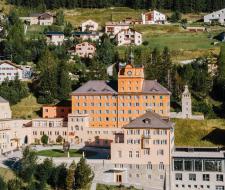 School is in top 3 best bilingual boarding schools in German speaking part of Switzerland
SwitzerlandSt. MoritzCurrently watching: 10from 79500.00 CHF / year
School is in top 3 best bilingual boarding schools in German speaking part of Switzerland
SwitzerlandSt. MoritzCurrently watching: 10from 79500.00 CHF / year -
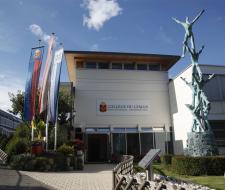 In 2024 100% graduates achieved IB Diploma
SwitzerlandGenevaCurrently watching: 9from 24900.00 CHF / year
In 2024 100% graduates achieved IB Diploma
SwitzerlandGenevaCurrently watching: 9from 24900.00 CHF / year -
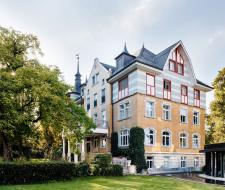 In 2021 an average IB score was 38
SwitzerlandSt. GallenCurrently watching: 9from 31000.00 CHF / term
In 2021 an average IB score was 38
SwitzerlandSt. GallenCurrently watching: 9from 31000.00 CHF / term -
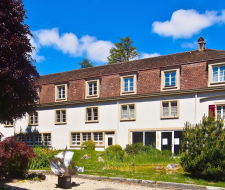 In 2023an average IB&FB score was just over 36 points.
SwitzerlandLausanneCurrently watching: 8from 69300.00 CHF / year
In 2023an average IB&FB score was just over 36 points.
SwitzerlandLausanneCurrently watching: 8from 69300.00 CHF / year -
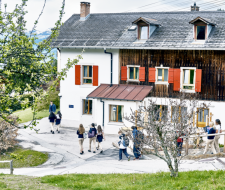 In 2023 an average IB score was 35.2
SwitzerlandMontreuxCurrently watching: 8from 31800 CHF / term
In 2023 an average IB score was 35.2
SwitzerlandMontreuxCurrently watching: 8from 31800 CHF / term
Physics is a fundamental branch of the science of nature. Studying Physics in Switzerland, a recognized international student center, offers the best programs for talented physicists from all over the world. Major universities where physics is taught include the University of Bern, the University of Geneva, the University of Zurich, and others.
Studying physics in Switzerland for ithe foreign students is:
- Unique educational system,
- Participation in scientific research,
- International Standards of Education.
By studying physics, the students get an idea of the structure of the world, physics helps to understand the principle of operation of many things, shows a mathematical picture of the universe, from subatomic to cosmological measurements. The main task of a physicist is to conduct experiments and create new scientific ideas.
Studying physics in Switzerland will provide broad skills that are applied in a variety of fields and contexts, such as:
- Investigations
- Communication
- Problem solving,
- Teamwork,
- Critical thinking.
Alternative destinations
Studying physics in Switzerland
Physics is taught in Switzerland at the bachelor's level in German or English. Duration is 3–4 years of full-time study. A bachelor's degree in physics prepares graduates to study and investigate the laws of nature, physical processes and phenomena.
The bachelor's program consists of introductory courses on various topics:
- Physics,
- Chemistry,
- Astronomy,
- Mathematics,
- Theory of Heat,
- Computer Science,
- Electrodynamics,
- Linear Algebra,
- Classical Mechanics,
- Data Analysis in Physics,
- Mathematical Methods of Physics,
- Introduction to Solid State Physics,
- Introduction to Nuclear and Particle Physics, etc.
Schools offering physics study in Switzerland incorporate work in physics laboratories alongside lectures — this is an important part of the bachelor's curriculum that prepares students for research in a master's program.
Basic physics experiments are conducted in the following directions:
- Optics,
- Mechanics,
- Electronics,
- Astrophysics,
- Particle Physics,
- Thermodynamics,
- Nuclear Physics,
- Quantum Optics,
- Electromagnetism,
- Quantum Mechanics,
- Quantum Electronics,
- Nuclear and Elementary Particle Physics.
Studying physics in Switzerland for international students provides basic preparation for independent experimentation. The practical course in the physics laboratory offers hands-on experience with equipment, conducting experiments and analyzing them, and includes:
- Planning,
- Setup,
- Execution,
- Evaluation,
- Interpretation of physical experiments, including measurement accuracy.
A mandatory component is the preparation of a written report on the completed experiment in scientific form; students learn to conduct increasingly complex experiments independently and document them in a scientifically correct manner.
Studying physics at universities in Switzerland helps international students to:
- Understand complex physical phenomena,
- Approach experiments with complex instruments in a structured way,
- Study and apply relevant statistical methods of data evaluation,
- Interpret measurements and measurement uncertainties,
- Produce descriptions of experiments and results in scientific form, in line with scientific publications.
In their final year, students choose between working in a laboratory and carrying out various research projects. To deepen knowledge in the field of theoretical physics, participation in seminars and projects is offered. To gain broad knowledge in experimental physics, students choose between:
- Completing a semester project,
- Working in a physics laboratory,
- Participating in a research institute project.
Students receive studying under the supervision of a researcher and upon completion write a written report containing a declaration of originality.
Master's and doctoral programs
Studying physics in Switzerland at the master's level stipulates 1–2 years of full-time study. The research project in a master's program is conducted with the aim of gaining experience in making experiments in a research environment, as well as analyzing and interpreting the data obtained. Results are provided in written form and as a presentation, with associate professors from the faculty of physics and mathematics serving as supervisors.
A master's degree is the path to obtaining a Doctor of Philosophy in physics. Both doctoral and master's students possess an analytical mindset, a deep understanding of all areas of physics, the ability to assess and apply modern research methods, and to uncover the system of physical laws.
The topics of study depend on the direction chosen by the students — some of the most popular are:
- Materials quality testing,
- Improving fuel efficiency,
- Analysis of geological process data,
- Design of industrial devices,
- Research in the fields of astrophysics, optics, and mechanics.
Studying physics at Swiss universities for international students in a doctoral program takes 2–4 years. Students choose a supervising professor under whose guidance they conduct analyses and gain the experience necessary to complete a dissertation. Doctors of Philosophy:
- Conduct research in the field of electronics,
- Publish original articles and dissertations,
- Advise students,
- Participate in departmental work,
- Assist in the implementation of new ideas.
Studying physics at Swiss universities for international students
Attending a school with physics studies in Switzerland even for half a year allows students from abroad to work part-time: this gives students practical preparation and the opportunity to find an internship.
After graduation, physics faculty graduates in Switzerland find employment on average within 6 months. A physics degree opens up countless career paths around the world, with specialists working in various industries:
- Education,
- Engineering,
- Business finance,
- Medical sciences,
- Research and development,
- Computer hardware/software.
They successfully hold the following positions:
- Scientist,
- Laboratory technician,
- Optical engineer,
- Data analyst,
- Electrical engineer,
- Research associate,
- Systems engineer,
- Accelerator operator,
- Design engineer,
- Applications engineer,
- High school physics teacher,
- Physics technical specialist,
- Software developer, etc.
Physics skills are in demand in all countries; on average, specialists earn from $67,000/year to $210,000/year.
Cost of studying physics in Switzerland
Obtaining a degree in Switzerland at public universities costs from 1,500–2,000 €/year; at private universities the cost will be around 12,000–30,000 €/year (recalculated each year).
Additional expenses:
- Registration fee,
- Accommodation,
- Food,
- Educational materials.