
 Spain
Spain
 For partners
 Study chemistry in Switzerland - 24 institutions
-
 In 2023: 37 IB average, 43 highest point, 100% pass rate
SwitzerlandMontreuxCurrently watching: 8from 31010.00 CHF / year
In 2023: 37 IB average, 43 highest point, 100% pass rate
SwitzerlandMontreuxCurrently watching: 8from 31010.00 CHF / year -
 In 2023 a quarter of the IB students gained 34 points or higher
SwitzerlandMontreuxCurrently watching: 10from 4380 CHF / weeks
In 2023 a quarter of the IB students gained 34 points or higher
SwitzerlandMontreuxCurrently watching: 10from 4380 CHF / weeks -
 One of the best only-girl school in Europe
SwitzerlandMontreuxCurrently watching: 9from 56000 CHF / semesters
One of the best only-girl school in Europe
SwitzerlandMontreuxCurrently watching: 9from 56000 CHF / semesters -
 School is in top 3 best bilingual boarding schools in French speaking part of Switzerland
SwitzerlandLausanneCurrently watching: 8from 52250 CHF / semesters
School is in top 3 best bilingual boarding schools in French speaking part of Switzerland
SwitzerlandLausanneCurrently watching: 8from 52250 CHF / semesters -
 One of the best preparatory boarding schools in Europe
SwitzerlandMontreuxCurrently watching: 7from 31000 CHF / semesters
One of the best preparatory boarding schools in Europe
SwitzerlandMontreuxCurrently watching: 7from 31000 CHF / semesters -
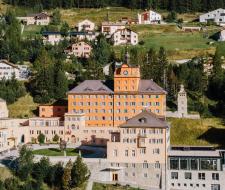 School is in top 3 best bilingual boarding schools in German speaking part of Switzerland
SwitzerlandSt. MoritzCurrently watching: 7from 79500.00 CHF / year
School is in top 3 best bilingual boarding schools in German speaking part of Switzerland
SwitzerlandSt. MoritzCurrently watching: 7from 79500.00 CHF / year -
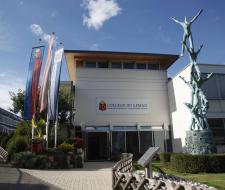 In 2024 100% graduates achieved IB Diploma
SwitzerlandGenevaCurrently watching: 10from 113500.00 CHF / year
In 2024 100% graduates achieved IB Diploma
SwitzerlandGenevaCurrently watching: 10from 113500.00 CHF / year -
 In 2021 an average IB score was 38
SwitzerlandSt. GallenCurrently watching: 10from 55000 CHF / terms
In 2021 an average IB score was 38
SwitzerlandSt. GallenCurrently watching: 10from 55000 CHF / terms -
 In 2023an average IB&FB score was just over 36 points.
SwitzerlandLausanneCurrently watching: 6from 69300.00 CHF / year
In 2023an average IB&FB score was just over 36 points.
SwitzerlandLausanneCurrently watching: 6from 69300.00 CHF / year -
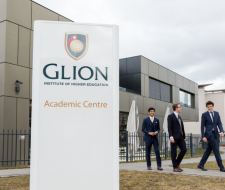 #3 for Hospitality and Leisure Management in the world
SwitzerlandMontreuxCurrently watching: 7from 20350.00 CHF / semester
#3 for Hospitality and Leisure Management in the world
SwitzerlandMontreuxCurrently watching: 7from 20350.00 CHF / semester
Chemistry is the study of the composition, structure, properties, and transformations of substances. The discipline is often combined with other natural sciences such as geology, physics, and biology, providing insight and powerful analytical tools for engineering applications. Chemistry forms the basis of modern medicine, explains countless phenomena of modernity, and offers answers to many questions. Studying chemistry in Switzerland is the key to understanding the world and a great opportunity to build a successful career!
Studying chemistry at universities in Switzerland for international students leads to a degree:
- Bachelor
- Master
- Doctor (PhD).
Popular destinations:
- Chemistry
- Bioinformatics,
- Medicinal Chemistry,
- Chemistry and Management,
- Microbiology and Biochemistry,
- Physical Organic Chemistry,
- Biochemical and molecular nutrition,
- Chemical Biology and Medicinal Chemistry,
- Nanoscience and Functional Nanomaterials.
Alternative destinations
Studying Chemistry in Switzerland: Main Areas
Schools specializing in chemistry in Switzerland offer a variety of specializations:
- Biological Chemistry — involves the study of chemical processes in living organisms. This requires additional theoretical and practical knowledge in biochemistry, micro- and cell biology, biochemical engineering, and molecular genetics.
- Digital Methods in Biological Sciences — computer methods are at the forefront of medical and biological sciences. Models for chemical or biotechnological research are developed and processed using informatics.
- Pharmaceutical Technology — covers the technical production and development of various dosage forms, provides an introduction to drug delivery systems based on nanotechnology, teaches the basics of cleanroom technology, offers an overview of quality assurance, and imparts in-depth knowledge in pharmaceutical microbiology.
- Environmental Chemistry and Biotechnology — play a vital role in solving pressing environmental problems (climate change, resource scarcity). The main focus is on three goals: the use of new bioproducts, the production of renewable energy sources, and the closing of material cycles to ensure resource- and energy-efficient production and consumption.
Studying Chemistry in Switzerland for International Students: Opportunities
Universities in Switzerland offer the study of chemistry on topics:
- General Chemistry,
- Molecular Chemistry,
- Computational Chemistry and a number of others.
Teaching is conducted in German, English, and French.
Studying chemistry at Swiss universities for foreign students is available on programs:
- Bachelor's — duration 3-4 years, admission from 18 years old,
- Master's — 1.5-2 years, admission after 20 years old,
- Doctoral studies — study duration from 3 years, students are accepted from 20 years old.
A bachelor's degree covers a wide area of chemistry, while a master's degree allows you to delve deeper into a specific industry.
Schools studying chemistry in Switzerland offer many specializations, some of the most common include:
- Analytical Chemistry — the section determines the exact chemical composition of substances (identification) and their measurement,
- Biochemistry — consists of the study of chemicals found in living organisms (DNA and proteins),
- Inorganic Chemistry — studies substances that do not contain carbon,
- Organic Chemistry — studies substances based on carbon compounds,
- Physical Chemistry — includes the study of physical properties and behavior of chemicals,
- Biophysical Chemistry — the topic considers the application of physical chemistry in a biological context.
During their studies, students will become familiar with:
- The subtleties of molecular structures and bonds,
- Advanced tools for detailed analysis,
- Fundamental concepts that regulate chemical reactions.
Course subjects:
- Physics,
- Biology,
- English,
- Mathematics,
- Microbiology,
- Organic Chemistry,
- Analytical Chemistry,
- Information Technology.
Studying chemistry in Switzerland includes:
- Considering a variety of chemical processes,
- Gaining extensive knowledge in the field of natural sciences using mathematical, physical, chemical and biological models,
- Developing new substances, analysis methods and processes.
Within the program, students choose additional topics to broaden their horizons. Courses include lectures and internships necessary for consolidating theory, and upon completion of the program a thesis is completed, supplemented by practice in operating companies.
Studying chemistry in Switzerland for foreign students allows you to spend a semester abroad and participate in student exchanges with partner universities.
Skills will prepare students for a wide range of career opportunities:
- Healthcare,
- Nanotechnology,
- Environment,
- Agriculture,
- Government administration,
- Production of plastics, textiles, paints and chemicals,
- Laboratory research in universities and research institutes,
- Production of analytical instruments, chemical and biotechnological equipment.
Studying chemistry in Switzerland for foreign students after successfully obtaining a bachelor's degree is based on research and practice, which leads to a master of science degree. A master's degree expands career opportunities for graduates, especially in international companies, provides new knowledge and promotes professional communication.